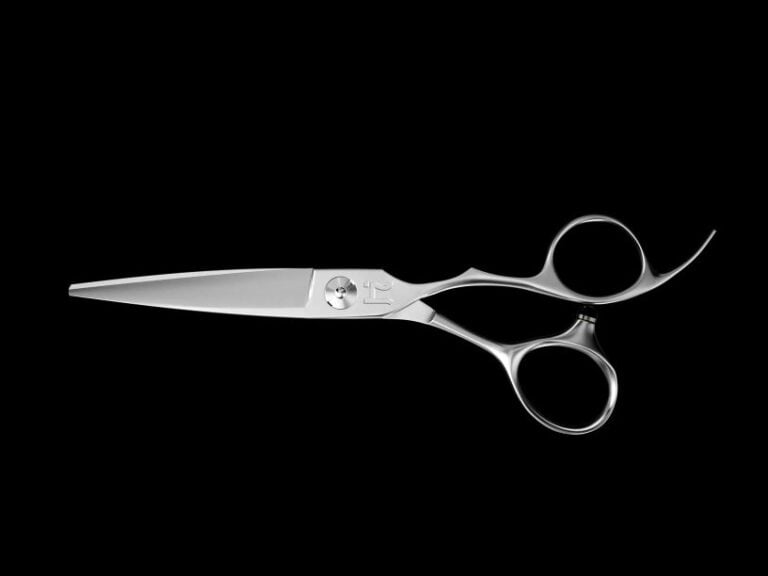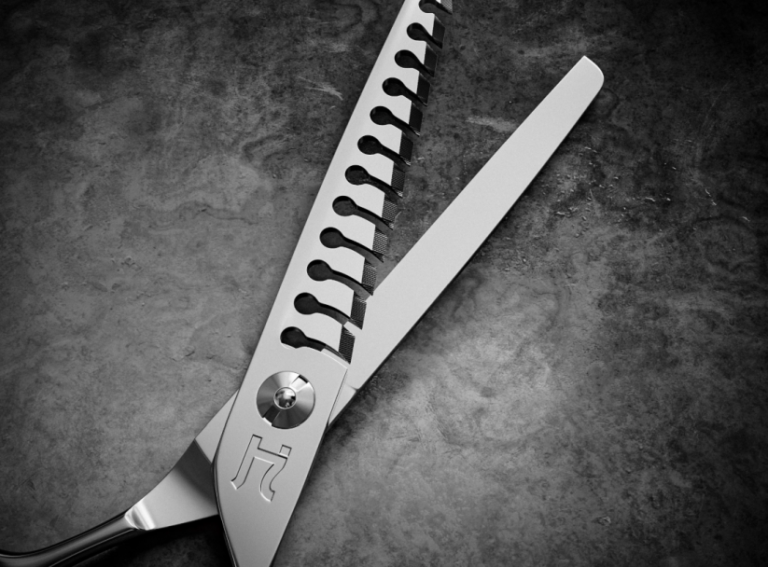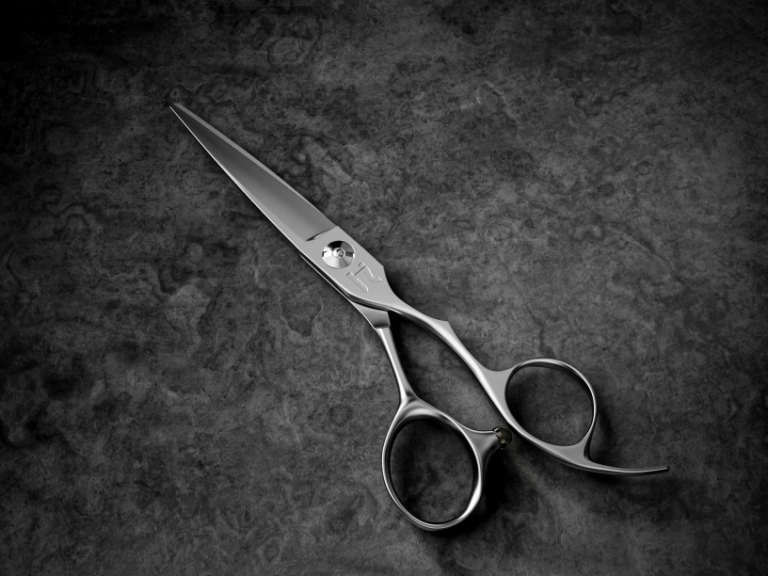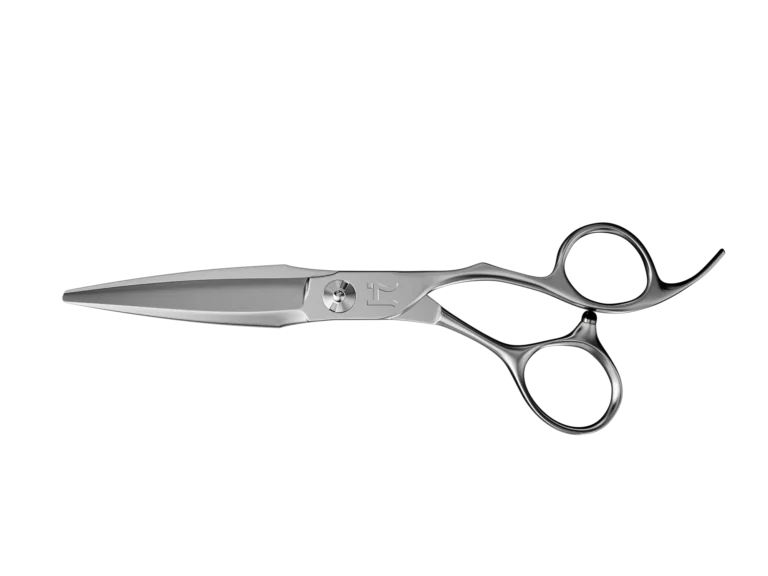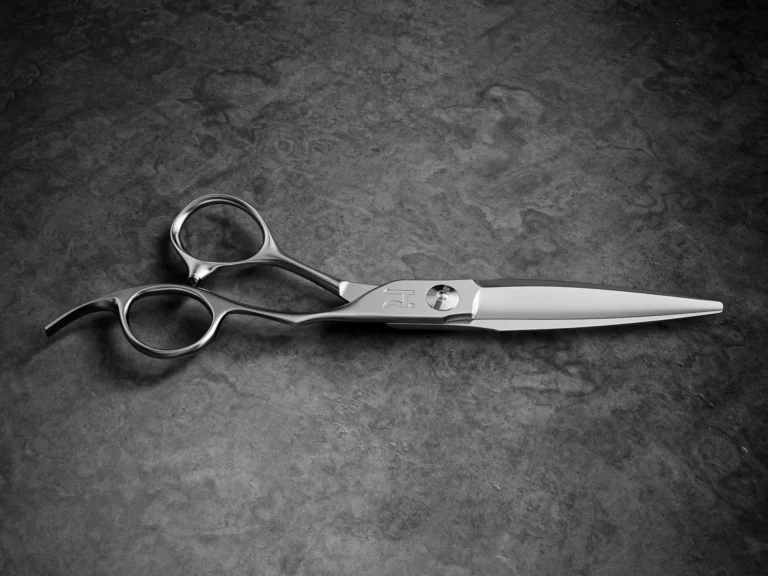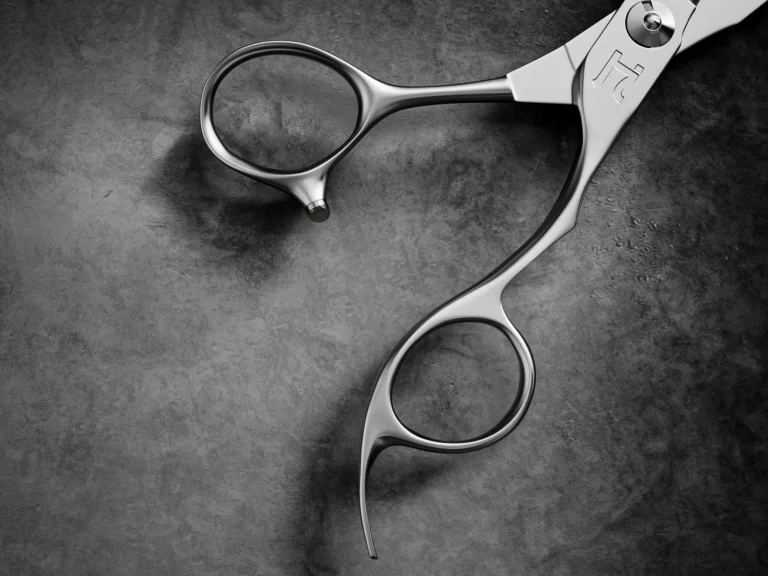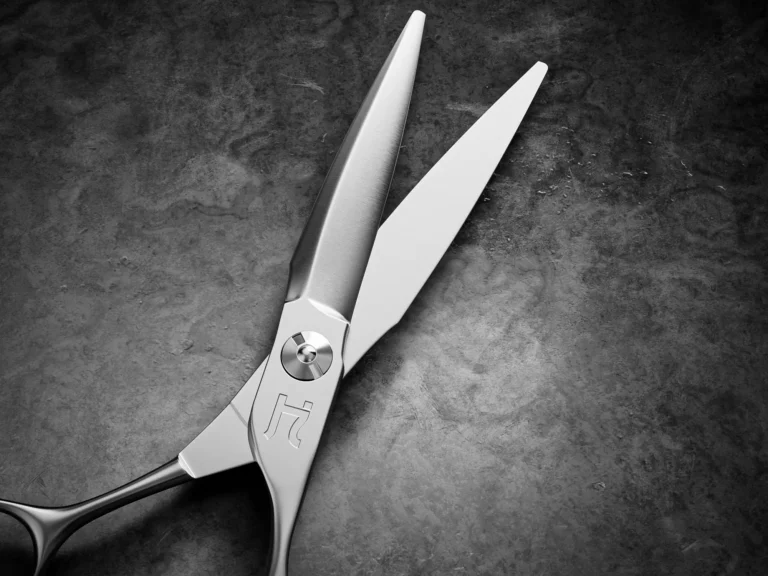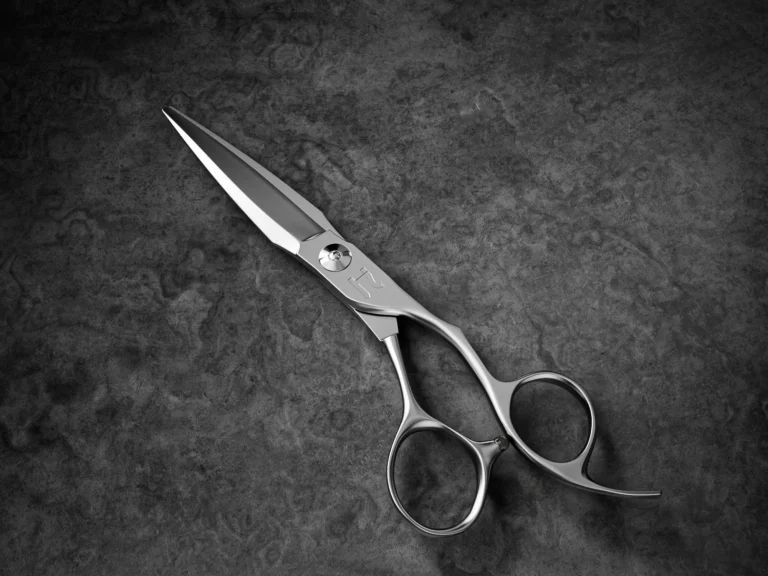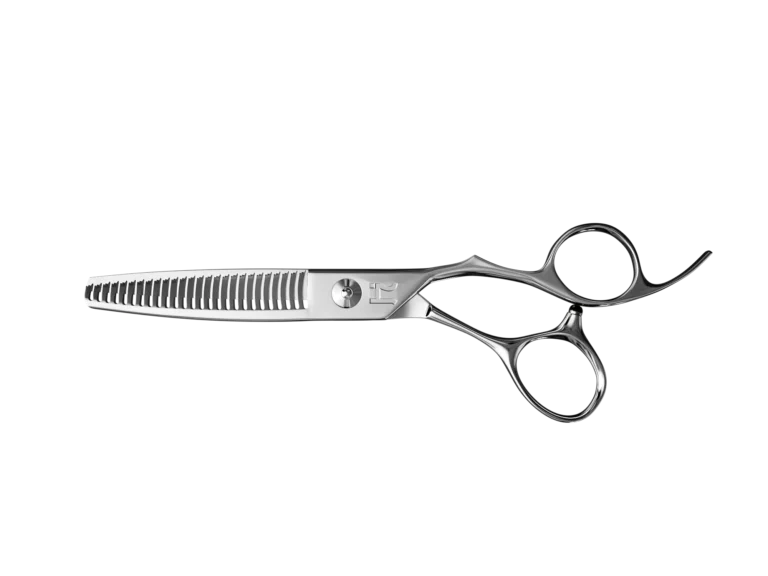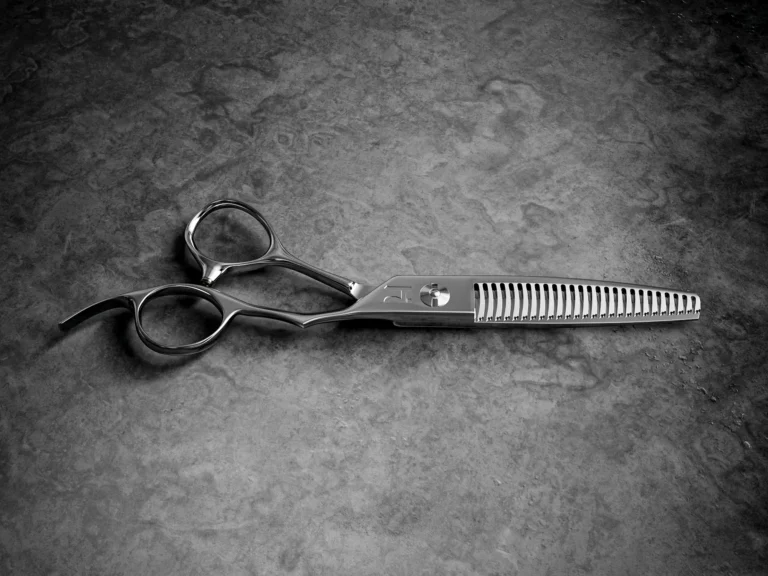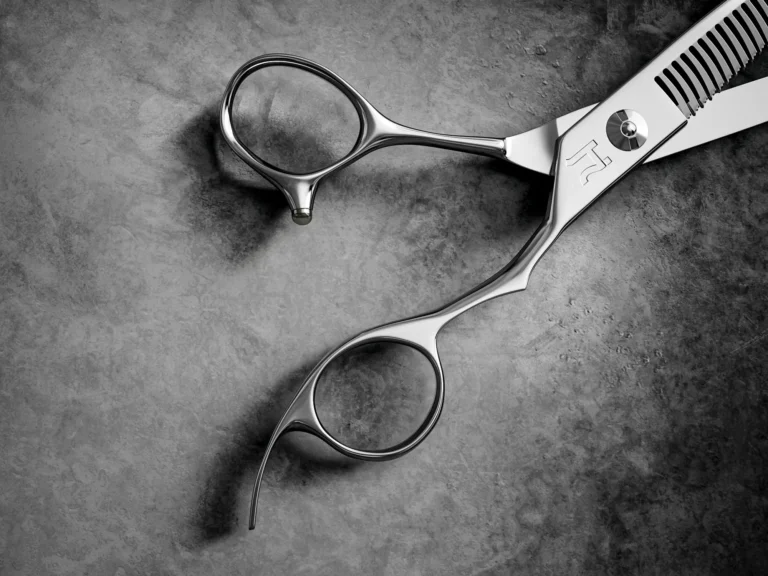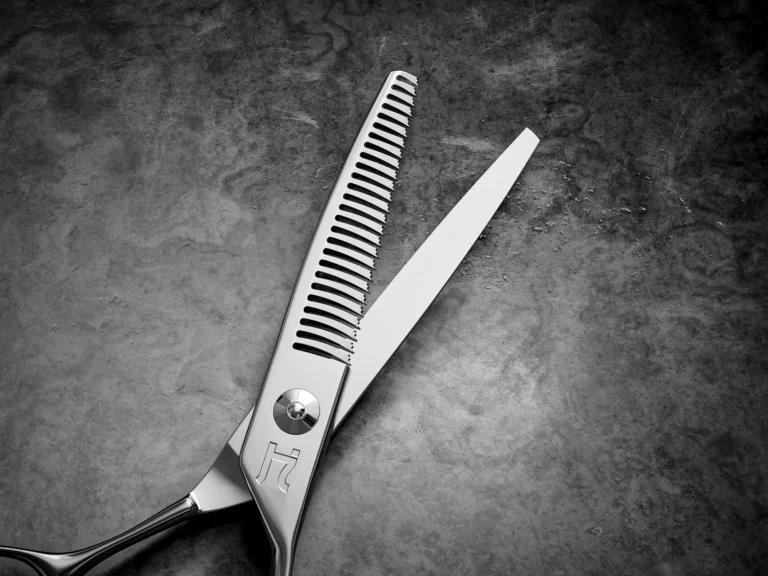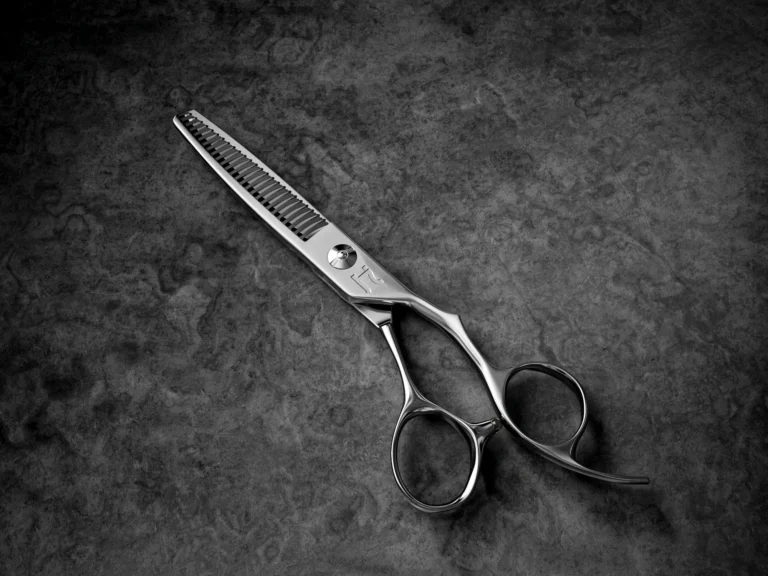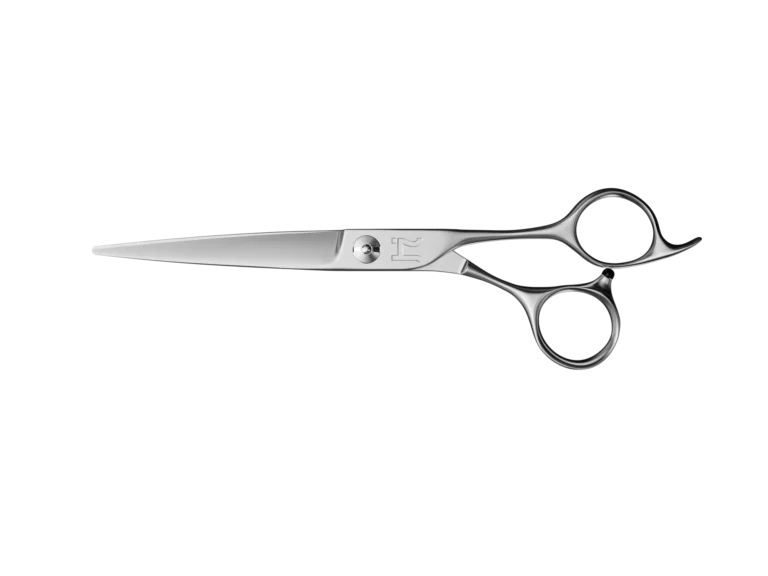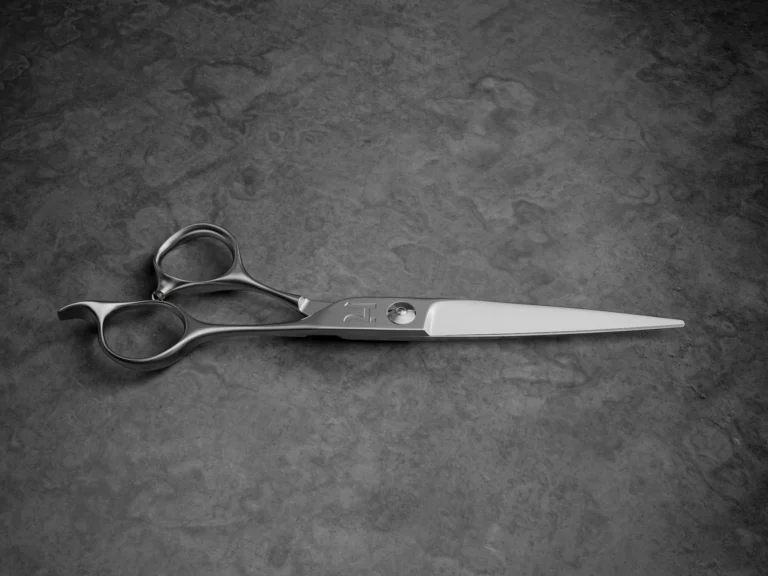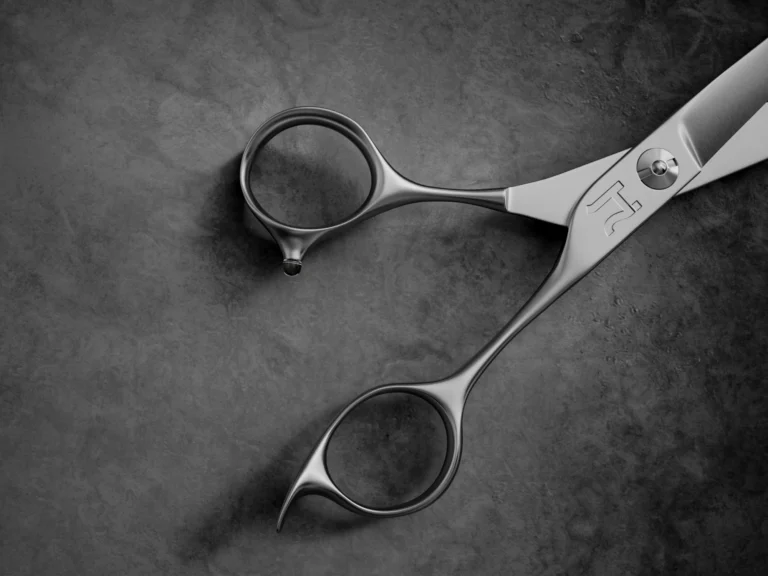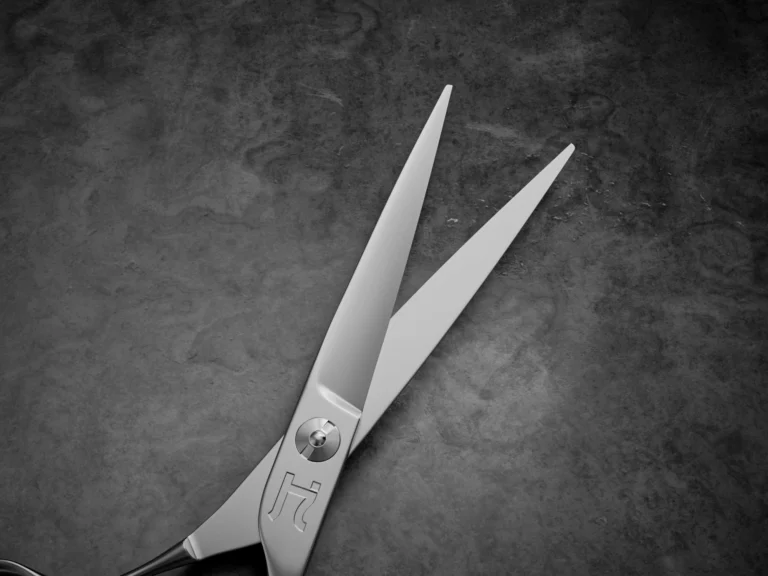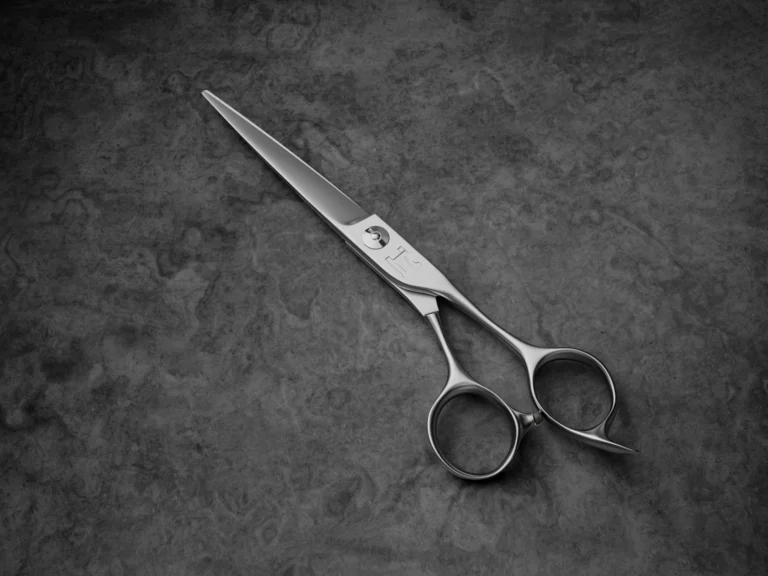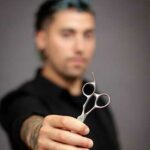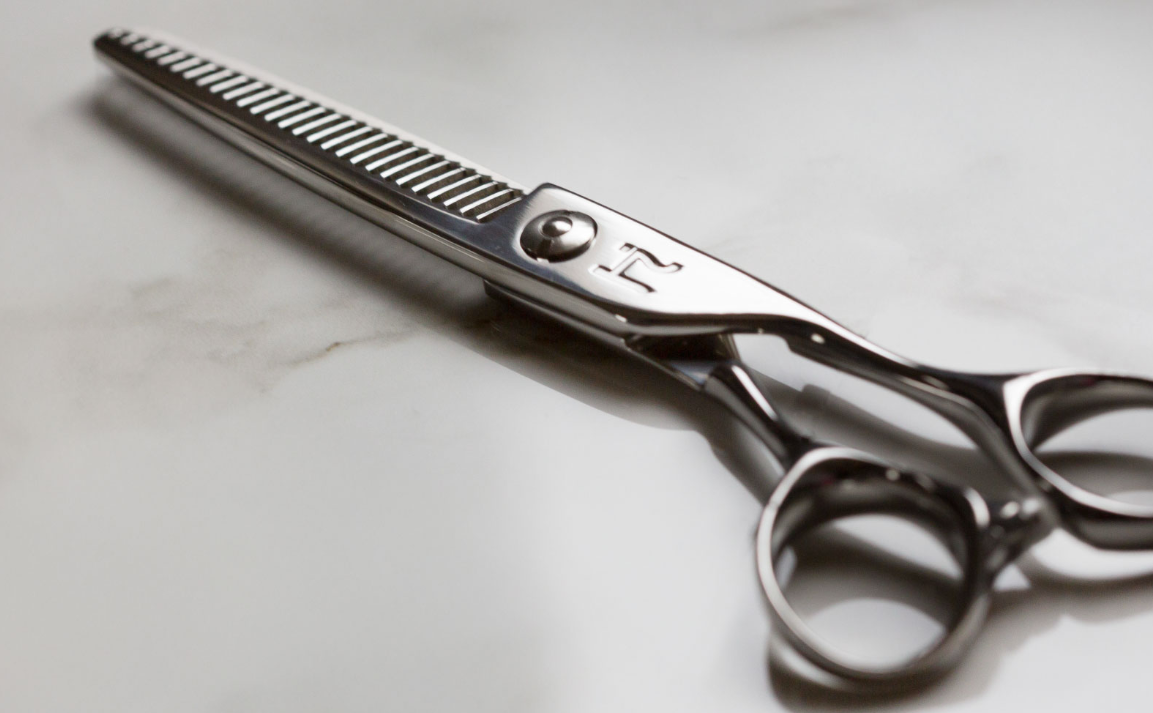
For stylists and barbers who regularly refine shapes on dry hair, the wrong professional dry cutting shears can turn a controlled technique into a fight against pushing, folding, and drag. Dry hair provides less support than wet hair and can be especially resistant when it is coarse, curly, dense, chemically treated, or carrying styling product. Hanzo offers high-carbon and nano powder steel shears with substantial blade construction and technique-specific geometry for clean, controlled dry work.
You already know why you cut hair dry. You can see its natural fall, movement, density, texture, and finished shape as you work. The more important buying question is which shear gives you the right blade thickness, radius, size, steel, and handle for your technique.
The best option depends on whether you primarily perform:
- All-around salon dry cutting
- Precision slide cutting and finishing
- Curly-hair shaping and carving
- Barbering and straight-line cutting
- Premium perimeter and bob work
- Left-handed dry cutting
Here is how the leading Hanzo options compare.
What Makes a Shear Good for Dry Cutting?
Dry hair can be more resistant than wet hair because the strands are not saturated, grouped, and supported by water. A dry cutting shear therefore needs enough blade authority to cut unsupported hair cleanly without pushing the section forward or folding strands between the blades.
High-Carbon Steel Supports a Strong Cutting Edge
Dry cutting creates considerable friction between the hair and the cutting edge. Coarse, curly, highly textured, and chemically treated hair can place even more demand on the blades.
Premium high-carbon Japanese stainless steel can support a hard, durable cutting edge suited to repeated dry work. The steel grade is not the only factor, however. Heat treatment, blade construction, edge geometry, tension, sharpening, and maintenance all influence the shear’s final performance.
A strong cutting edge matters during slide cutting, channel cutting, dry point cutting, and weight removal because it reduces the need to force the blades through resistant hair.
Thicker Blades Provide More Cutting Authority
A very thin precision blade may feel light and responsive, but it can lack the rigidity required for dense dry sections.
Many effective dry cutting hair shears use a thicker blade profile. The additional material helps reduce flex and gives the shear more authority as it closes through coarse or dense hair. Instead of allowing the section to push away from the cutting edge, the blade maintains contact and follows through more decisively.
This difference becomes obvious during a major transformation. Removing length from a large, dry section with a lightweight detail shear can feel slow and uncertain. A thicker high-carbon blade is generally better suited to the task.
Blade Radius Determines Movement or Line Precision
Not every dry haircut requires the same blade shape.
Some dry cutting shears use an exaggerated radius, meaning the cutting blade has a more pronounced curve. This geometry helps the shear peel, carve, and slide through hair rather than immediately creating a hard line.
An exaggerated radius is useful for:
- Channel cutting
- Dry slide cutting
- Face-framing
- Carving
- Curl-by-curl refinement
- Blending extensions
- Removing internal weight
Other dry cutting models use a reduced radius and a wider blade contact area. These shears minimize pushing and are better suited to straight lines, blunt cutting, scissor-over-comb, dense perimeters, and barbering.
The correct geometry depends on whether you want softness and movement or clean line precision.
Edge Type Is Only One Part of the Design
A convex cutting edge is not automatically good or bad for dry cutting. The entire shear design matters.
A thin, lightweight shear built primarily for delicate wet work may feel less effective on resistant dry sections, even if its edge is extremely sharp. In contrast, a shear that combines suitable steel, blade rigidity, cutting radius, correct tension, and dry-cutting geometry can move through dry hair with far greater control.
When comparing professional shears, do not judge the tool by sharpness or edge terminology alone. Choose a model whose complete blade design matches the dry cutting techniques you perform most often.
Best All-Around Dry Cutting Shear: HH6 Kime
The HH6 Kime is the strongest all-around recommendation for a salon stylist who performs significant dry work but does not want a shear limited to one technique.
Its premium high-carbon Japanese stainless steel and thicker blade profile give it the authority to move through thick, coarse dry hair. A slightly exaggerated radius supports peeling techniques such as channel cutting and slide cutting, while the tip still provides control for cleaner line work.
The HH6 is available in 5.0, 5.5, and 6.0-inch sizes.
Best for:
- Everyday salon dry cutting
- Channel cutting
- Slide cutting
- Coarse and dense hair
- Wet-and-dry versatility
- Stylists purchasing one primary cutting shear
Many stylists do not want to change tools every time they move from wet structure work to dry refinement. The Kime offers substantial dry-cutting performance while remaining useful during wet haircutting.
Choose the 5.0-inch model for compact control and detailed work. The 5.5-inch version offers a versatile middle ground, while the 6.0-inch shear provides greater coverage and reach through longer or denser sections.
Stylists who experience thumb, wrist, or shoulder strain can consider the HH6S Kime Swivel. It combines the Kime blade concept with an offset swivel thumb and is available in 5.5- and 6.0-inch sizes with single or double-swivel options.
Best for Dry Slide Cutting and Finishing: HHV Mamba
The HHV Mamba is for stylists who want the strength of high-carbon dry cutting steel with the maneuverable feel of a narrower precision blade.
It is a natural wet-and-dry hybrid. The slender blade is more agile than a wide dry cutter, making the Mamba especially effective for point cutting, controlled slide work, detailed finishing, and refining smaller areas around the face and perimeter.
Its shortened tang and slender design also make it easy to reposition during freestyle cutting.
The HHV is available in 4.5, 5.0, 5.5, 6.0, and 6.5-inch sizes.
Best for:
- Dry slide cutting with a precision feel
- Point cutting
- Detail finishing
- Face-framing
- Work around the ears and neckline
- Stylists moving between wet and dry techniques
The Mamba does not feel like an oversized power shear. It delivers a familiar precision profile while providing the high-carbon construction required for regular dry refinement.
Choose a shorter model for close-contact detail work. A longer size provides broader slide-cutting passes, greater reach, and more blade coverage through longer hair.
A true left-handed version, the HHVL Mamba, is also available.
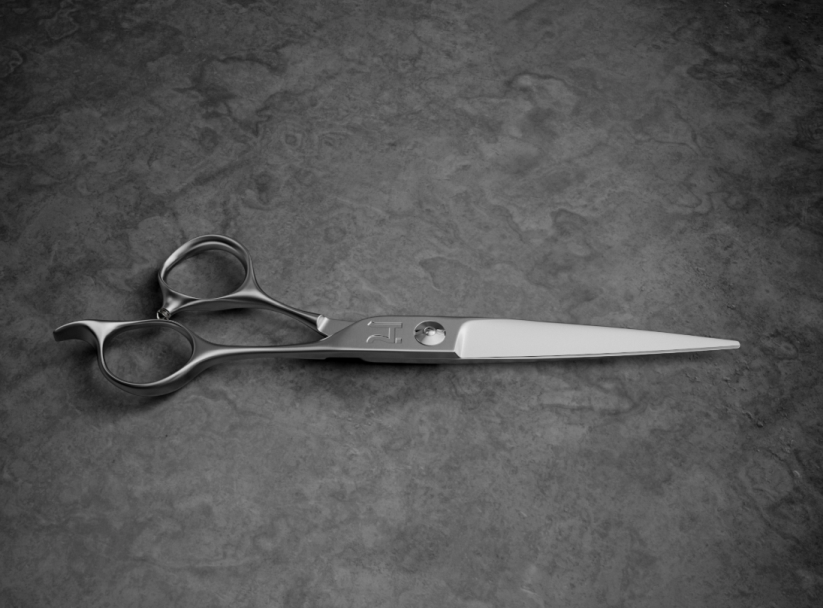
Best for Curly Hair and Dry Detail Work: HH1 Kamikaze
The HH1 Kamikaze is the technique-specific choice for stylists who want to create movement rather than rigid lines.
Its wide blade and exaggerated radius are designed for dry slide cutting. The curved profile helps the blades travel through coarse, dry hair while supporting carving, channel cutting, face-framing, layering, extension blending, point cutting, and detailed dry finishing.
It is particularly useful for curly hair because the curved blade can follow the curl pattern and support shape refinement without forcing every section into a straight cutting path.
The HH1 is available in 4.5, 5.5, 6.0, and 6.5-inch sizes.
Best for:
- Curly and highly textured hair
- Dry slide cutting
- Carving and channel cutting
- Face-framing
- Blending extensions
- Removing weight
- Creating movement within a shape
What the Kamikaze Is Not Designed to Do
The Kamikaze is not the first choice for creating a hard, perfectly straight perimeter. Its exaggerated radius is intended to produce flow, softness, and texture.
That distinction matters. A stylist who primarily cuts blunt bobs may prefer a straighter, line-focused blade. A curl specialist or dry-shaping stylist may find the Kamikaze’s movement-focused geometry indispensable.
The HH1 is also available as the HH1S Kamikaze Swivel, a 5.5-inch model offered with single- and double-swivel configurations. A true left-handed HH1L Kamikaze is also available.
Best Dry Cutting Shear for Barbers: HHCW Karu
The HHCW Karu is designed for barbers who need more line control than an exaggerated-radius slide cutter provides.
Unlike the Kamikaze, the Karu uses a reduced blade radius to minimize pushing and make straight-line cutting easier. Its wider blade increases blade contact, while the thicker profile and sword-like ridge provide the strength needed to work through dense hair.
Best for:
- Scissor-over-comb
- One-length cutting
- Blunt cutting
- Deep point cutting
- Large transformations
- Straight-line work on dense hair
- Barbers who prefer longer shears
The Karu is currently selectable in 6.5, 7.0, and 7.5-inch sizes. The 7.0 and 7.5-inch lengths are particularly good for barbering techniques.
Its handle also uses slightly smaller ring holes, which may reduce the need for additional finger sizers.
A barber working through a full day of dense, dry cuts needs a shear that closes decisively. Repeatedly chasing a section that pushes away slows the service and makes clean line work more difficult. The Karu’s reduced radius, wide blade contact, and high-carbon construction address that problem directly.
Choose the 6.5-inch version when you want greater maneuverability. The 7.0 and 7.5-inch versions provide more blade coverage and reach for scissor-over-comb and broad cutting sections.
Best Premium Dry Cutting Upgrade: HHP Pai Mei
The HHP Pai Mei is the premium choice for established stylists who prioritize steel strength, a sharp cutting angle, and straight-line precision.
It is constructed from condensed microparticles of nano powder steel. This high-strength material supports a sharper cutting angle and powerful performance through dense sections.
The Pai Mei combines a nearly flat thumb blade with a rounded spine and a curved cutting blade carrying an 800 mm radius. This geometry is designed to produce straight, controlled lines through substantial sections of hair.
It is available in 5.5, 6.0, and 6.5-inch sizes.
Best for:
- Precision dry perimeter work
- Bobs and one-length shapes
- Dense sections
- Straight-line cutting
- Established stylists seeking a premium upgrade
- Professionals who prioritize advanced steel construction
The Pai Mei is not a dedicated dry slide cutter in the same way as the Kamikaze. Its primary advantage in dry work is precision.
It is the premium upgrade for stylists whose dry cutting involves perfecting perimeters, correcting weight lines, creating clean bobs, and completing shapes that cannot tolerate pushing or repeated passes.
Left-Handed Options for Dry Cutting
Left-handed stylists should use a true left-handed shear rather than simply turning over a right-handed model. A true left-hand configuration reverses the blade orientation so that the natural pressure of the hand pushes the cutting edges together during closing.
HH6L Yumi
The HH6L Yumi is the true left-handed version of the HH6 Kime.
It uses premium high-carbon Japanese stainless steel, a thicker blade, and a slightly exaggerated radius for slide cutting, channel cutting, coarse hair, and general wet-and-dry work.
The Yumi is available in a 6.0-inch configuration.
Choose it for: Versatile left-handed dry cutting, channel cutting, coarse hair, and mixed salon work.
HHVL Mamba
The HHVL Mamba delivers the Mamba’s slender, maneuverable blade in a true left-handed configuration.
It is available in 5.5 and 6.0-inch sizes and combines high-carbon dry cutting steel with the blade profile of a narrow precision shear.
Choose it for: Left-handed point cutting, detailed finishing, precision work, and stylists who prefer a slimmer blade.
HH1L Kamikaze
The HH1L Kamikaze brings the Kamikaze’s wide blade and exaggerated dry-slide radius into a true left-handed configuration.
The current model is available in a 5.5-inch size.
Choose it for: Left-handed dry slide cutting, curly hair, carving, face-framing, channel cutting, extension blending, and texture-focused dry work.
Quick Decision Guide
| Dry Cutting Use Case | Recommended Shear | Why It Fits |
| All-around salon dry cutting | HH6 Kime | Thick high-carbon blade with a versatile radius |
| Precision dry slide cutting | HHV Mamba | Slender blade with high-carbon edge strength |
| Curly hair and textured movement | HH1 Kamikaze | Wide blade with an exaggerated dry-slide radius |
| Barber straight-line cutting | HHCW Karu | Reduced radius, wide blade contact, and longer sizes |
| Premium perimeter work | HHP Pai Mei | Nano powder steel and straight-line precision |
| Left-handed all-around cutting | HH6L Yumi | True left-handed Kime design |
| Left-handed precision work | HHVL Mamba | Slender wet-and-dry hybrid blade |
| Left-handed curly-hair work | HH1L Kamikaze | Curved geometry for movement and carving |
Frequently Asked Questions
What are the best professional hair cutting shears for dry hair?
The best shear depends on the technique. The HH6 Kime is the most versatile all-around option, the HHV Mamba is ideal for precision finishing, the HH1 Kamikaze excels at curly hair and carving, and the HHCW Karu is designed for barbering and straighter dry cutting.
The HHP Pai Mei is the premium option for stylists who prioritize dense-section performance and precise perimeter lines.
Dry cutting scissors are shears whose steel, blade thickness, rigidity, radius, and cutting geometry are suited to working on hair in its dry state. Some models are designed to slide and carve through the hair, while others prioritize straight lines and blunt cutting.
Are high-carbon dry cutting shears better for coarse hair?
High-carbon dry cutting shears can be a strong choice for coarse hair because they can support a durable cutting edge. A thicker, rigid blade can also provide the authority needed to cut resistant dry sections without excessive pushing or folding.
The steel must still be combined with suitable blade geometry, correct tension, professional sharpening, and regular maintenance.
Should dry cutting shears have curved blades?
Curved or exaggerated-radius blades are useful for slide cutting, carving, curl refinement, face-framing, and creating movement.
A reduced-radius or straighter blade is generally better for blunt lines, bobs, scissor-over-comb, and perimeter precision. Neither design is universally better. The right choice depends on the technique.
Find the Right Shear for Your Dry Cutting Technique
The best shear for dry work is not automatically the most expensive model or the one with the most aggressive curve. It is the shear whose steel, blade thickness, radius, size, and handle match the work you perform behind the chair.
Choose the HH6 Kime for versatile salon work, the HHV Mamba for precision, the HH1 Kamikaze for texture and curls, the HHCW Karu for barbering, or the HHP Pai Mei for premium line work.
Browse Hanzo’s full range of professional shears and use the blade type filter to view the high-carbon dry cutting lineup.