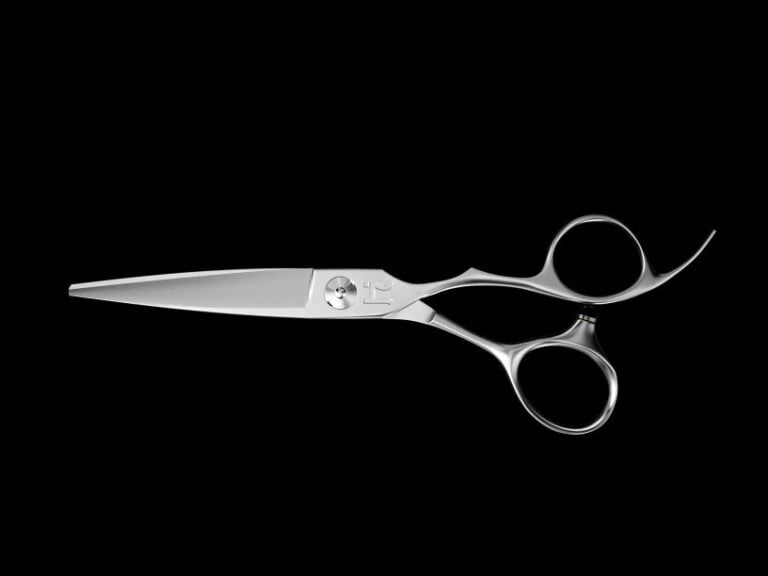
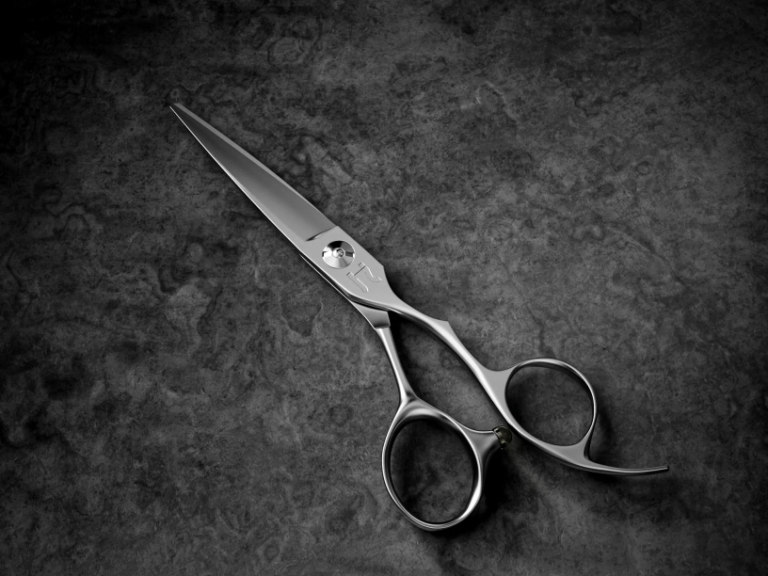
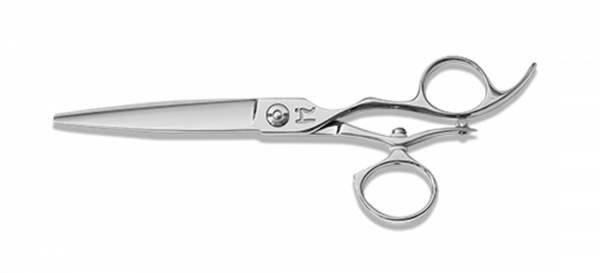
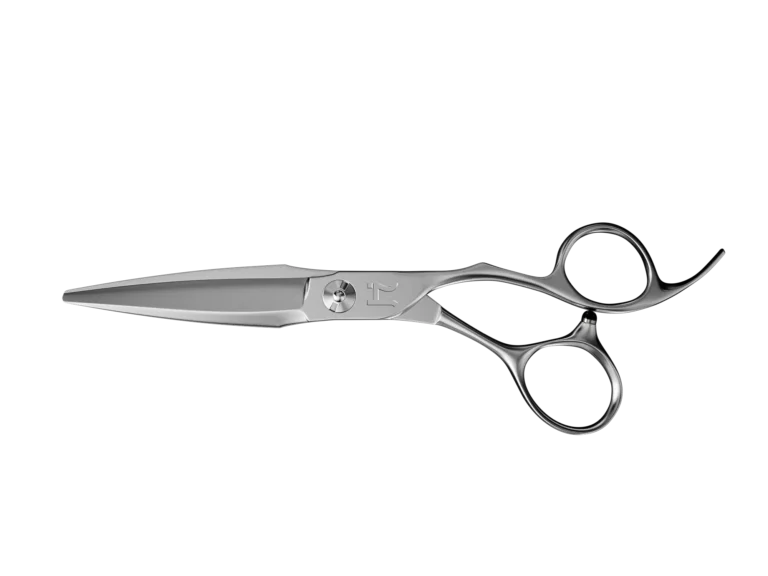
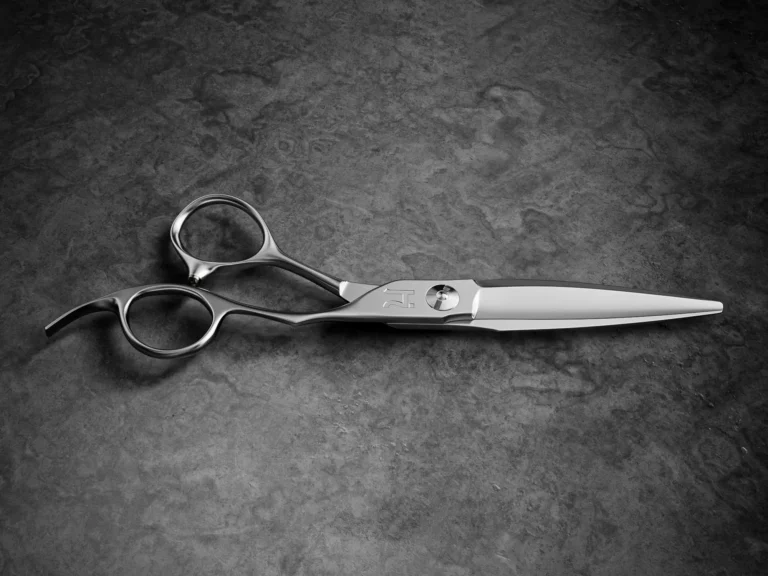
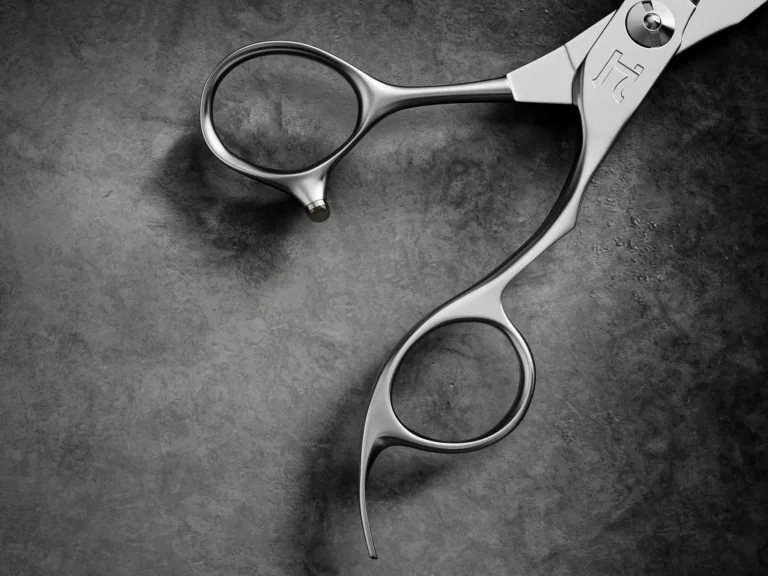
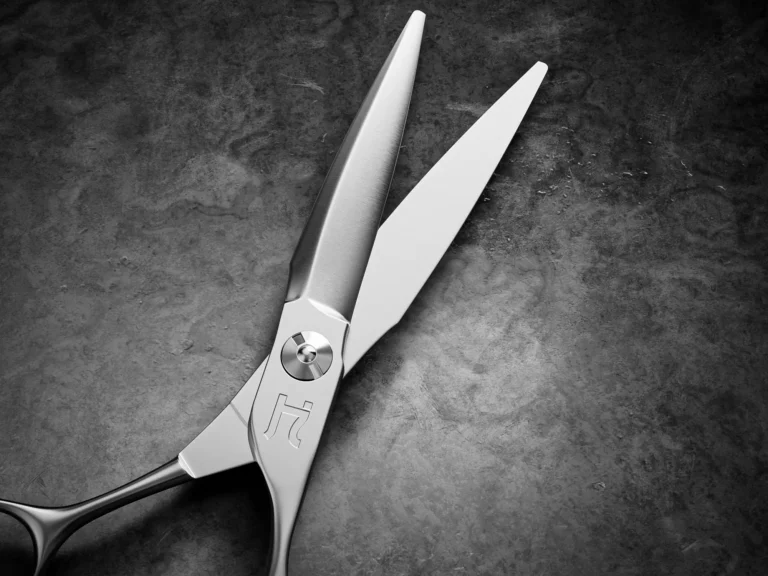
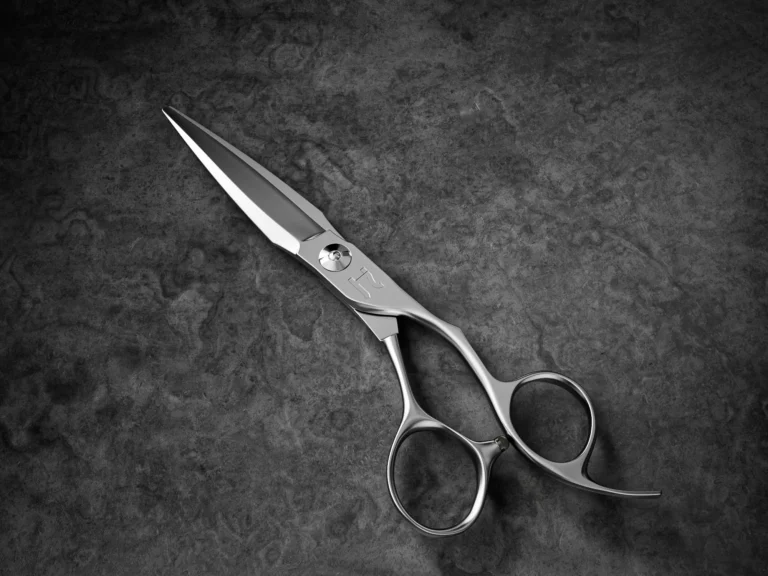
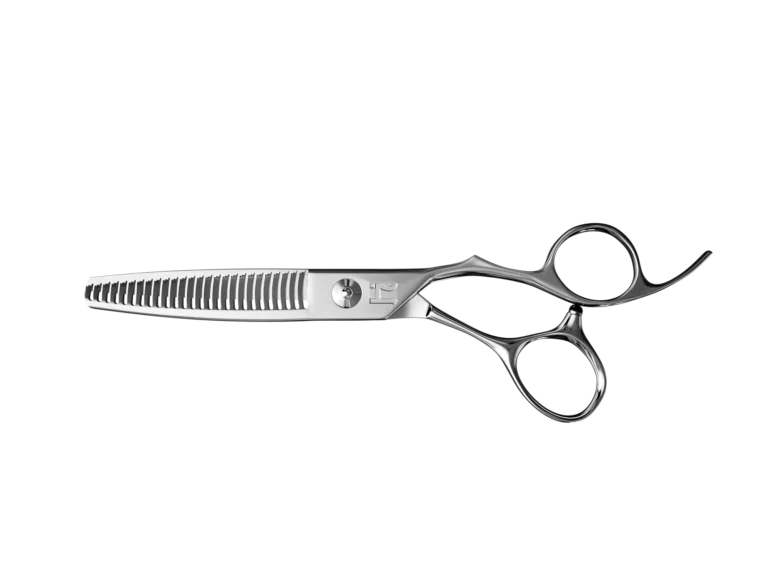
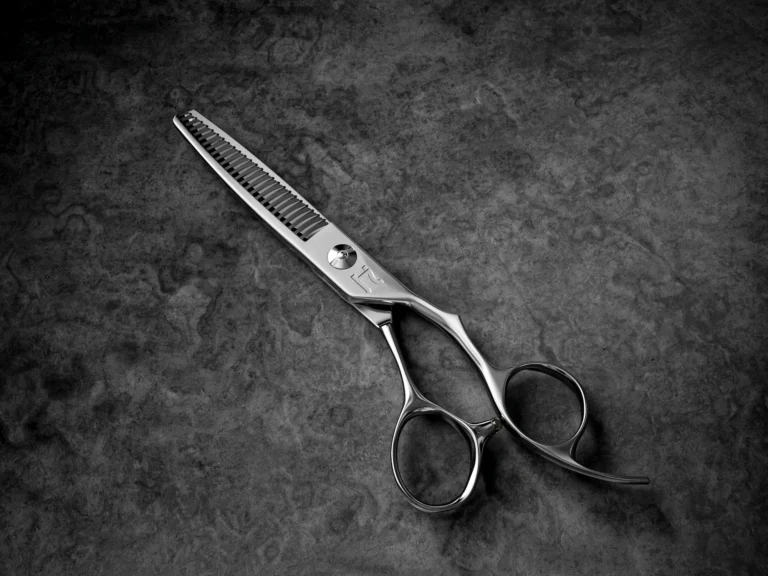
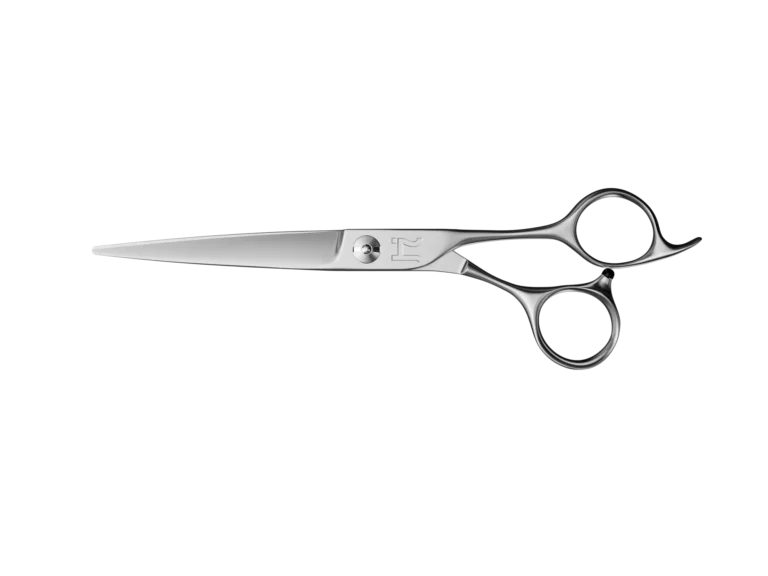
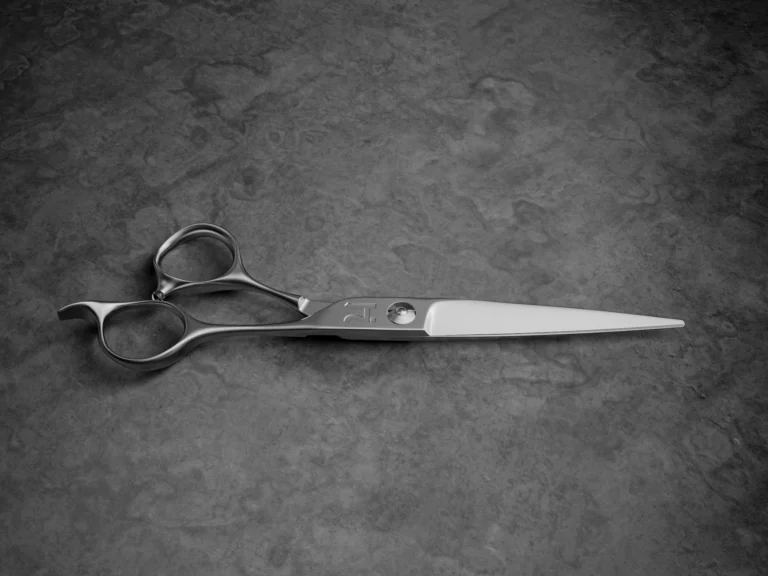
Clean scissors cut better, last longer and keep every client safe. Hair, styling product and moisture build up on the blades and around the pivot after every cut, and left alone they slow the blades down, dull the feel of the edge and can lead to staining or corrosion.
The short answer: to clean scissors, wipe away hair and product with a lint-free cloth, remove stubborn residue with a little isopropyl alcohol on the cloth, disinfect with an EPA-registered disinfectant as your state requires, dry the shear completely, then put one drop of shear oil at the pivot and wipe off the excess.
This guide covers each of those steps for professional hair shears, plus how to sanitize and sterilize scissors, how to oil and store them, and what never to use on a precision cutting tool.

What You Need to Clean Scissors
- A soft, lint-free cloth or chamois
- A small soft brush for the pivot area
- 70% isopropyl alcohol, for stubborn product residue
- An EPA-registered disinfectant spray or wipe approved for salon tools
- Shear oil or a manufacturer-approved lubricant
- Your shear’s tension key, such as the Hanzo premium tension key
- A padded shear case or pouch
How to Clean Scissors in 5 Steps
1. Remove Visible Hair and Product
After each client, wipe both sides of each blade with a clean, lint-free cloth, moving from the pivot toward the tip. Keep your fingers away from the cutting edge. A blade can look clean and still carry a thin film of hairspray, dry shampoo, pomade or cutting lotion, so give the shear a fuller wipe-down at the end of the day.
2. Clear the Pivot
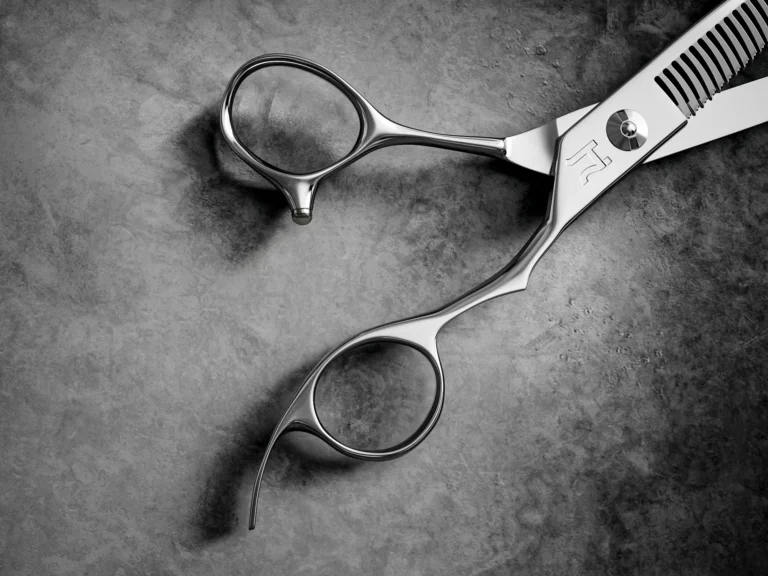
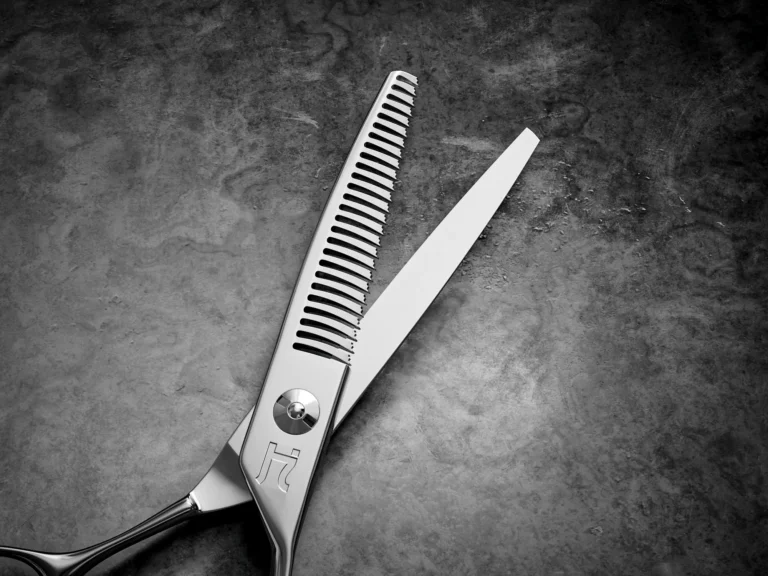
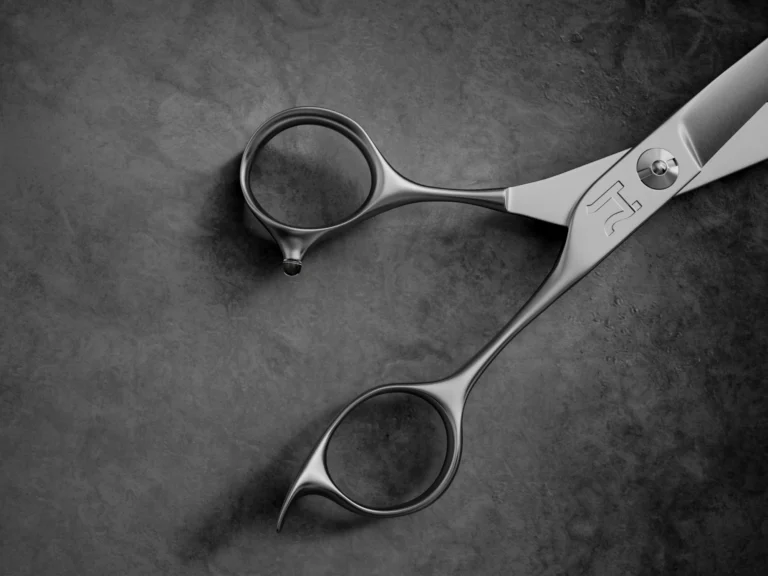
Open the shear and look around the tension screw, washer, bumper and inner blade faces. Fine hair collects here and mixes with product and oil into a sticky buildup. Loosen it with the corner of the cloth or a soft brush. Never push pins or other metal tools into the pivot, and do not take the shear apart for routine cleaning.
3. Dissolve Stubborn Residue
For product that will not wipe away, put a small amount of isopropyl alcohol on the cloth, not on the shear, and wipe the affected area. Dry it straight away. Alcohol is a residue remover here, not a replacement for the disinfectant your state requires.
4. Disinfect According to Your State’s Rules
Salon sanitation rules vary by state, so follow your cosmetology or barbering board and the disinfectant label. In general that means cleaning first, then applying an EPA-registered disinfectant at the right dilution and leaving it wet for the full contact time on the label. Never mix disinfectants or cleaning chemicals.
5. Dry the Shear Completely
Never let any liquid dry on a shear. Wipe the blades, handles, finger rest and bumper with a clean, dry cloth, paying close attention to the pivot. Open and close the blades slowly and check whether any moisture comes out of the joint. The shear must be fully dry before you oil or store it.
Sanitizing, Disinfecting and Sterilizing Scissors: What’s the Difference?
These words are often used as if they mean the same thing. They do not.
- Cleaning removes hair, product and visible debris. It always comes first, because disinfectants do not work properly on a dirty surface.
- Sanitizing reduces germs to a safer level. It is not enough on its own for salon tools.
- Disinfecting uses an EPA-registered chemical, applied as the label directs, to kill bacteria, viruses and fungi on a cleaned, non-porous surface. This is what most state boards require for shears between clients.
- Sterilizing destroys all microbial life, including spores. True sterilization needs equipment such as an autoclave and belongs in medical, dental and tattoo settings. It is not a routine step for hair shears.
How to Sterilize Scissors
For professional hair shears: in a salon or barbershop, “sterilizing” your shears in practice means cleaning them and then disinfecting them with an EPA-registered product exactly as the label directs. Do not boil or soak a precision shear. Water trapped in the pivot can cause corrosion, and heat and long soaks can damage bumpers, finishes and handle materials. Check with your shear’s manufacturer before using any heat-based method.
For household or craft scissors at home: wash the blades with warm, soapy water, rinse, then wipe them thoroughly with 70% isopropyl alcohol and let them air-dry fully. Boiling all-metal scissors disinfects them, but neither boiling nor alcohol reaches true sterilization, which needs an autoclave. For scissors used on wounds or medical dressings, use sterile single-use supplies or follow your healthcare provider’s instructions.
Are UV Sterilizers Enough?
No. A UV cabinet can keep clean, disinfected shears dry and protected, but many state boards do not accept UV light as a disinfection method. California’s board does not recognize UV sterilizer units as approved, Colorado states a UV light box is not acceptable for disinfection, and Georgia allows UV cabinets only for storing tools that have already been cleaned and disinfected. Some states do not allow UV boxes in salons at all. If you use one, treat it as storage, never as a substitute for disinfectant. See the California Board of Barbering and Cosmetology bulletin for an example of how boards treat UV units.
How to Oil Hair Shears
The pivot is the main friction point on a shear. A small amount of the right oil keeps the blades opening and closing smoothly and helps prevent rust and stiffness.
- Clean and dry first. Never oil over hair, product, disinfectant residue or moisture, or you will trap it in the joint.
- Open the shear to about 45 degrees. Apply one or two drops of shear oil where the blades meet near the tension screw.
- Work it in. Open and close the blades slowly several times.
- Wipe off the excess. Too much oil makes the handles slippery, which makes a drop more likely, and can transfer onto a client’s hair.
How often: with heavy daily use, oil the pivot at the end of each working day. With lighter use, oil at least weekly, after any deep clean, and before storing a shear for a long period. A dry, noisy or rough-feeling pivot is your signal.
What to use: a dedicated shear oil or the lubricant your shear’s manufacturer approves. Do not use cooking oil, hair oil, motor oil, thick grease or general household lubricants. WD-40 is a water-displacing multipurpose product, not a routine shear oil. There is no need to oil the bumper. If it is cracked, loose or missing, have it replaced.
How to Store Scissors
Many shears are damaged when they are not being used. A shear dropped loose into a drawer or kit bag can strike clippers, combs or razors and pick up a nick in the edge or a bent tip.
- Store each shear in its own padded case, pouch or tool roll, and keep that case clean.
- Close the blades gently before putting the shear away. Do not snap them shut.
- Keep the case away from damp towels, shampoo bowls, chemical spills, humidity and heat.
- Do not leave your main shears loose on the station between clients.
- Before long-term storage, clean, disinfect, dry and oil the shear, then wipe off the excess oil.
Check the Tension After Cleaning
Cleaning and oiling can change how the blades feel, so check the tension before you start cutting. Hold the shear upright, open it fully and let the blade fall closed. It should stop roughly halfway. If it closes completely, the tension is too loose. If it barely moves, it is too tight. Make small adjustments with your tension key, and never tighten the screw just because the shear is not cutting well. For a full walkthrough, see how to adjust tension on professional shears.
What Not to Use on Your Scissors
- Paint thinner, acetone or other harsh solvents. They can damage finishes, washers and handle materials.
- Bleach and aggressive household cleaners. Use only products your state allows for salon tools, as the label directs.
- Abrasive sponges, scouring pads or steel wool. They scratch the blade and can damage the edge.
- Fragranced or lotion-based wipes. They leave another layer of residue behind.
- Home sharpeners, sharpening stones or rotary tools. They are not designed for hair shear geometry and can ruin a convex edge in seconds.
When Your Scissors Need Professional Sharpening
Cleaning and oiling keep a shear working smoothly, but they cannot restore a worn edge. If your shear pushes or folds hair, catches at one point, needs more pressure to close, or still feels rough after cleaning, oiling and a tension check, it is time for service. Send it in after a drop or an accidental cut through foil too.
Hair shear edges should only be sharpened by a technician who understands their edge angle, blade curve and alignment. Hanzo’s StaySharp sharpening program takes any make or model, subject to the shear’s condition, and you can read more about how often professional shears should be sharpened and where to get your shears sharpened.
How to Clean Scissors FAQs
How do you clean scissors?
Wipe off visible hair and product with a lint-free cloth, clear the pivot with a soft brush, use a little isopropyl alcohol on the cloth for stubborn residue, disinfect with an EPA-registered product as your state requires, dry completely, and finish with a drop of shear oil at the pivot.
How do you sterilize scissors at home?
Wash them in warm, soapy water, rinse, wipe thoroughly with 70% isopropyl alcohol and let them air-dry. That disinfects household scissors well. True sterilization needs an autoclave. Professional hair shears should be cleaned and then disinfected with an EPA-registered product, not boiled or soaked.
Can you clean scissors with rubbing alcohol?
Yes. Isopropyl alcohol on a cloth removes stubborn styling-product residue. For salon tools it does not replace the EPA-registered disinfectant your state board requires.
Can you boil scissors to sterilize them?
Boiling disinfects all-metal household scissors but does not truly sterilize them. Do not boil professional hair shears: heat and trapped water can damage the pivot, bumper and finish.
Can you use WD-40 on hair shears?
Not as a routine lubricant. Use a dedicated shear oil or one your shear’s manufacturer approves.
How often should you oil hair shears?
At the end of each working day with heavy use, and at least weekly with lighter use. Always oil after a deep clean and before long-term storage.
Does a UV sterilizer clean scissors?
No. A UV cabinet does not clean, and many state boards do not accept UV as disinfection. Use it only to store shears that have already been cleaned and disinfected, where your state allows it.
Keep Your Shears Cutting Like New
A few minutes of cleaning, drying and oiling after every working day protects the tool you rely on most. If you own a pair of Hanzos, see our care guide for Hattori Hanzo shears for tension checks and warranty details, or browse the full range of professional shears.