For hairstylists and barbers who spend full days cutting behind the chair, the wrong handle design can turn small, repetitive movements into thumb tension, wrist discomfort, or shoulder fatigue. The challenge is that terms such as offset, opposing, crane, and swivel are often used without explaining what they physically mean. Understanding these differences can help you choose haircutting shears that support your natural cutting posture rather than forcing your hand and arm to compensate.
The most important distinction is simple: handle style controls where your thumb sits in relation to your fingers. That position affects how far your thumb reaches, how much your forearm rotates, and how high your elbow rises while you cut.
What Handle Design Actually Controls
The handle of a shear is more than a place to put your fingers. Its geometry determines the resting position of your hand before the blades even begin to move.
When the thumb ring sits directly across from the finger ring, your thumb must reach farther away from your palm. When the thumb ring moves forward or downward, your hand can remain closer to a neutral, relaxed position.
That change can affect three key areas:
- Thumb: How far it must extend to open and close the blades
- Wrist and forearm: How much they must rotate or bend
- Elbow and shoulder: How high the arm must rise to maintain the cutting angle
This is why two shears with similar blades can feel completely different after several hours of work. When comparing professional shears, the handle should be evaluated as carefully as the blade length, steel, and cutting edge.
Opposing Handle: The Traditional Position
An opposing handle, also called a straight or even handle, places the finger ring and thumb ring directly across from each other. The two sides look relatively symmetrical when the shear is closed.
In plain English, your thumb sits farther back and more in line with your ring finger.
What does an opposing handle do to your body?
Because the thumb ring is farther from the natural resting position of the thumb, the thumb generally has to extend more during the opening motion. Depending on the technique and the stylist’s anatomy, that position may also encourage greater forearm rotation or a higher elbow.
Picture yourself cutting a horizontal perimeter. With an opposing handle, you may find yourself lifting the elbow to keep the blades level while the thumb reaches backward to control the moving blade.
That does not mean an opposing handle is automatically uncomfortable. Some professionals trained on this design and have used it successfully for years. Familiarity, hand size, mobility, technique, and shear fit all influence how the handle feels.
Who may prefer opposing handle shears?
Opposing handle shears may suit:
- Stylists and barbers who learned with a traditional straight handle
- Professionals who experience no strain with their existing posture
- Detail cutters who like a firm, familiar hand position
- Barbers who regularly rotate or reverse their shears for specific techniques
The traditional alignment can provide a structured feeling in the hand. However, it may require more active positioning from the thumb, wrist, elbow, and shoulder than a deeper offset design.
Many modern Hanzo cutting shears are available with offset or offset-swivel configurations designed to support a more relaxed hand position because many working professionals prefer a more relaxed thumb and arm position.
Offset Handle: The Most Common Professional Standard
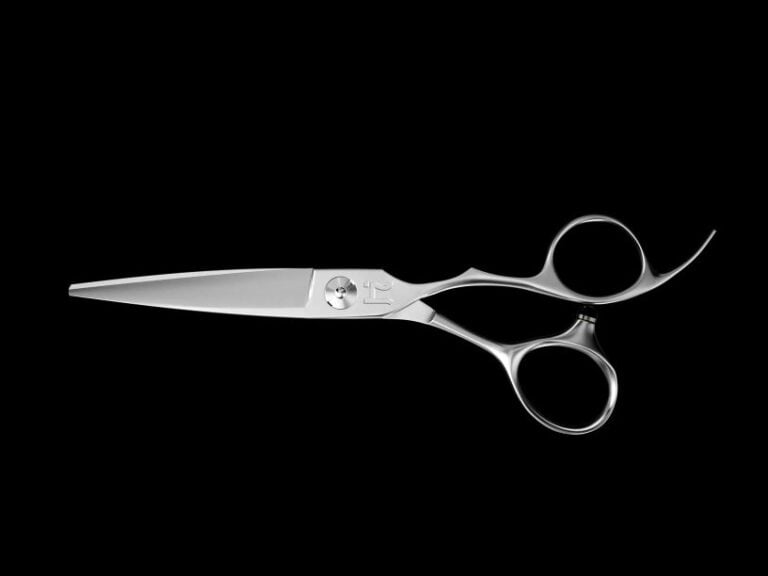
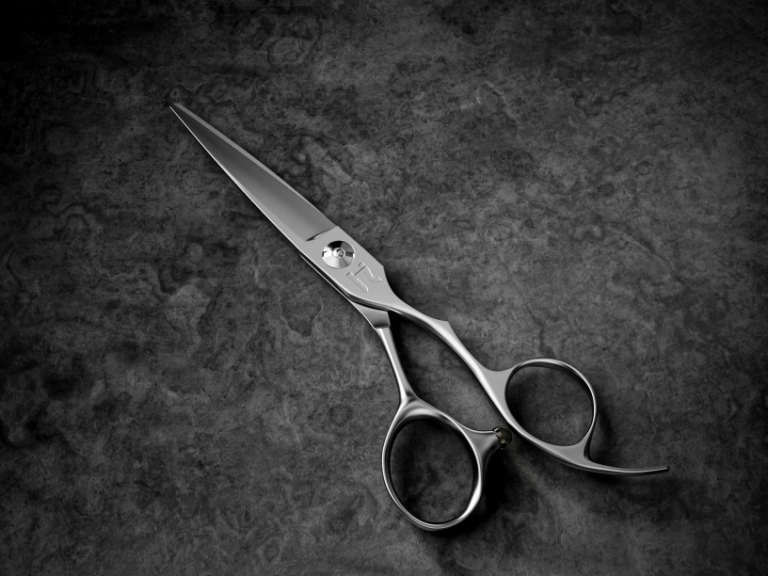
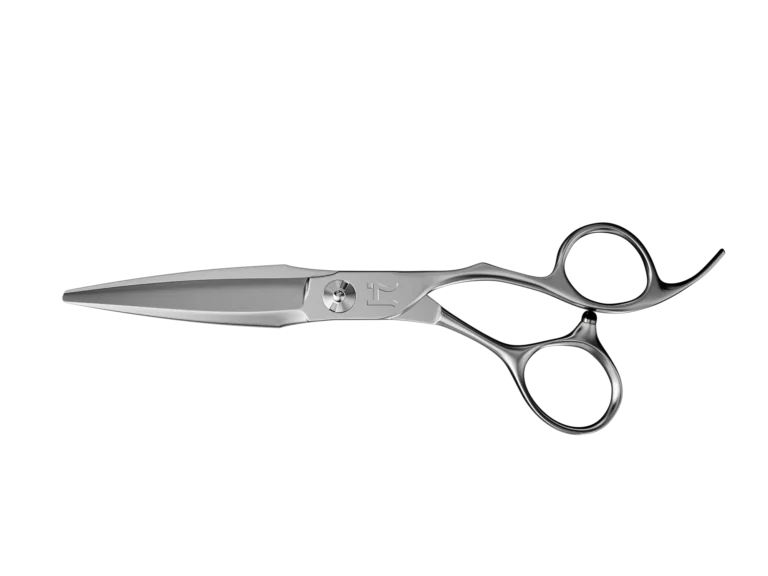
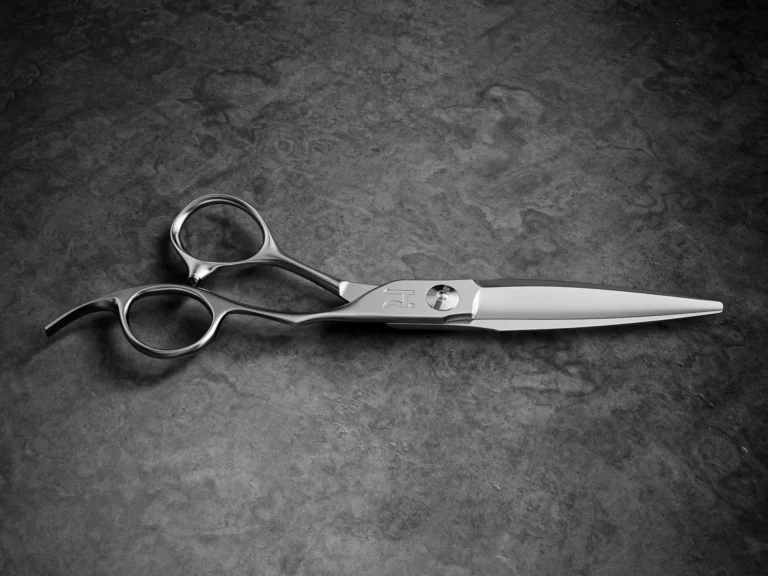
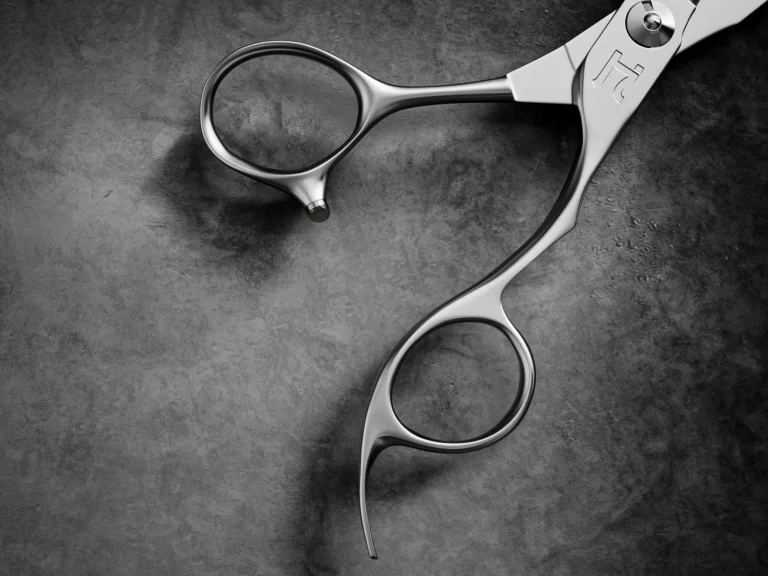
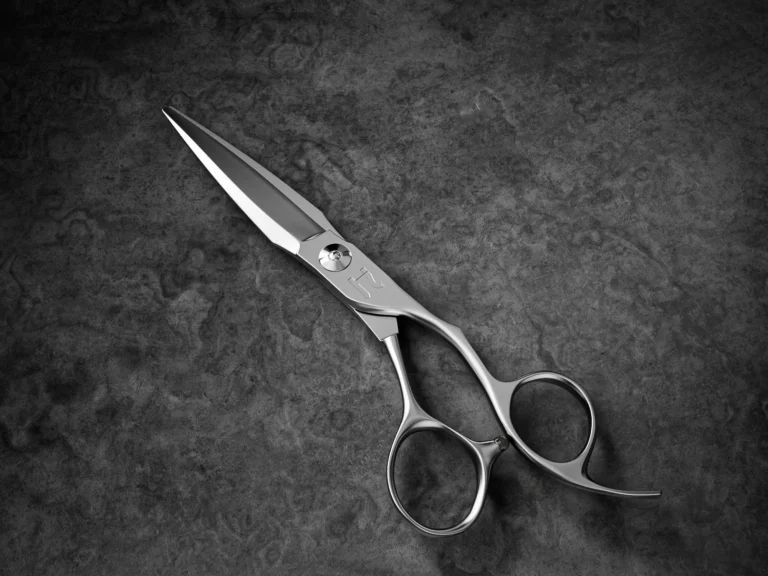
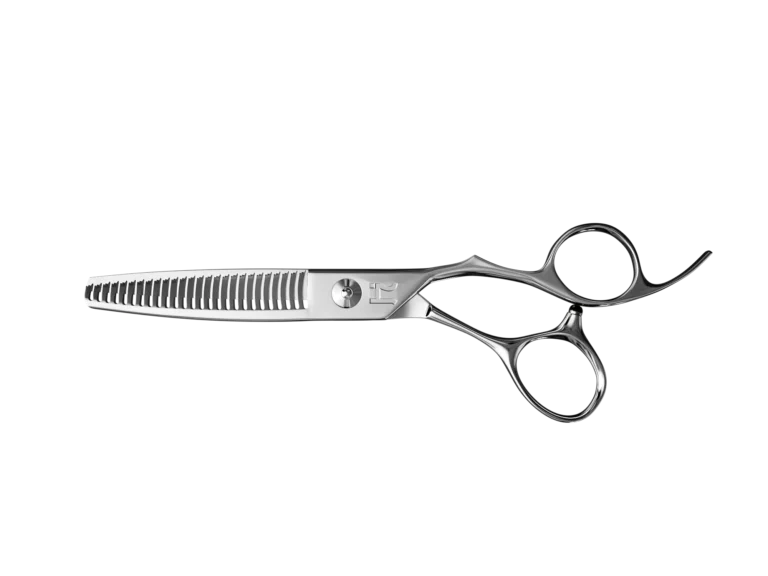
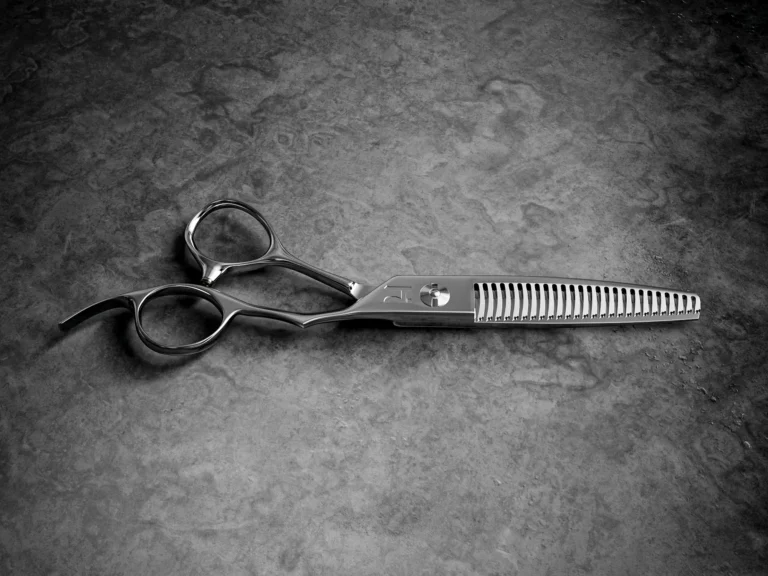
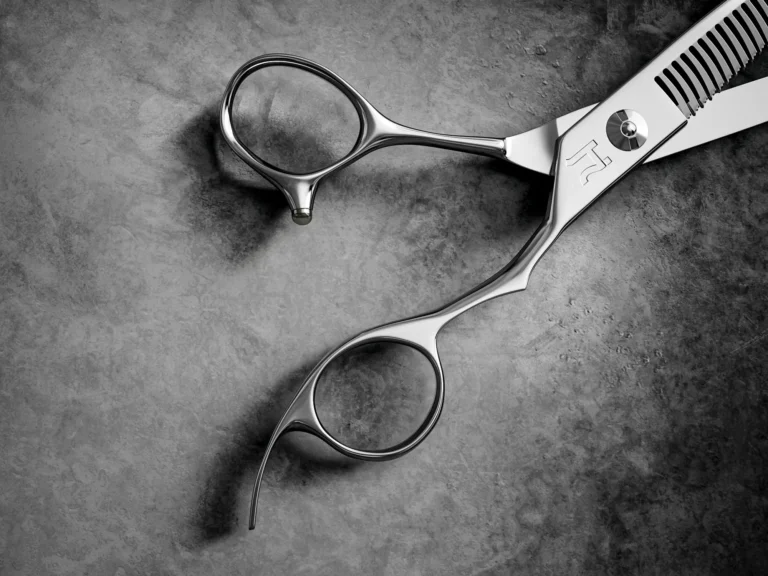
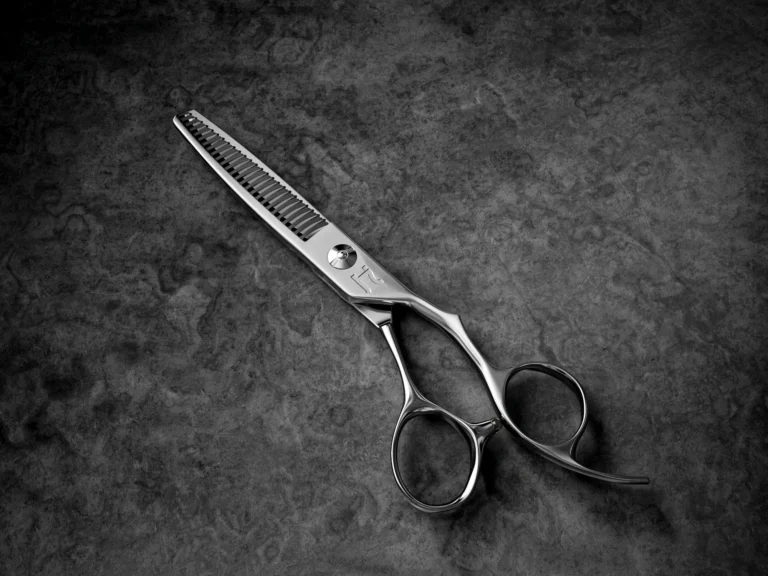
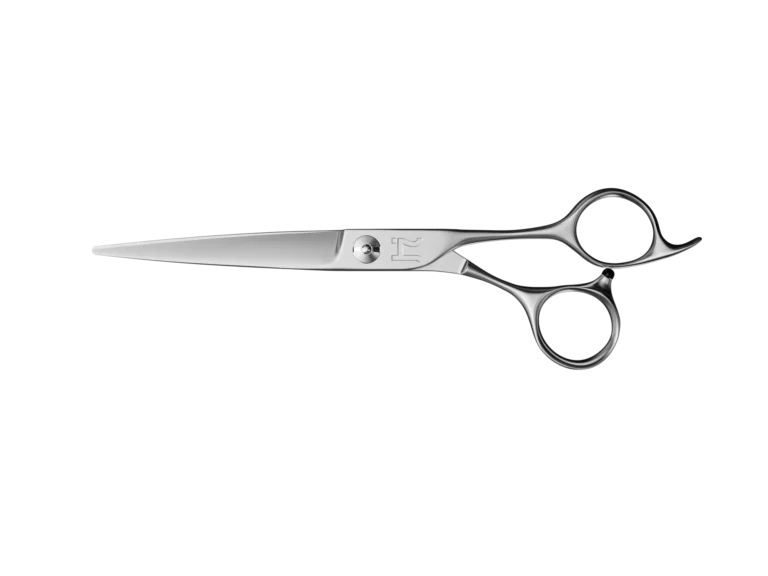
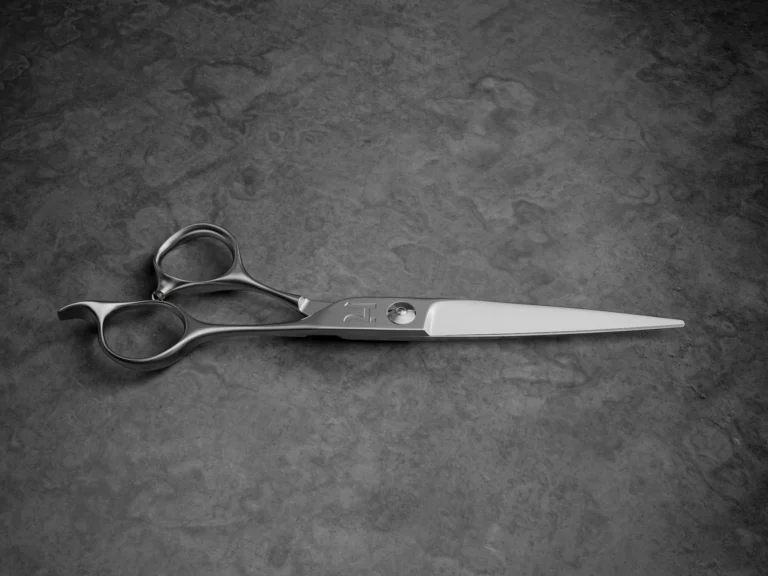
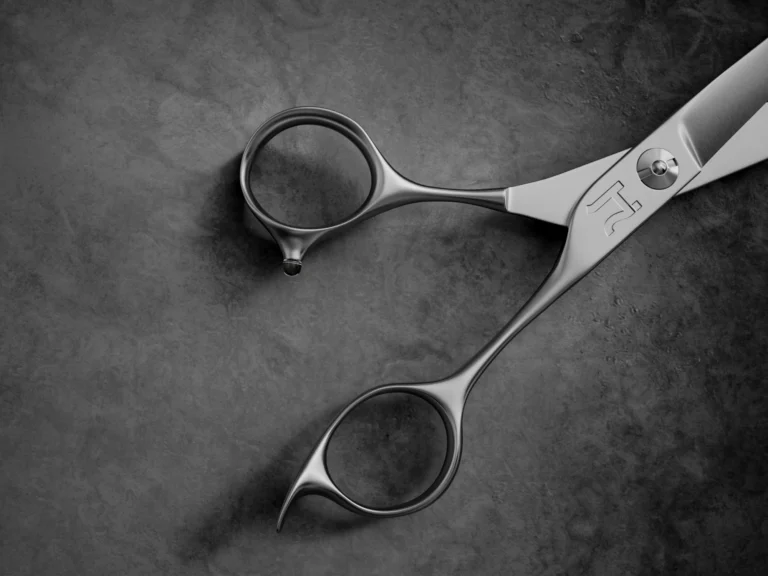
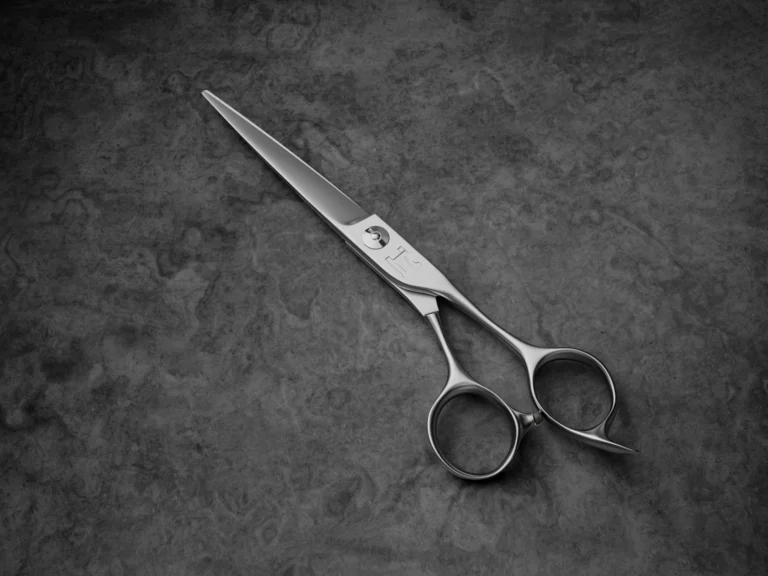
An offset handle moves the thumb ring forward and usually slightly lower than the finger ring. The two rings are no longer positioned directly across from each other.
The simplest way to visualize it is this: the thumb side of the handle is shorter and angled toward the front of the shear.
This brings the thumb closer to its natural resting position against the hand. The thumb does not have to reach as far backward to enter the ring or travel as far during the cutting motion.
How does an offset handle affect cutting posture?
A properly fitted offset handle can help:
- Reduce excessive thumb extension
- Keep the wrist closer to a neutral position
- Decrease unnecessary forearm rotation
- Allow the elbow to remain lower during many cutting techniques
- Reduce the effort required to maintain the shear’s position
Ergonomic research on hair-cutting scissors has found that redesigned scissors can reduce wrist bending and reported shoulder and wrist discomfort compared with traditional designs. However, no handle can eliminate injury risk on its own. Technique, fit, work volume, posture, breaks, and individual anatomy still matter.
Offset handle shears have become a common professional standard because they improve the resting position of the hand without feeling radically different from a traditional handle. For many stylists, the transition is immediate. Others may need a few cutting sessions to adjust their thumb movement and grip pressure.
What does a 20-degree offset mean?
A 20-degree offset means that the thumb portion of the handle is angled forward from the traditional opposing position. On Hanzo product pages, “20-degree offset” identifies the angle of the handle configuration. It refers to the handle design, not the blade edge or sharpness.
The HH8 Talon uses a 20-degree offset handle. Its forward thumb position is designed to provide a more ergonomic grip while retaining the controlled feel many professionals expect from a fixed-thumb shear.
The HH6 Kime also uses a brushed 20-degree offset handle. Its handle combines an ergonomic shape with an offset thumb intended to improve comfort and control during wet and dry cutting.
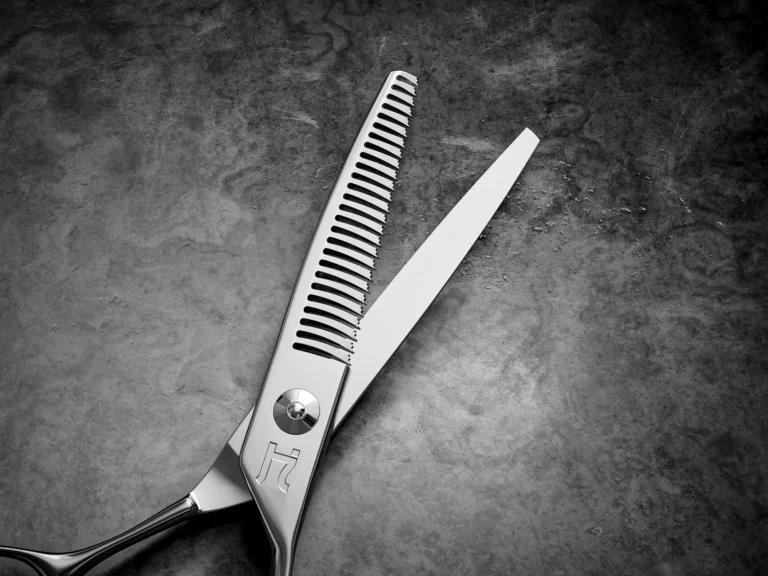
These are examples of how an offset can be applied to different blade profiles and cutting purposes. The handle style does not dictate whether a shear is intended for wet cutting, dry cutting, detailing, or broader section work.
Who should consider offset handle shears?
Offset handles are a strong starting point for most professionals, particularly:
- Stylists cutting several clients per day
- Barbers who want a lower, more relaxed elbow position
- Professionals transitioning from traditional straight handles
- Cutters who feel thumb tension after long appointments
- Anyone who wants improved ergonomics without adopting a swivel thumb
For many hands, offset shears offer the best balance between familiar control and reduced positional strain.
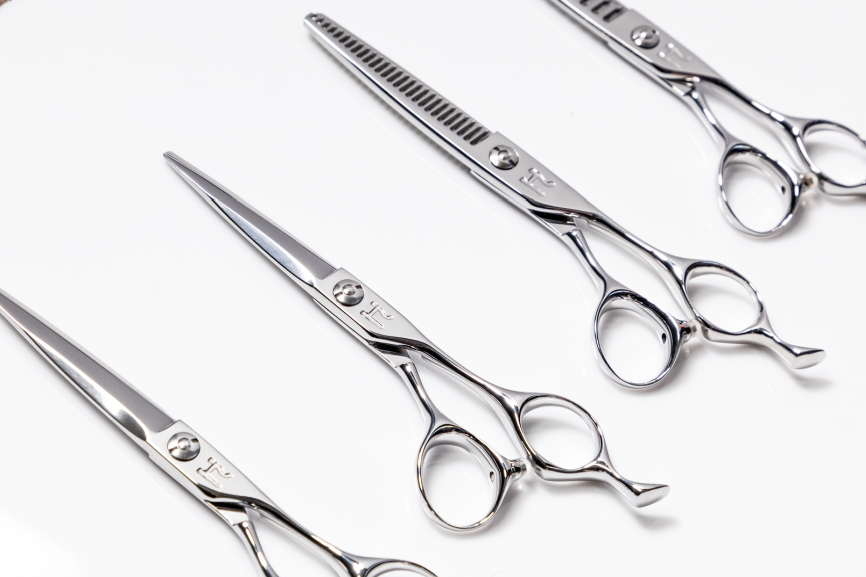
Crane Handle: Designed for a Lower Elbow Position
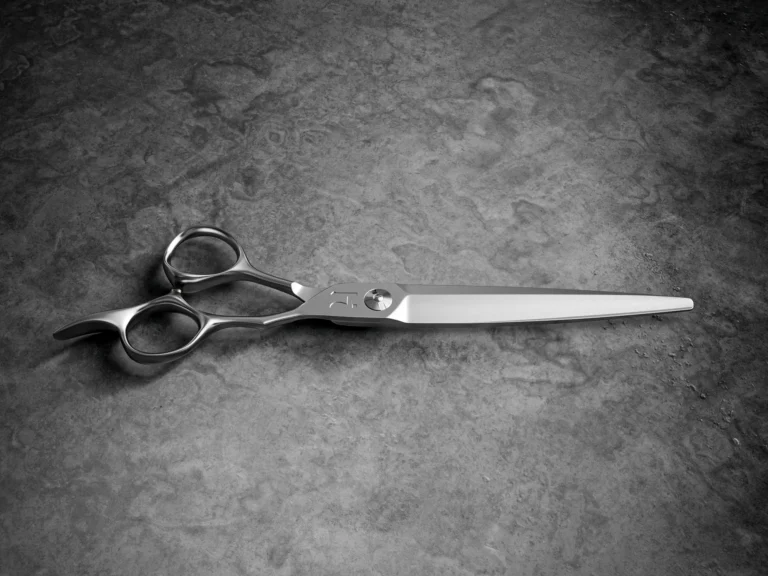
A crane handle takes the offset concept further. The thumb ring sits noticeably lower and farther forward than it does on a standard offset handle.
When the shear is held horizontally, the handle may angle downward while the blades remain level. That dropped handle position is what gives the design its “crane” name.
Some manufacturers use the terms deep offset, drop handle, and crane handle somewhat differently, so the physical shape matters more than the label. Look at how far the thumb ring drops below and moves forward from the finger ring.
How does a crane handle affect the shoulder?
The deeper drop can allow the elbow to remain closer to the body while the blades stay in the required cutting position. Lowering the elbow reduces the amount of time the shoulder must remain elevated during certain techniques.
That can be valuable during:
- Horizontal perimeter cutting
- Repetitive scissor-over-comb work
- Long precision-cutting appointments
- Full salon or barbershop shifts
- Techniques performed with the arm away from the torso
Imagine finishing a fully booked Saturday. With a traditional handle, you may unconsciously keep your elbow lifted through hundreds of repeated openings and closings. A crane handle changes the relationship between the hand and blades so the arm may not need to work as hard to maintain the same cutting line.
Is there a tradeoff with crane handles?
A deeper offset can feel less structured to professionals accustomed to opposing handles. Some cutters initially feel that the thumb has more freedom but less rigid feedback from the handle.
That is not necessarily a loss of control. It is often a change in how control is produced. Instead of gripping or bracing heavily through the thumb, the stylist may need to rely more on relaxed finger placement, proper tension, and controlled thumb movement.
Crane handle shears may be particularly useful for:
- Stylists who experience shoulder fatigue during cutting
- Barbers who prefer to work with their elbow close to the body
- Professionals who cut through long, fully booked shifts
- Cutters focused on long-term physical sustainability
- Anyone whose current shear repeatedly forces the shoulder upward
The deepest offset is not automatically the best choice for every person. Your preferred techniques, hand size, range of motion, and existing habits should guide the decision.
Offset vs Opposing Handle Shears: Quick Comparison
| Feature | Opposing Handle | Offset Handle | Crane Handle |
| Ring position | Thumb and finger rings sit across from each other | Thumb ring sits forward and slightly lower | Thumb ring drops substantially lower and farther forward |
| Thumb movement | Usually requires more extension | Requires less extension | Encourages a relaxed, lower thumb position |
| Elbow position | May encourage a higher elbow | Often allows the elbow to drop | Designed to support a distinctly lower elbow |
| Forearm rotation | May require more rotation | Usually reduces unnecessary rotation | Can further reduce arm repositioning |
| Learning curve | Familiar to traditionally trained cutters | Usually easy to adapt to | May require more adjustment |
| Best suited to | Traditional techniques and familiar control | Everyday professional cutting | Professionals seeking greater shoulder relief |
How to Tell Which Handle You Need
You do not need specialized equipment to evaluate your current handle. Start by paying attention to what your body does while you cut.
- Relax your shoulder before raising the shear
Hold your current shear as though you are about to cut a horizontal section. Relax your neck and shoulder.
Ask yourself:
- Does your elbow immediately rise?
- Does your shoulder move toward your ear?
- Can you keep the blades level without holding the arm in a tense position?
Some elbow elevation is unavoidable during haircutting. The goal is not to keep your arm pinned to your side during every technique. The question is whether the handle creates more elevation than the task actually requires.
2. Check how far your thumb has to reach
Place only the tip or first section of your thumb inside the thumb ring. Avoid pushing the thumb deeply through it.
Open and close the shear slowly. Your thumb should be able to control the blade without stretching, gripping, or pulling backward.
A strained feeling at the base of the thumb can indicate:
- The handle is too large
- The thumb hole is too loose
- Your thumb sits too deeply in the ring
- The opposing position requires excessive extension
- You are using more grip pressure than necessary
An offset handle may shorten that reach and bring the moving blade closer to the thumb’s natural path.
3. Watch your wrist from the side
Your wrist should remain reasonably aligned with the forearm rather than repeatedly bending sharply up, down, or sideways.
Do not judge the handle from one cutting position alone. Test it during:
- Horizontal cutting
- Vertical cutting
- Point cutting
- Scissor-over-comb
- Cutting around the ear
- Working at the back of the head
A handle that feels comfortable in one position may expose a limitation in another.
4. Notice when fatigue appears
Pay attention to how your body feels at the beginning and end of a busy day.
Recurring fatigue in the thumb, wrist, forearm, shoulder, or upper back should not be dismissed simply because it has become familiar. The body can adapt to an inefficient tool position, but adaptation does not necessarily mean the position is ideal.
Changing handles may help, but persistent pain, weakness, tingling, or numbness deserves assessment by a qualified healthcare professional.
5. Test the shear using your real techniques
A handle cannot be judged properly by opening and closing it twice at a counter. Use it through the motions you perform every day.
Hanzo’s 15-day professional trial gives licensed cosmetologists and barbers an opportunity to evaluate a shear before committing to a purchase. The most ergonomic design is the one that fits your hand and supports your working posture across a real schedule.
Can the Handle Type Combine With a Swivel Thumb?
Yes. Handle angle and thumb movement are separate ergonomic features.
Offset, opposing, and crane describe where the thumb ring is positioned relative to the finger ring. Fixed and swivel describe whether that thumb ring remains stationary or rotates as the shear moves.
A shear can therefore have:
- An offset handle with a fixed thumb
- An offset handle with a swivel thumb
- A deeper offset or crane-style handle with a swivel thumb
- A single-swivel or double-swivel mechanism
The HH3 Ayako combines an ergonomic handle with either a single- or double-swivel thumb. The rotating ring gives the thumb greater independence, allowing the wrist and arm to remain straighter through a wider range of cutting positions.
The HH6S Kime Swivel applies a swivel mechanism to the Kime platform, giving professionals another option when they want both an ergonomic handle position and increased thumb mobility.
For a closer look at the rotating thumb mechanism itself, read our guide to swivel vs straight handle shears.
Are Offset Scissors Better Than Straight Shears?
Offset scissors are better for many professionals because the forward thumb position can reduce thumb reach, forearm rotation, and unnecessary elbow elevation. However, they are not universally better for every hand or technique.
A stylist who works comfortably with opposing handles may value their familiar, structured feel. Another professional may immediately notice that an offset or crane design allows the shoulder to relax.
The right choice depends on:
- Your hand and finger size
- Your thumb mobility
- Your dominant cutting techniques
- The height of your cutting position
- Your daily workload
- Any existing areas of fatigue
- How deeply you place your fingers in the rings
Handle design should support your technique, not force your body to work around the tool.
Find a Handle That Works With Your Body
A shear is used thousands of times across a working week. Small differences in thumb reach, wrist alignment, and elbow height can become meaningful over years behind the chair.
Opposing handles offer traditional positioning and familiar control. Offset handles bring the thumb forward for a more relaxed everyday grip. Crane handles deepen that offset to help the elbow and shoulder remain lower during demanding cutting schedules.
Browse Hanzo’s full range of professional shears and filter by handle style to find the right ergonomic fit.