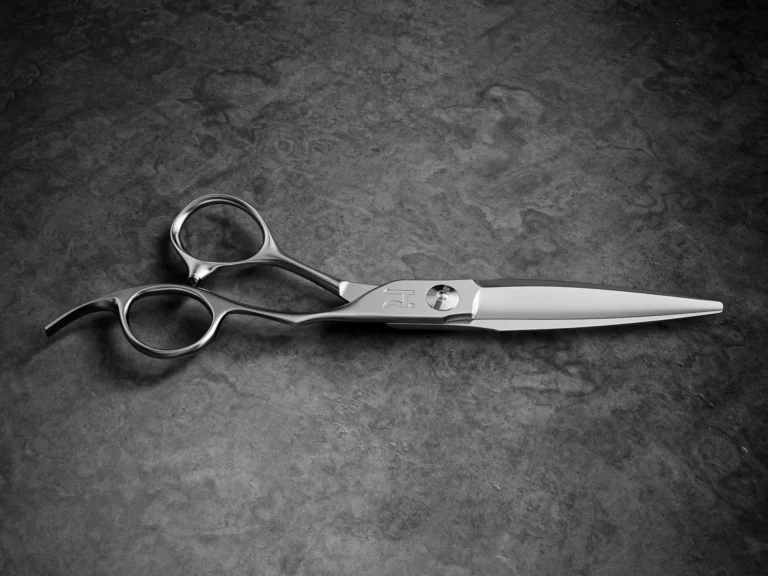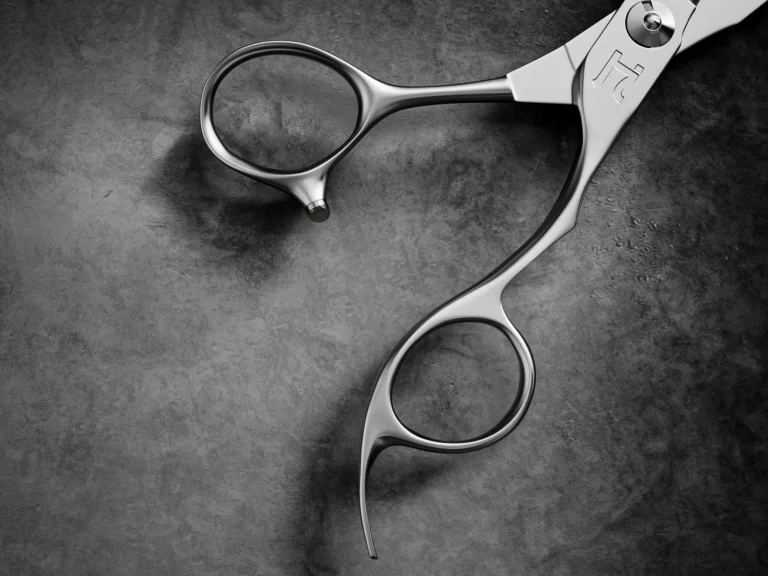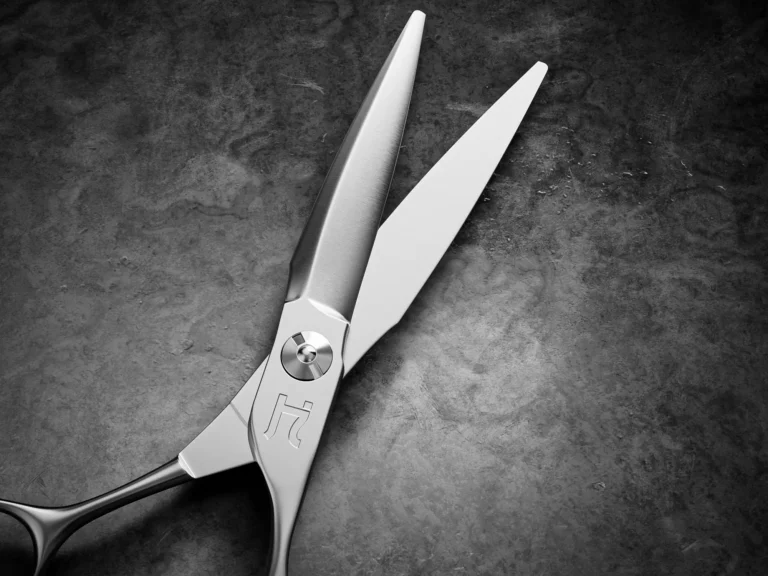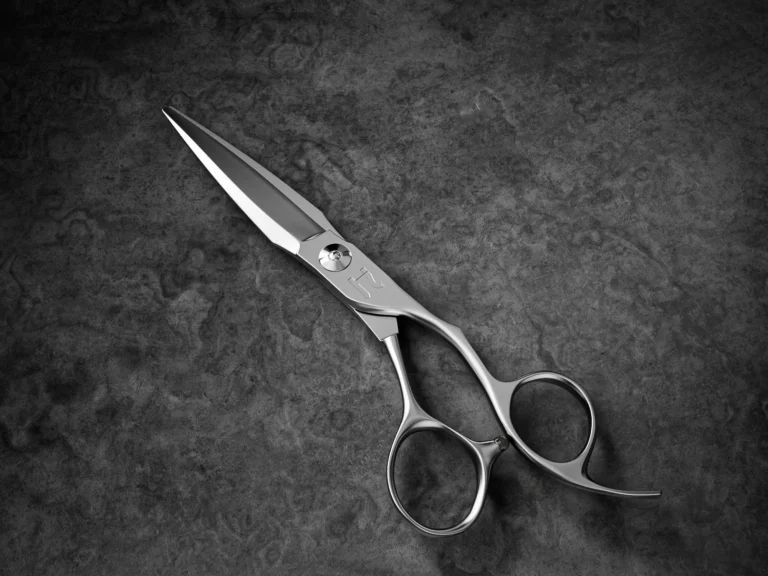
For stylists and barbers choosing their first haircutting shears, or wondering whether their current pair really fits, sizing can feel more confusing than it should. A shear that is too short may limit your reach, while one that is too long can feel difficult to control around the ears, neckline, and face. The right fit depends on your hand, but it also depends on what you cut and how you cut it. This guide gives you a practical starting measurement and shows you how to match shear length to your everyday technique.
The Palm Measurement Method: Start Here
Use this quick palm test to estimate a comfortable shear size:
- Place the closed shear against your open cutting hand.
- Position the finger ring near the base of your ring finger.
- Lay the blade along your palm and middle finger.
- Check where the blade tip lands.
- The tip should generally reach the upper section of your middle finger without extending far beyond it.
If the blade extends noticeably beyond your middle finger, try a shorter shear. If it falls well below the upper joint, try a longer one.
Some sizing methods use the upper joint as the reference point, while others compare the blade with the full length of the middle finger. That variation is exactly why the palm method should be treated as a starting point, not a rigid rule.
After estimating your size, compare different lengths within Hanzo’s collection of professional shears. Your primary cutting techniques should determine the final choice.
Quick Answer
A 5.5″ or 6.0″ shear is a versatile starting point for many stylists. Choose a shorter shear for detailed cutting and precise tip control. Choose a longer shear for scissor-over-comb, blending, bulk removal, and working across wider sections.
Hand size narrows your options. Technique makes the final decision.
How Is Shear Size Measured?
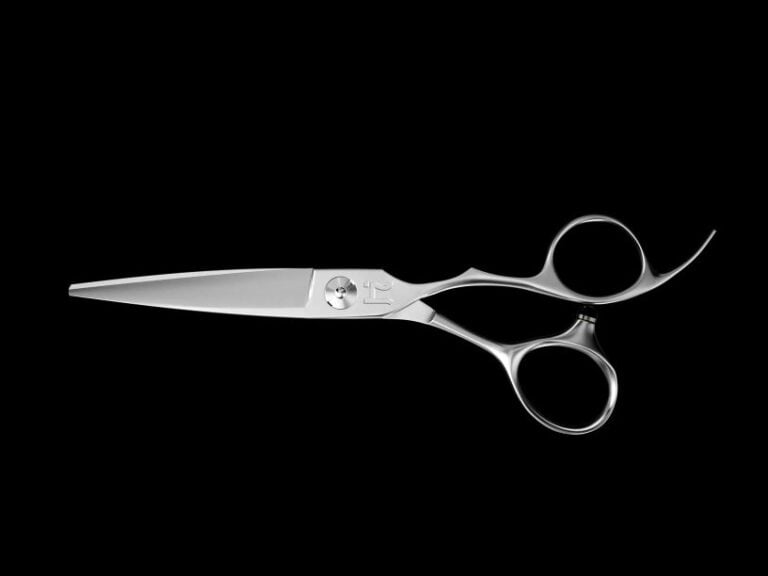
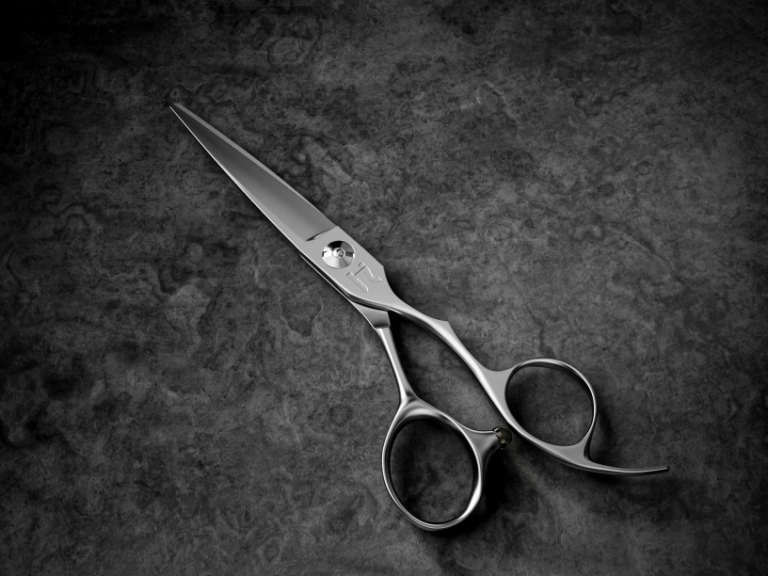
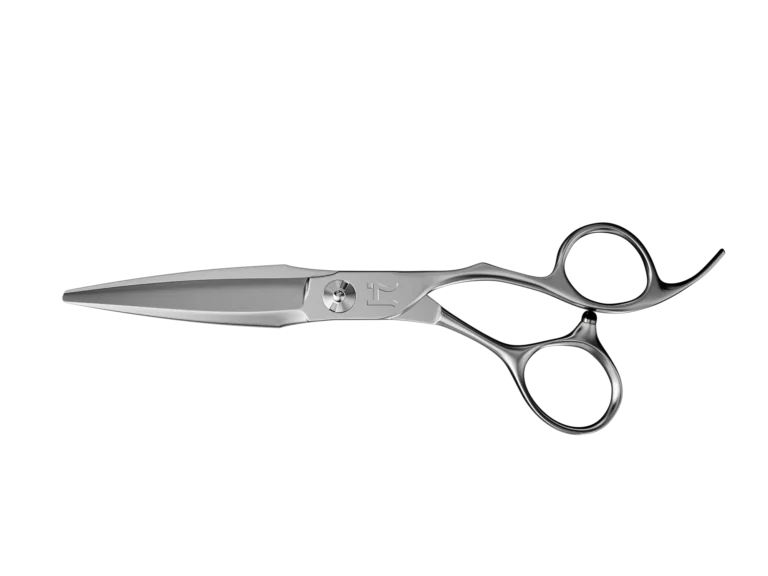
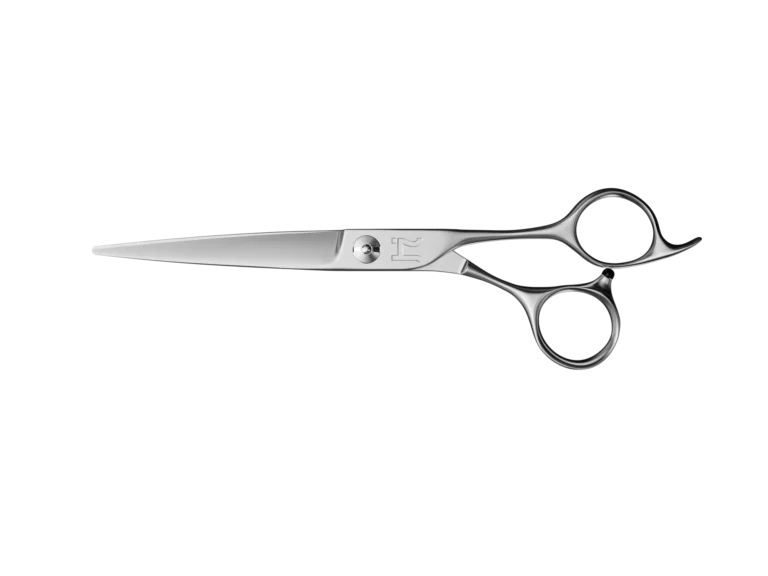
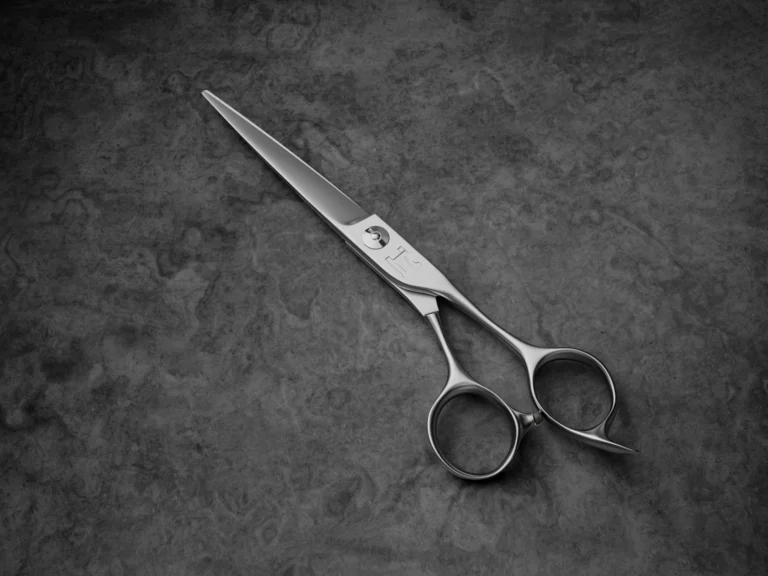
A shear’s advertised size generally refers to its overall length, measured from the blade tip to the end of the longest finger ring. The removable finger rest, also called the tang, is normally excluded.
The cutting blade itself is measured from the pivot screw to the tip.
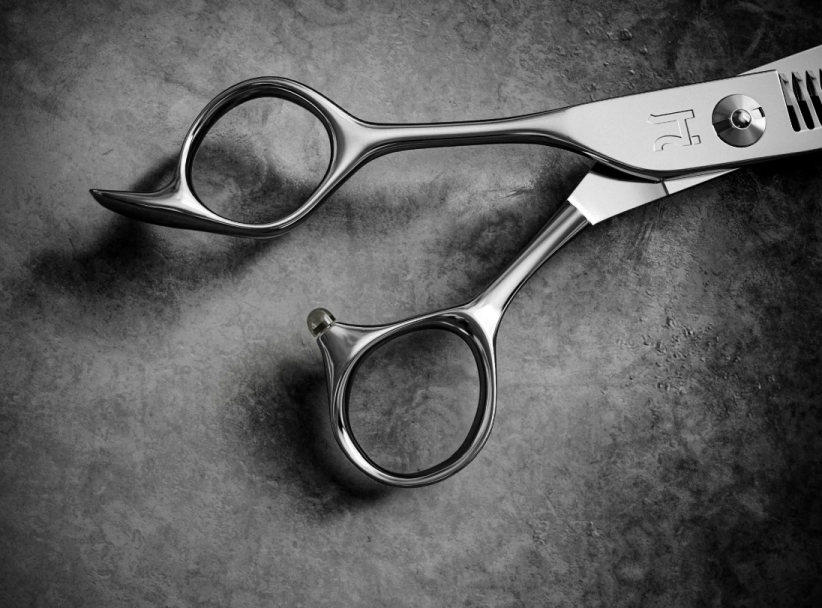
This distinction matters because two shears with the same listed size may have different usable blade lengths. Handle shape, finger-ring position, offset, blade-to-handle ratio, and overall balance can all change how large or compact a shear feels.
Use the listed size to narrow your choices, but do not rely on the number alone. A shear also needs to feel balanced and controlled when it is moving in your hand.
Hair Shear Length Guide: What Each Size Is Used For
The following shear size chart provides a practical overview of how common lengths are used.
4.5″ Shears
Ultra-compact 4.5″ shears are precision tools suited to intricate detail work, tight areas around the ears and neckline, and professionals with very small hands.
They offer excellent tip control but may feel limiting when cutting broad sections or performing extensive scissor-over-comb work.
5.0″ Shears
A 5.0″ shear works well for:
- Fine detail work
- Precision around the ears and face
- Close-contact cutting
- Small hands
- Short, controlled point cutting
This length gives you strong tip awareness but covers less hair with each closing motion.
5.5″ Shears
A 5.5″ shear is a versatile option for many salon professionals. It provides enough length for everyday cutting without feeling oversized during detail work.
It is commonly suited to:
- Layering
- Point cutting
- Face framing
- Graduation
- General wet cutting
- Everyday salon services
Many stylists begin with this size because it offers a manageable balance of reach and control.
6.0″ Shears
A 6.0″ shear provides more blade coverage while remaining controllable for mixed salon and barbering work.
It is useful for:
- General layering
- Cutting moderately large sections
- Light scissor-over-comb
- Men’s and women’s cutting
- Blunt perimeter work
- Mixed wet and dry services
The difference between a 5.5″ and 6.0″ shear may look minor, but the additional half-inch can make broader cutting passes more efficient.
6.5″ to 7.0″ Shears
Shears in the 6.5″ to 7.0″ range are frequently selected for:
- Scissor-over-comb
- Longer men’s cuts
- Wide blending passes
- Cutting thick or dense sections
- Establishing strong perimeter lines
- Professionals who prefer greater reach
The added length can increase coverage, but only when you can open and close the shear comfortably without losing control.
7.5″ Shears
A 7.5″ shear is a specialist tool for broad cutting, extended reach, large sections, and advanced barbering techniques.
It can make scissor-over-comb more efficient because the blade covers more of the comb. However, it is rarely the best first or only shear for a stylist who performs a large amount of close detail work.
8.0″ Shears
An 8.0″ shear provides extra reach for wide scissor-over-comb sections, long cutting lines, deep point cutting, bulk removal, and advanced barbering work.
At this length, control and technique matter considerably. The extra blade coverage does not automatically make a cutter faster.
8.5″ Shears
An 8.5″ shear is a maximum-length specialist option for broad cutting passes, large sections, extended reach, and experienced professionals who deliberately prefer substantial blade coverage.
This size should be selected according to technique rather than hand size alone.
Why Cutting Technique Matters as Much as Hand Size
Hand size helps determine what you can operate comfortably. Your technique determines which blade length will be useful.
A stylist with medium-sized hands who performs scissor-over-comb throughout the day may prefer a 6.5″ shear. That same stylist may choose a 5.5″ shear when creating detailed face framing, refining a neckline, or working around the ears.
Scissor-Over-Comb
Longer shears usually make scissor-over-comb more efficient. A 6.5″, 7.0″, or longer blade can cover a wider area of the comb with each pass, helping create smooth blends with fewer repetitive motions.
The shear must still feel stable. A long blade that wanders away from the comb will not improve efficiency or accuracy.
Point Cutting
Shorter shears generally provide more precise tip control for detailed point cutting. A 5.0″ or 5.5″ shear makes it easier to see and position the tip without placing unnecessary blade length near the client.
Longer shears can also be used for point cutting, particularly when working deeply into large sections, but they require more control.
Wet Cutting
Many stylists prefer short or mid-length shears for wet cutting because they provide controlled movement through damp sections. A 5.5″ or 6.0″ shear is versatile enough for most wet-cutting patterns, layering, and perimeter work.
For long one-length cuts or wide sections, additional blade length may help create a cleaner line with fewer passes.
Dry Cutting
During dry cutting, blade design, edge character, balance, and movement through dry hair may matter as much as length.
A shorter shear can support controlled detailing, while a longer blade may be better for broad shaping, deep point cutting, or removing weight from larger sections.
Barbering
Barbers often benefit from longer shears because they cover more area during blending and scissor-over-comb work. Lengths from 6.5″ upward may reduce the number of closing motions required across a section.
That does not mean every barber needs the longest available shear. Detail work around the hairline, ears, and beard may still be easier with a shorter secondary pair.
Common Professional Shear Sizing Mistakes
Keeping the Size You Used in School
Many stylists continue buying the same 5.5″ size they received in cosmetology school without reconsidering whether it matches their current work.
Training shears are often selected for standardization and general usability. They are not individually fitted to every student’s hand, specialty, or future career direction.
Your technique may also have changed since school. The size that worked while learning basic sections may no longer be the best choice for a full schedule of fades, shags, precision cuts, or long-layer services.
Assuming Longer Shears Automatically Make You Faster
Length adds coverage and reach. It does not automatically add speed.
A longer shear can improve efficiency when your technique requires broad passes. It can also slow you down when you have to compensate for poor control, uncomfortable balance, or excess blade length.
Speed comes from controlled, repeatable technique.
Choosing Only by Hand Size
Large hands do not automatically require a long blade, and small hands do not prevent someone from using a longer shear.
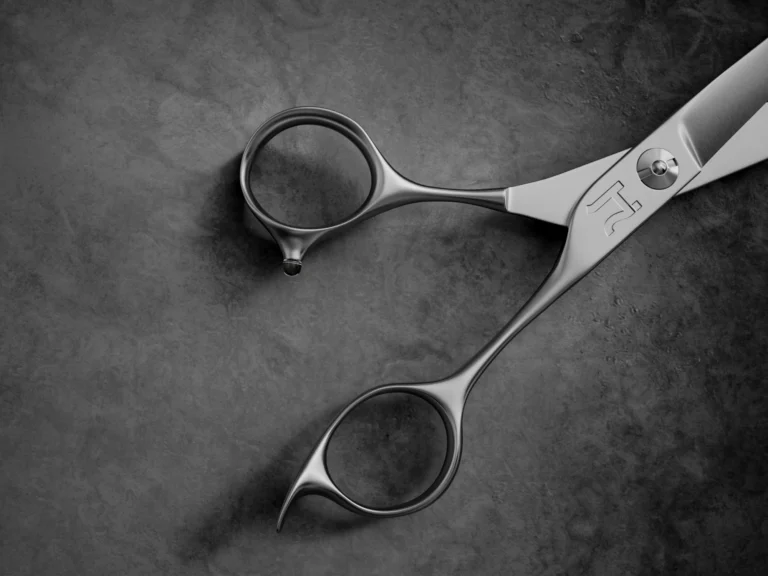
Finger-ring size, handle design, thumb position, offset, and balance affect how the tool fits. Blade length should then be matched to the work being performed.
Ignoring How the Shear Feels in Motion
A shear may appear correctly sized against your palm but still feel awkward during actual cutting.
Open and close it naturally. Recreate your usual hand positions. Check whether your thumb moves without reaching, the blade remains stable, and your wrist stays relaxed.
A static measurement cannot replace a real cutting test.
What If You Are Between Shear Sizes?
Suppose the palm method places you between 5.5″ and 6.0″. Use your primary technique as the tiebreaker.
Choose the shorter option when your work emphasizes:
- Precision
- Face framing
- Detailed point cutting
- Tight areas around the ears
- Close-contact control
Choose the longer option when your work emphasizes:
- Wider sections
- Blending
- Scissor-over-comb
- Strong perimeter lines
- Greater reach
- Efficient bulk removal
Also consider whether this will be your only shear. For an all-purpose tool, a versatile middle length may make sense. For a secondary shear, select the size that fills a specific gap in your current setup.
When the difference is difficult to judge, Hanzo’s 15-day trial allows licensed cosmetologists and barbers to test a shear under real working conditions before committing. Use it through several services rather than judging the fit from a few practice motions.
Does the Same Sizing Method Apply to Left-Handed Stylists?
Yes. The same palm measurement and technique-based selection process applies to left-handed stylists and barbers.
The shear itself, however, should use true left-handed cutting geometry. A dedicated left-handed shear reverses the blade orientation and is designed so the natural pressure of the left hand keeps the cutting edges working together correctly.
Browse the left-handed shear collection to compare lengths and handle configurations designed specifically for left-handed cutting.
Do not compensate for a right-handed shear by changing your grip or forcing your thumb position. That can reduce blade visibility, interfere with control, and place unnecessary strain on your hand and wrist.
Frequently Asked Questions About Shear Size
How do you know what size shears to get?
Begin with the palm measurement method, then adjust according to your main cutting techniques. Shorter shears favor detail and tip control, while longer shears favor reach, blending, and scissor-over-comb work.
What are 7-inch shears good for?
Seven-inch shears are useful for scissor-over-comb, men’s cutting, blending, long cutting lines, bulk removal, and larger sections. They are especially valuable when reach and blade coverage matter more than compact tip control.
Should your shear size match your hand exactly?
Not necessarily. Hand size determines what you can hold and operate comfortably, but your cutting style determines the most useful blade length. Treat the palm measurement as an initial guide rather than an absolute rule.
Find the Right Size for Your Hand and Technique
The right shear should feel controlled during detail work, efficient across larger sections, and natural through repeated opening and closing movements. Measure your hand first, identify the techniques you perform most often, and test the length under real working conditions.
Hanzo’s professional shears range from compact 4.5″ precision shears to specialist 8.5″ cutting tools. Browse the full collection and filter by size to find the right fit for your hand and technique.