Quick Answer
The Practical Answer for Working Professionals: If your elbow lifts when you detail, your wrist bends constantly to find angles, or your shoulder tightens by mid-afternoon – that’s your body compensating for a fixed thumb. A swivel thumb removes that restriction. Your thumb rotates with the motion, so your wrist, elbow, and shoulder don’t have to work as hard to create the same angles. It’s not a performance upgrade. It’s a strain reduction tool – and whether it’s worth switching to depends entirely on how you currently work.
The Problem Most Professionals Misdiagnose
If you’re a barber or stylist working a full column, you’ve likely felt some version of this: your wrist starts bending more as the day goes on, your elbow lifts when you’re detailing, and your shoulder tightens without you even noticing it happening.
Most people write this off as fatigue.
But in a lot of cases, it’s not about how much you’re working – it’s about how your tool is forcing you to work.
A fixed thumb shear locks your thumb into one angle. Every time your blade needs to approach hair from a slightly different position, something else in your body has to adjust to make that happen. Over time, those adjustments stack up into strain, inefficiency, and eventually pain.
This guide is written for working barbers and stylists evaluating whether a swivel shear is the right move for their practice – not a general overview of shear types.
At Hattori Hanzo Shears, this is where tool design stops being preference and starts becoming mechanics.
What a Swivel Thumb Actually Changes (Mechanically)
A swivel thumb doesn’t add power, sharpness, or cutting ability.
What it does is remove a restriction.
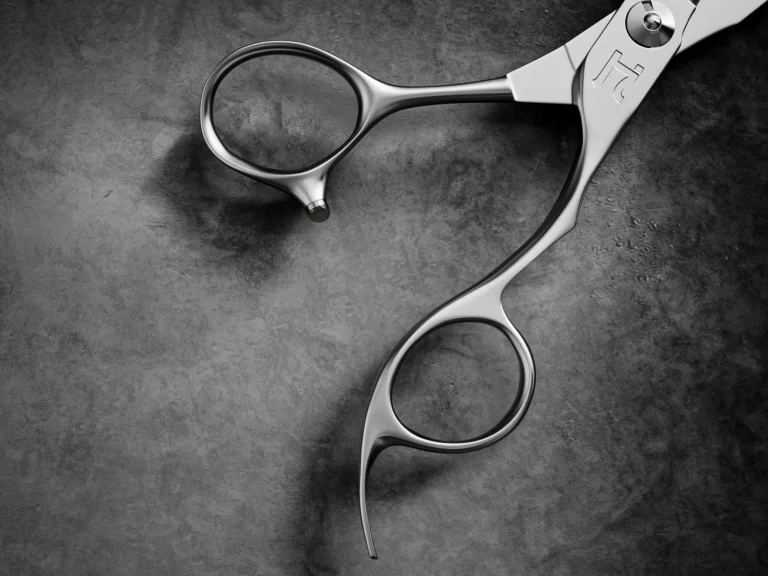
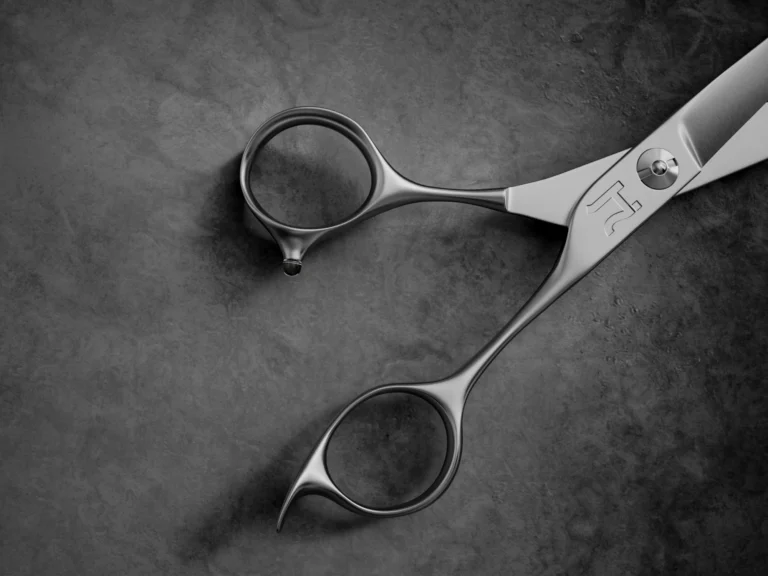
With a fixed thumb, your hand is partially locked. With a swivel, your thumb can rotate as the shear moves, which means your hand, wrist, and arm don’t have to force positions to achieve angles.
That one change affects the entire movement chain:
- Thumb → Hand → Wrist → Elbow → Shoulder
When the first joint (thumb) is freed, the rest of the chain doesn’t need to compensate as aggressively.
What Happens at the Wrist
With a traditional shear, your wrist becomes the “adjustment point.”
When you’re point cutting, working around the ears, or detailing tight sections, your thumb can’t change position – so your wrist bends to create the angle. That’s why you feel that sideways bend or upward tilt during certain techniques.
Over time, that repeated deviation creates localized fatigue, especially at the base of the thumb and across the wrist joint.
A swivel thumb shifts that responsibility.
Instead of forcing the wrist to create angle, the thumb rotates with the motion. Your hand can stay closer to neutral, and the shear adapts around it.
From behind the chair, the difference is subtle but noticeable:
you’re no longer forcing position – you’re arriving at it more naturally.
This matters because sustained non-neutral wrist positions are commonly associated with strain patterns seen in conditions like Carpal Tunnel Syndrome, particularly in repetitive professions.
What Happens at the Elbow
If your wrist is forced into position, your elbow usually follows.
You’ll see it most clearly when doing detail work. Instead of staying relaxed at your side, your elbow starts lifting to help reposition the shear. It’s not a conscious decision – it’s your body finding another way to create the angle your thumb couldn’t.
This is where fatigue starts to spread.
A swivel thumb shear reduces that need for compensation. Because your hand can rotate more freely, your elbow doesn’t have to lift as often to “find the line.”
In practice, this often means:
- Less arm elevation during cutting
- Smoother movement around the head
- Fewer mid-cut adjustments
It’s not that your elbow never moves – it just doesn’t have to work as hard to support your tool.
What Happens at the Shoulder
The shoulder is where everything accumulates.
If your elbow is lifting repeatedly throughout the day, your shoulder is carrying that load – especially during longer services or detailed work.
That’s why many stylists feel tightness across the upper back or shoulders, even if the discomfort seems to “start” in the hand.
When a swivel thumb allows the elbow to stay lower and more relaxed, the shoulder naturally follows. There’s less need to elevate or rotate excessively just to maintain cutting angles.
From a working perspective, this often shows up as:
- Less tightness by mid- or end-of-day
- Reduced need to “reset” your posture between clients
- More consistency in how your body feels across a full schedule
According to guidance from organizations like the Occupational Safety and Health Administration and the National Institute for Occupational Safety and Health, maintaining neutral joint positions and minimizing repetitive elevation are key factors in reducing strain in repetitive work environments.
The Trade-Off Most People Don’t Talk About
Swivel shears are not plug-and-play.
The same freedom that reduces strain can initially feel like a loss of control – especially if you’ve spent years working with a fixed thumb shear.
Common first reactions:
- “It feels loose”
- “I can’t control my lines the same way”
- “It’s too much movement”
That’s not a flaw – it’s a transition.
You’re not just changing a tool. You’re changing how your hand organizes movement. Most professionals need a short adjustment period before the benefits show up consistently.
Who Actually Benefits From a Swivel (And Who Doesn’t)
Swivel shears tend to make the biggest difference for professionals who:
- Do a high volume of detail work (point cutting, texturizing, dry cutting)
- Notice recurring thumb, wrist, or shoulder fatigue
- Struggle to keep their elbow down during precision work
They tend to matter less if:
- Your work is mostly blunt cutting with minimal angle variation
- You already maintain strong ergonomic positioning naturally
- You prefer a fixed, predictable thumb position for control
The key point:
A swivel shear isn’t “better.” It’s more adaptable.
Whether that helps depends on how you work.
Fixes You Can Apply Immediately (With or Without a Swivel)
Before changing tools, it’s worth checking your mechanics:
- Watch your wrist in the mirror during cutting – does it bend to create angle?
- Pay attention to your elbow – does it lift when you detail?
- Check your grip – are you squeezing more than necessary?
If you move to a swivel:
- Let the thumb move naturally – don’t try to lock it
- Slow your cutting slightly at first to regain control
- Focus on keeping your wrist neutral instead of chasing angles
These adjustments alone often reduce strain, even before switching tools.
Where Hattori Hanzo Shears Fits Into This

At this level, the conversation moves past “swivel vs non-swivel” and into something more practical: which tool actually supports the way you cut for 8–10 hours a day without breaking your body down.
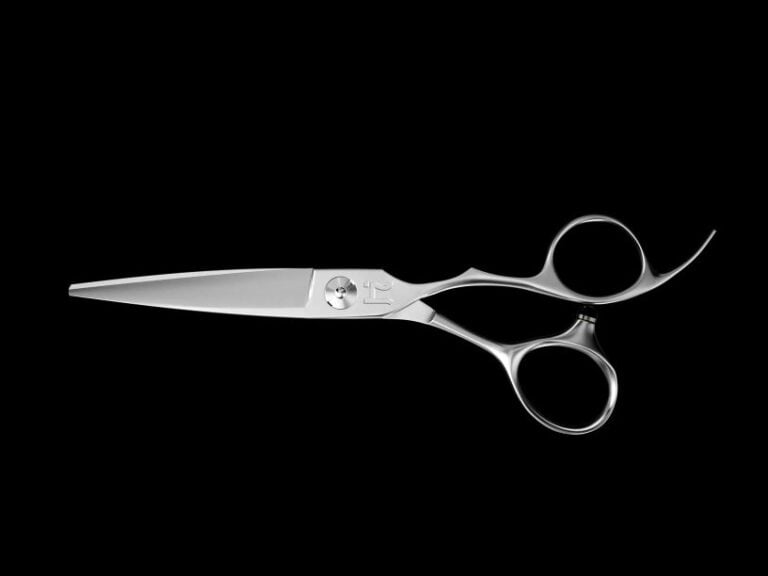
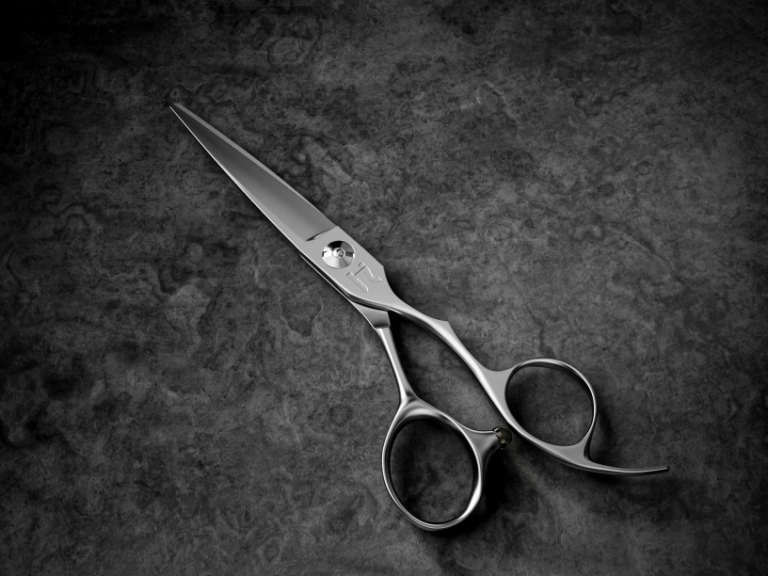
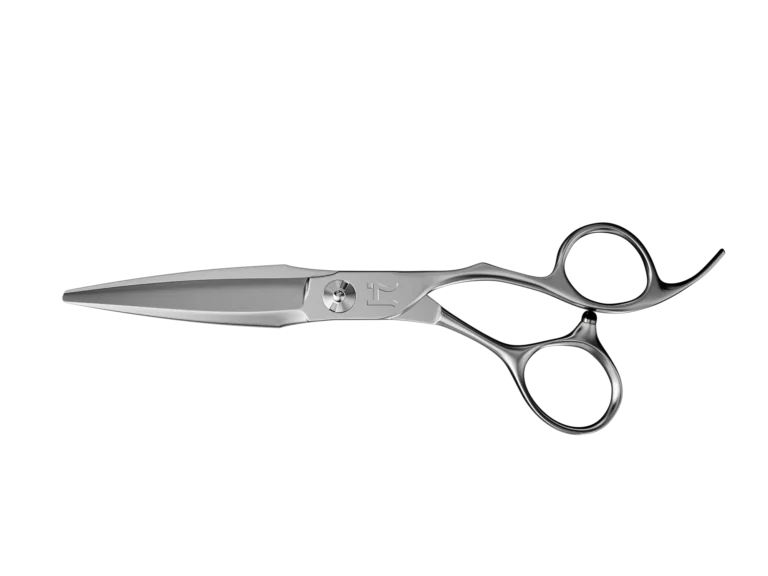
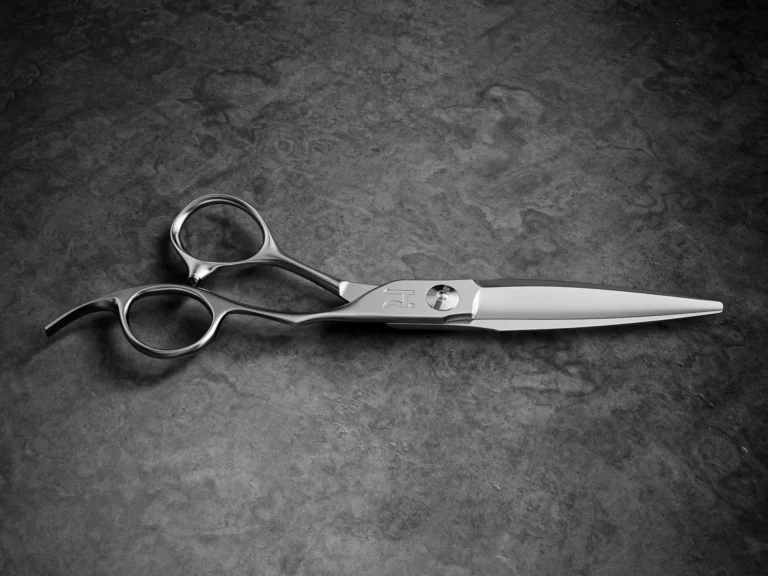
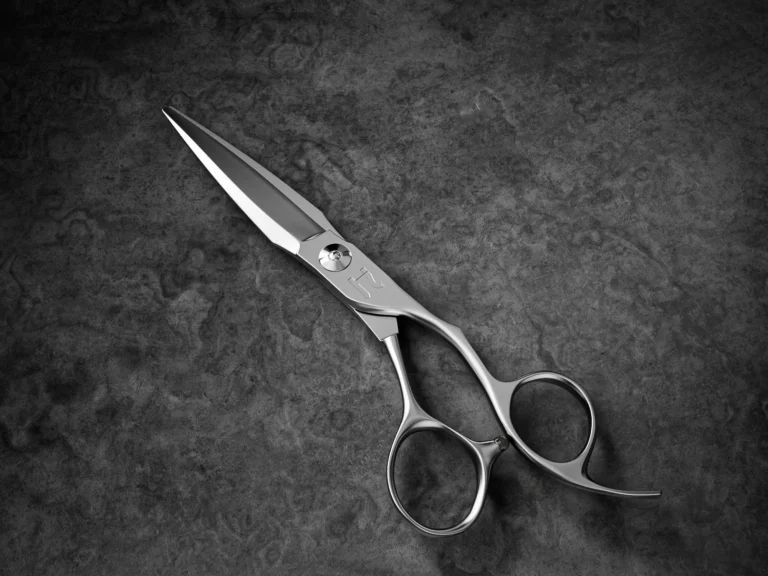
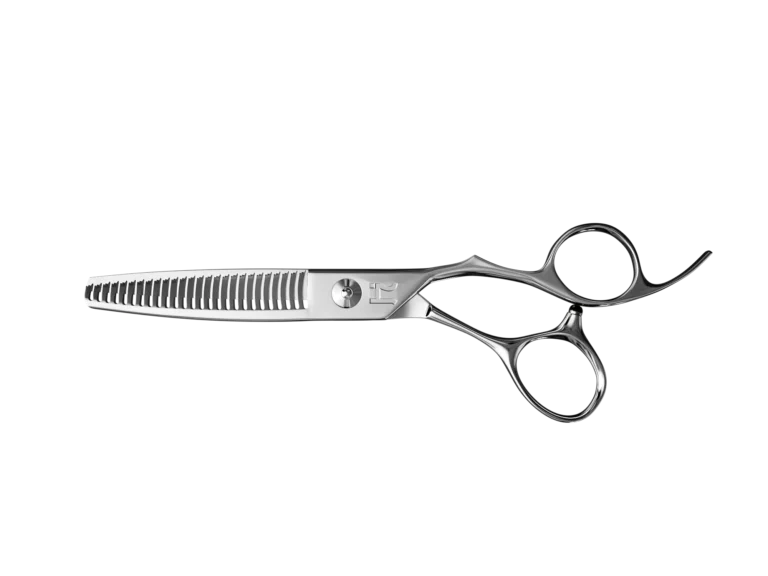
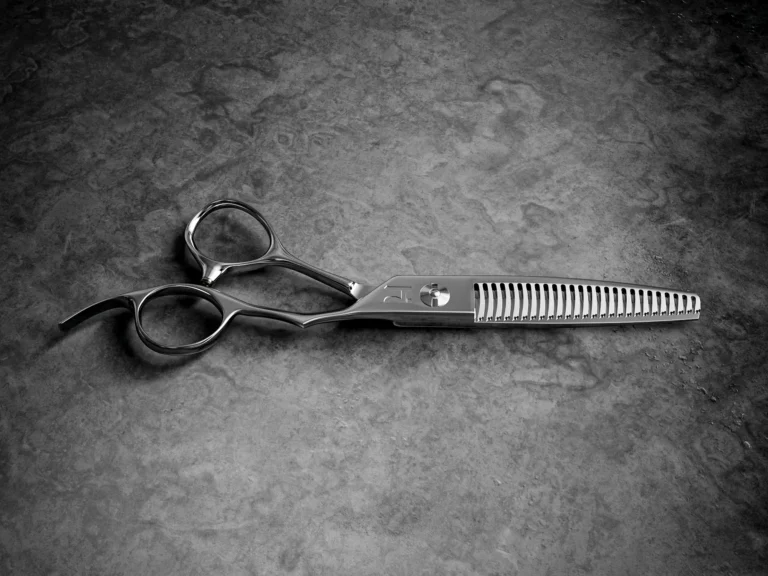
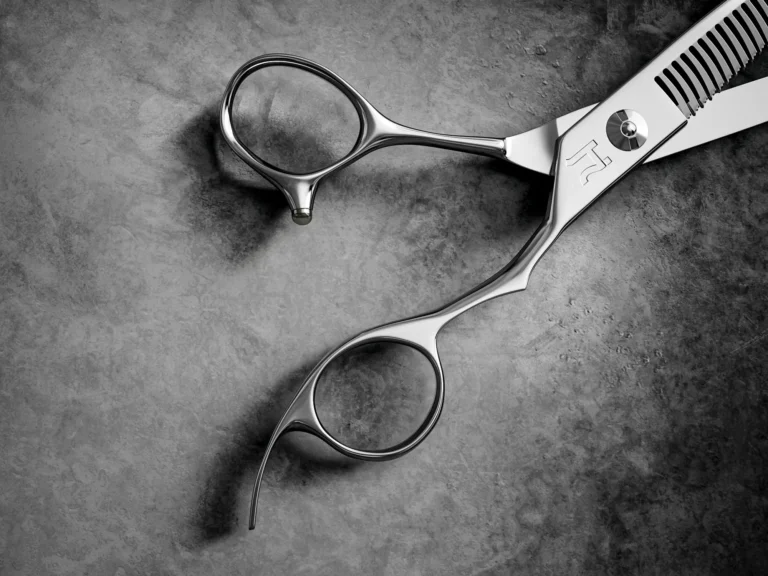
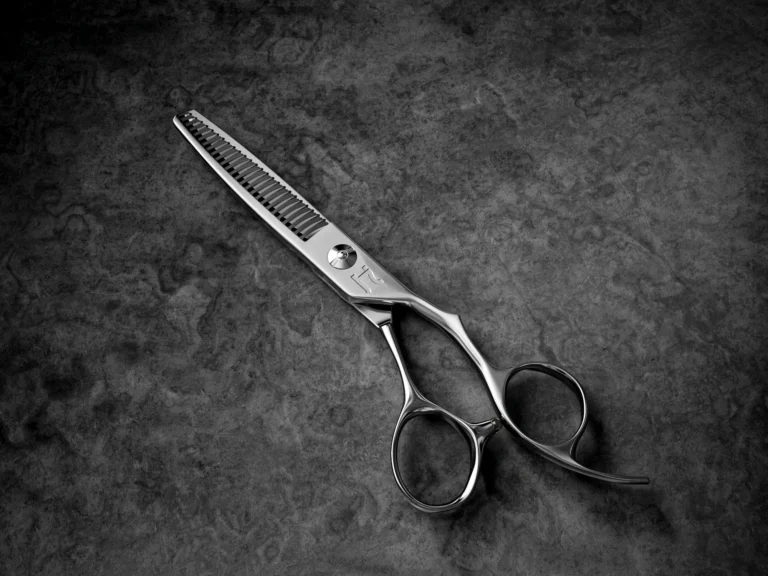
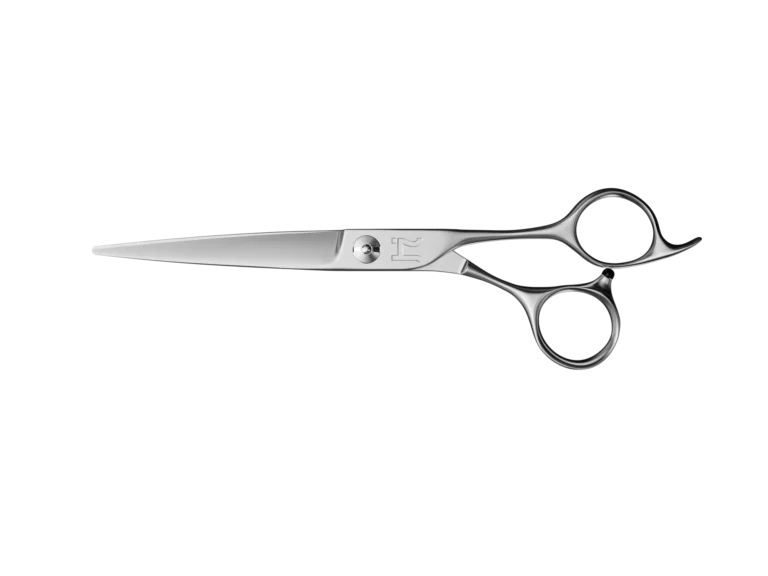
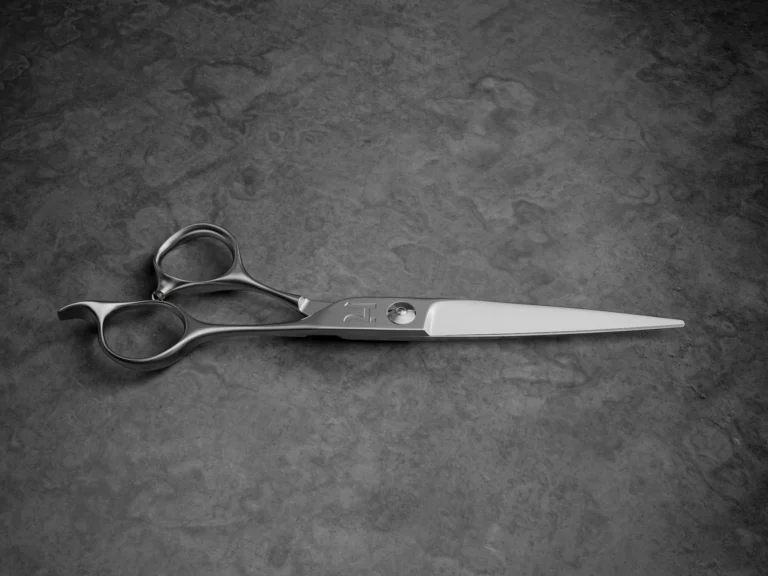
Hattori Hanzo Shears approaches swivel design as part of a broader system – not just a feature. Their swivel models are built around allowing controlled thumb rotation while maintaining balance and stability, so you’re not trading strain for instability.
If you’re working through fatigue, the answer isn’t just switching to “any swivel.” It’s dialing in:
- How much thumb freedom you actually need
- How stable the shear feels during precision work
- How the handle geometry supports your natural hand position
Within Hattori Hanzo’s swivel shears range, you’ll notice differences in how aggressive the rotation feels and how the shear balances in hand. Some models are designed to ease you into swivel movement with more control, while others offer greater freedom for stylists doing heavy detail work or advanced texturizing.
That’s why the real value isn’t just the shear – it’s the fit and guidance behind it.
If your shears are fighting your movement, Hattori Hanzo Shears typically addresses that through:
- Shear fitting (matching handle and thumb position to your hand)
- Education on movement and technique
- Ongoing support like sharpening and tension tuning, so performance stays consistent
Because at a professional level, the goal isn’t just to cut well today – it’s to still be cutting comfortably years from now.
When to Look Beyond the Tool
If you’re noticing:
- Persistent pain
- Tingling or numbness
- Loss of grip strength
it’s important not to rely on tool changes alone. Those symptoms may require evaluation by a qualified professional.
A swivel can help reduce strain – but it doesn’t replace proper care.
FAQ
I’ve never used a swivel shear – what will I actually notice differently in the first week?
The first thing most professionals notice is that the shear feels slightly loose or unfamiliar – like the thumb has too much freedom. That’s normal and it passes. What you’ll start to notice after a few days is that your wrist isn’t bending as hard to create certain angles, and your elbow isn’t lifting as much during detail work. The adaptation period is usually one to two weeks before it starts feeling natural. Don’t judge swivel shears by the first day.
I already use an offset handle – do I still need to consider swivel?
Offset handles lower your elbow position and reduce wrist deviation, which is genuinely helpful. But they don’t change what your thumb does – the thumb is still fixed. If you’re still noticing wrist bend or elbow lift during detailed work even with an offset handle, a swivel adds the next layer of relief by freeing the thumb itself. They solve different parts of the same problem. Many professionals eventually use offset swivel shears to get both benefits at once.
At what point in a career does switching to swivel actually make sense?
There’s no fixed milestone, but there are clear signals. If you’re doing 6 or more hours of cutting daily, if your work is technique-heavy with a lot of point cutting, texturizing, or dry cutting, or if you’ve started noticing thumb, wrist, or shoulder fatigue that wasn’t there a year ago – those are the signals. Switching earlier is better than waiting until the fatigue becomes pain. The adjustment period is short and the long-term benefit compounds over years of continued work.
What is a double swivel shear and who actually needs one?
A double swivel has two rotating points – the thumb ring and the finger ring – giving both hands freedom of movement. Most professionals don’t need a double swivel and find it requires significant retraining. It’s primarily useful for stylists doing very high-volume advanced technique work who have already adapted fully to a standard swivel and want to reduce strain further. If you haven’t used a standard swivel yet, start there before considering a double swivel.
I have wrist pain after long days – will switching to swivel fix it?
It may reduce it, but the honest answer is that it depends on the cause. If the pain comes from your wrist bending repeatedly to create angles that a fixed thumb forces, a swivel will help because it removes that specific demand. If the pain comes from grip force, tool weight, or tension that’s too tight, the swivel won’t address those. Diagnose first – watch your wrist in the mirror during cutting and see whether it bends to find angles. If it does, swivel is likely the right move. If it stays relatively neutral, look at tension, grip, and weight instead.
How long does it take to feel comfortable with swivel shears, and what makes the adjustment harder?
Most professionals feel reasonably comfortable within one to two weeks of regular use. The adjustment is harder if you try to control the swivel – if you consciously try to lock your thumb or resist the rotation, the shear will feel unstable. The faster path is to let the thumb move freely and focus your attention on keeping your wrist neutral rather than chasing angles. Start on less complex cuts where you have more room for error, and work up to detailed precision work once the movement starts feeling natural.
I do mostly scissor-over-comb and blunt cutting – will swivel shears actually help me or is this designed for a different technique?
Swivel shears benefit scissor-over-comb work more than most barbers expect. That technique involves a lot of elbow elevation and wrist adjustment as you move around the head, and a swivel reduces how hard your body works to create those angles. Blunt cutting is where swivel makes the least difference – if blunt cutting is the majority of your work and you don’t do much detailed or angled technique, the benefit will be smaller. But if scissor-over-comb is a significant part of your day, it’s worth trying.
How do I know if a swivel shear fits my hand correctly before committing to one?
The thumb ring should feel snug without gripping – if your thumb slides around inside the ring, the rotation becomes unpredictable and control suffers. The rotation itself should feel smooth and require no effort – if it feels stiff or catches, the mechanism needs attention. The best way to evaluate fit before committing is through a trial program. Hanzo’s 15-day test drive exists specifically for this — you can cut with the shear in real conditions before deciding whether it’s right for your hand and your technique.