Most barbers and stylists don’t think about their hands until something starts hurting. By that point the pattern has usually been building for months – small compensations, subtle fatigue, the kind of soreness you dismiss as part of the job. Then one day a client says something and you realise you’ve been gripping harder than you need to, or your wrist has been bent at the same angle all day, or your thumb hurts in a way it didn’t a year ago.
This guide is for working professionals who are already behind the chair. If you’re experiencing hand or wrist pain and you want to know what’s causing it and what to change first, this is the right starting point.
One important note before going further: this guide helps you identify likely causes and tool-related fixes. It is not a substitute for medical advice. If your symptoms include numbness, tingling, shooting pain, or anything that persists through rest, see a doctor or physical therapist. Some conditions require professional assessment that no article can replace.
The four pain patterns – and what each one usually means
Hand and wrist pain in cutting professionals tends to fall into four distinct patterns. Identifying which one you have tells you where to look first.
Pattern 1 – Thumb base pain or soreness
Pain or tenderness at the base of the thumb, on the palm side near where the thumb meets the wrist. Often described as a deep ache after a long day, or soreness when you pinch or grip. Sometimes called De Quervain’s tenosynovitis when it becomes more severe.
What drives it: excessive thumb travel from an opposing grip or poorly fitted thumb ring. Every time you open and close the shear, the tendons at the base of the thumb work to control that motion. If the thumb ring is too large, the thumb moves more than it needs to. If the handle is opposing grip, the thumb travels further with every close. Over hundreds of cuts a day this accumulates into tendon stress.
What to change first: thumb ring fit and handle type. The thumb ring should sit at the first joint – if it slides past or feels loose, it’s too large. Switching from opposing grip to offset immediately reduces thumb travel. If you’re already on offset and still getting thumb base pain, the next step is swivel – which removes the fixed repetitive load on the thumb tendon entirely.
Pattern 2 – Wrist pain or stiffness, specifically during or after cutting
Aching or stiffness in the wrist joint itself, particularly noticeable during angle work, point cutting, or dry cutting. Sometimes described as tightness on the back of the wrist or soreness on the thumb side of the wrist. Can present as reduced grip strength in the morning that loosens up through the day.
What drives it: repeated wrist deviation – the wrist bending sideways or tilting upward to create cutting angles that the tool’s handle geometry is forcing. When a fixed thumb shear requires a particular angle, the wrist bends to find it. Do that movement several hundred times in a day and the wrist joint and surrounding tendons absorb that load.
What to change first: handle geometry and cutting position. A swivel thumb shear removes the fixed thumb restriction, which is the primary reason the wrist bends during angle work. If you’re already on swivel and still getting wrist pain, watch yourself in a mirror during a typical cut – the wrist may be bending for reasons unrelated to the thumb, such as how you position the client or how you angle your body relative to the section. Tension that’s too tight also forces the wrist to work harder on every close – check that before assuming it’s a handle problem.
Pattern 3 – Elbow or forearm pain, typically on the outer side
Pain or tenderness on the outer elbow – the bony point or just below it – that gets worse after a long day and better with rest. Sometimes extends into the forearm as a dull ache. Commonly referred to as lateral epicondylitis or tennis elbow in medical terminology, though stylists typically develop it from a different movement pattern than tennis players.
What drives it: repeated elbow elevation combined with grip force. Scissor-over-comb, overhead layering, and working above the horizontal plane all require the elbow to lift. When the elbow stays elevated for extended periods, the muscles and tendons that attach at the outer elbow are under continuous load. Add grip force from tension that’s too tight and the load compounds.
What to change first: elbow position, then tension. A crane handle forces the elbow to drop naturally through its geometry – this is the most direct tool-based fix for lateral elbow strain. Check tension as well – tight tension increases the force required to close the shear, which amplifies the load on the forearm muscles with every cut. If you’re doing high volume scissor-over-comb, a crane handle is worth serious consideration before symptoms become chronic.
Pattern 4 – Shoulder tightness or upper back strain by mid-afternoon
Not a sharp pain but a progressive tightening through the shoulder and upper back that builds through the day, particularly on high-volume days. Often dismissed as general fatigue. Can present as reduced range of motion in the shoulder by late afternoon, or a headache originating from the base of the neck and upper trapezius.
What drives it: sustained elbow elevation. When the elbow lifts repeatedly, the shoulder elevates with it. The muscles that hold the shoulder elevated – particularly the upper trapezius – are not designed for sustained loading. They fatigue, tighten, and refer tension up into the neck and across the upper back. This is one of the most common complaints in the profession and one of the most misdiagnosed – many stylists treat it as a general posture or stress problem when it’s actually a direct result of handle geometry.
What to change first: handle geometry is the primary lever here, specifically crane handle design which drops the elbow and allows the shoulder to follow. This is covered in depth in the offset vs crane vs swivel handle guide. Secondary fixes include client positioning – ensuring the client’s head height keeps your elbow below shoulder level – and conscious breaks between clients to roll the shoulders and release the trapezius.
The tool variables that directly affect all four patterns
Once you’ve identified your pain pattern, these are the specific tool variables to audit in order.
Tension
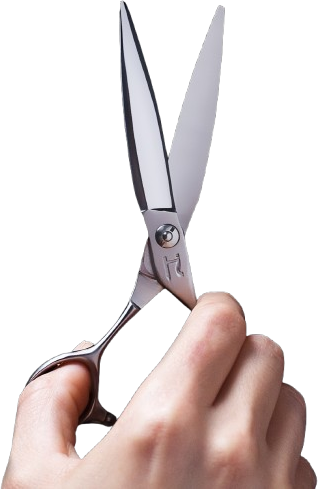
Tension that runs too tight is one of the most underestimated contributors to hand and forearm pain. Every cut requires your hand to close the shear against the pivot resistance. When tension is too tight, that resistance is higher than it needs to be. Over a full day of cutting, your flexor muscles are doing unnecessary work on every single close. Check your tension using the drop test – hold vertically, open the top blade to 90 degrees, release. If it barely moves, tension is too tight. Adjust one small increment at a time and notice whether cutting feel and hand fatigue both improve. The full tension diagnosis process is covered in the shear tension guide.
Handle geometry
Covered in detail in the offset vs crane vs swivel guide, but the summary for pain diagnosis purposes is: thumb base pain points toward handle type and thumb ring fit; wrist pain points toward swivel; elbow and shoulder pain points toward crane. These are not absolute rules but they’re the right starting points for each symptom.
Thumb ring fit
A thumb ring that is too large allows the thumb to move around inside it, which creates instability and forces the hand to grip harder to compensate. A thumb ring that is too small restricts blood flow and creates pressure points. The right fit is snug at the first joint with no movement. Many professionals have never had their thumb ring fit assessed and are cutting every day in a ring that’s the wrong size. Silicone thumb ring inserts can reduce the internal diameter of an existing ring – a simple fix worth trying before changing the shear entirely.
Shear weight and balance
A shear that is front-heavy – weighted toward the blade – requires more grip force to control during open-blade techniques like slide cutting and point cutting. A well-balanced shear pivots around the tension screw with minimal effort. If your shear feels like it wants to tip forward in your hand, the weight distribution is working against you. This is a shear selection issue rather than an adjustment issue – and it compounds tension and handle geometry problems when all three are present simultaneously.
What not to do
Several common responses to hand and wrist pain make the underlying problem worse. These are worth naming directly.
Overtightening tension to compensate for a dull edge forces the hand to work against unnecessary resistance. It is one of the most common causes of escalating forearm fatigue and it doesn’t fix the actual problem – it accelerates it.
Gripping harder to maintain control during a difficult cut is a compensation pattern that almost always comes from the wrong tension, wrong edge, or wrong handle rather than from the cut itself. The shear should do the work. If you find yourself gripping intentionally harder, something else needs to change.
Ignoring the early signals – the mild soreness that goes away with rest – and waiting until the pain becomes consistent. The conditions that cause professional hand and wrist injuries are progressive. The earlier the variables are addressed, the less recovery is needed.
Treating tool symptoms with physical therapy alone. Therapy can help manage symptoms and restore function, but if the tool variables driving the injury aren’t changed, the symptoms return. Tool changes and physical therapy work together – neither replaces the other.
The practical sequence for working professionals
If you’re currently experiencing any of the four pain patterns, here is the order to work through before making any large decisions:
- First – check tension. It takes 30 seconds and is the most common and most fixable variable. If improving tension reduces your symptoms noticeably, stop there and monitor.
- Second – check thumb ring fit. Try a silicone insert to see if a snugger fit changes how hard your hand works during cutting. Low cost, immediate feedback.
- Third – evaluate handle geometry against your symptom pattern. Use the pain pattern descriptions above and the handle comparison guide to identify which handle feature addresses your specific complaint.
- Fourth – evaluate client and body positioning. Sometimes the fix is as simple as raising the chair, repositioning where you stand, or being more deliberate about bringing the work to you rather than reaching for it.
- Fifth – if symptoms persist despite tool and positioning changes, see a professional. A physical therapist who works with musicians or other repetitive-motion professionals will understand the occupational pattern faster than a general practitioner.
When it’s worth switching shears entirely
A shear switch is worth serious consideration when two or more of the following are true: you’ve had your current shears for more than three years and handle ergonomics have advanced since you bought them; your pain pattern points to a specific handle feature your current shear doesn’t have; you’ve addressed tension and fit and symptoms persist; or the cost of one more sharpening service is approaching the point where it makes more financial sense to invest in a better tool.
The Hanzo 15-day test drive exists specifically for this evaluation. You cut with the shear in real conditions for two weeks – long enough for a genuine ergonomic assessment – before committing. If the symptoms that drove you to look at a new shear improve during those two weeks, you have your answer. If they don’t, you’ve lost nothing.
Recommended Hanzo shears by pain pattern:
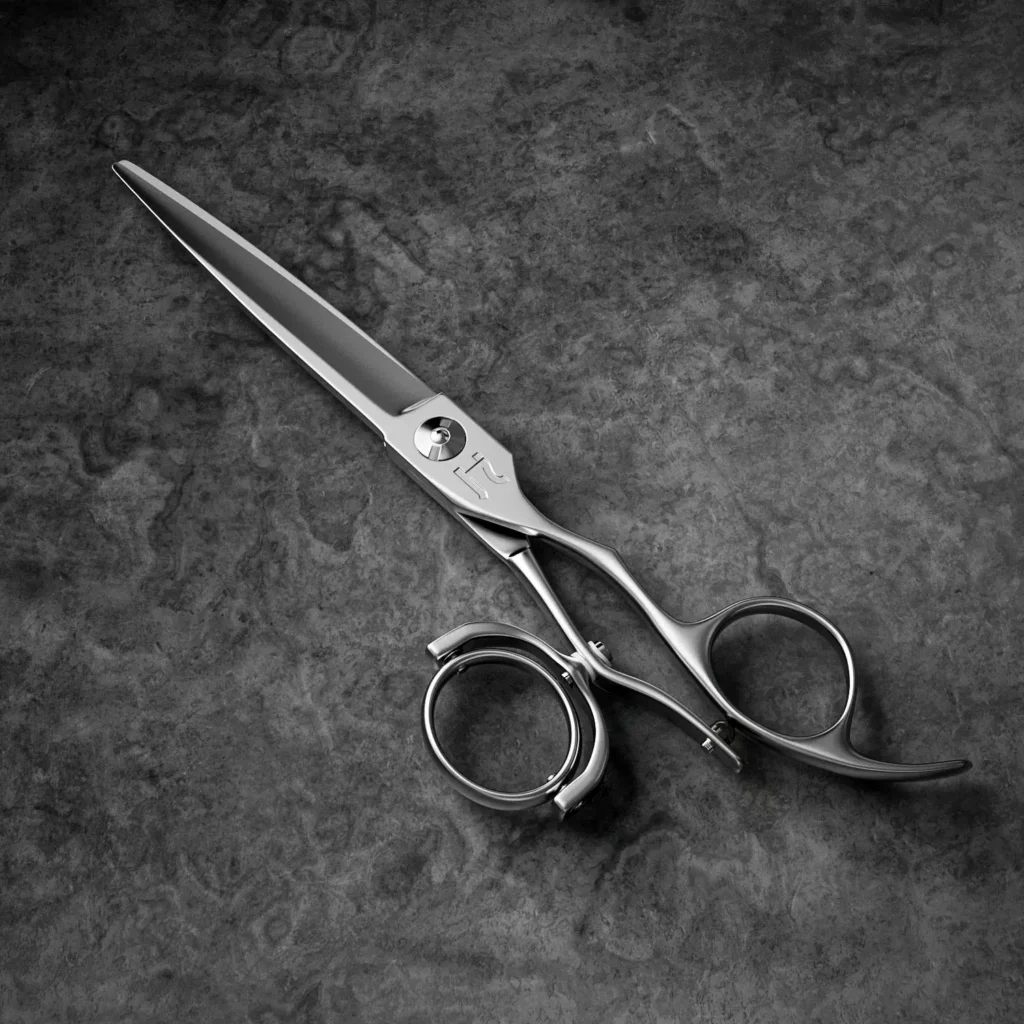
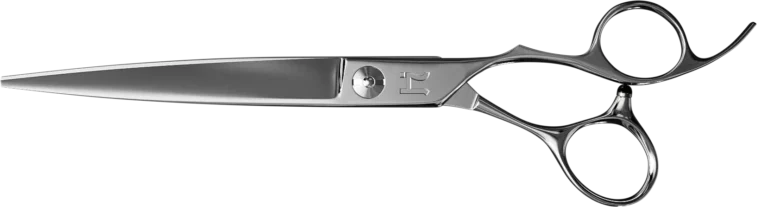
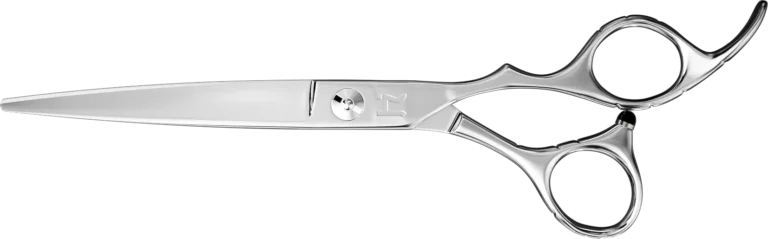
For thumb base pain and wrist fatigue during angle work – the HH6S Kime Swivel with its offset swivel handle removes fixed thumb load and reduces wrist compensation simultaneously.
For elbow and shoulder strain from scissor-over-comb and overhead work – browse the full shears range and speak with a Hanzo local representative who can assess your cutting style and hand in person. Handle geometry recommendations are more accurate in person than from a guide.
For general strain reduction across a high-volume day – the Stay Sharp programme keeps your edge in peak condition, which reduces the grip force required to cut through hair cleanly. A dull edge is a silent contributor to hand fatigue that most professionals don’t identify until they experience the difference a fresh edge makes.
Frequently Asked Questions
I’ve had wrist pain for a few months – should I push through it or stop cutting?
Don’t push through it and don’t stop cutting if you can avoid it financially. The right response is to identify the cause and change the variable driving it while continuing to work where possible. Pushing through without changing anything accelerates the injury. Stopping without addressing the tool and technique variables means the pain will return when you go back. The goal is to find and fix the source – tension, handle, fit, positioning – and monitor whether symptoms improve over two to three weeks of adjusted practice.
Is carpal tunnel common in hairdressers and barbers?
It appears in the profession but it is less common than the general term suggests. Many professionals self-diagnose carpal tunnel when the actual condition is De Quervain’s tenosynovitis at the thumb base, lateral epicondylitis at the elbow, or simple tendon overuse without nerve involvement. True carpal tunnel involves compression of the median nerve and presents with specific symptoms – numbness and tingling in the thumb, index, and middle finger, particularly at night. If that pattern fits your symptoms, get a proper diagnosis before assuming tool changes will resolve it.
My hand hurts after long days but feels fine the next morning – is that serious?
Pain that resolves with rest is an early warning signal, not a crisis – but it’s the most important time to act. Pain that resolves overnight means the tissue is recovering between sessions, which means you have time to address the cause before the recovery window closes. Once symptoms stop resolving with rest and become persistent through the day, the condition has progressed and recovery takes longer. Treat overnight recovery as a window, not a reassurance.
Can I keep cutting with hand pain while I wait for a new shear to arrive?
Yes, with adjustments. Check tension immediately – tight tension is the fastest fix available to you right now. Use the lightest possible grip force and avoid forcing cuts. Take short breaks between clients to open and close your hand fully and rotate the wrist through its range of motion. These won’t solve the underlying cause but they reduce the load on the affected tissue while you wait.
I switched to a swivel shear and my wrist pain improved but my elbow now hurts – what happened?
This is a real pattern and it makes sense mechanically. The swivel reduced wrist compensation, which changed how your arm moves through the cut. If the new movement pattern involves more elbow elevation than your previous one – particularly if you came from a heavily bent-wrist cutting style – the load has shifted up the chain. This usually settles as your technique adapts to the new tool. If it persists beyond three to four weeks, evaluate your elbow position during cutting and consider whether a crane geometry alongside the swivel would address both.
Does shear weight actually matter for injury prevention?
Yes, more than most professionals account for. A heavier shear requires more grip force to control during open-blade techniques, and that grip force accumulates across hundreds of cuts. The difference between a 90-gram shear and a 65-gram shear feels minimal in a single cut and significant across an eight-hour day. Weight matters most for professionals who do significant slide cutting, point cutting, or texturizing – techniques where the blade is open and moving rather than closing through a section.
I’ve tried changing my tools and still have pain – what now?
See a physical therapist, ideally one with experience in occupational or repetitive-motion injuries. Bring your shears to the appointment if possible so they can observe your actual cutting motion rather than guessing from a description. A therapist who understands the profession can identify compensation patterns in your movement that no tool change will fix – body mechanics, standing posture, how you transfer force through the shoulder – and give you specific exercises and corrections. Tool changes and professional assessment work together. Neither replaces the other.