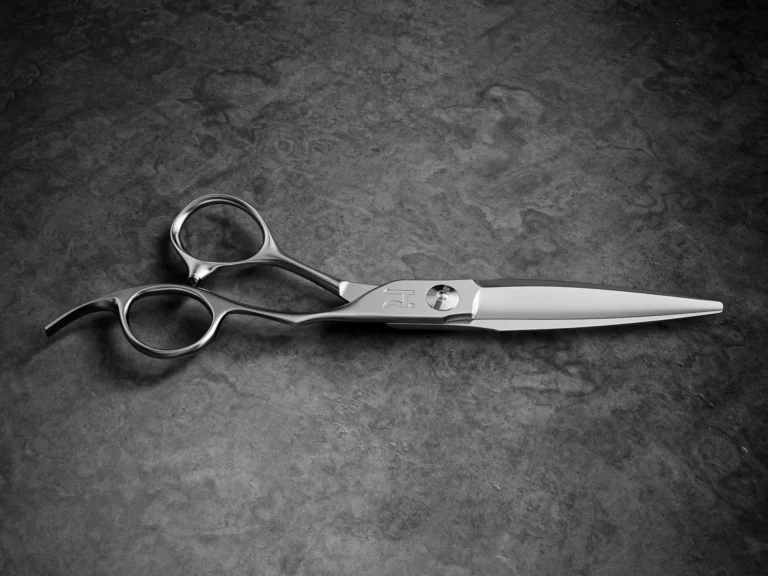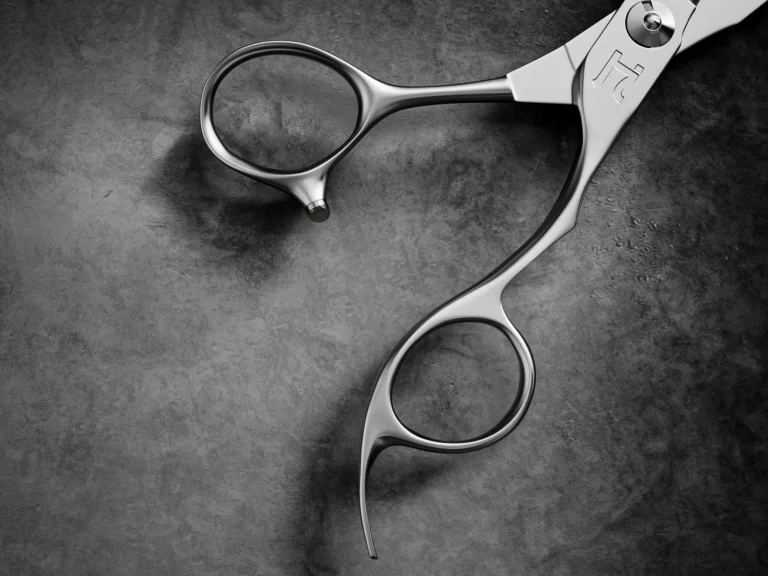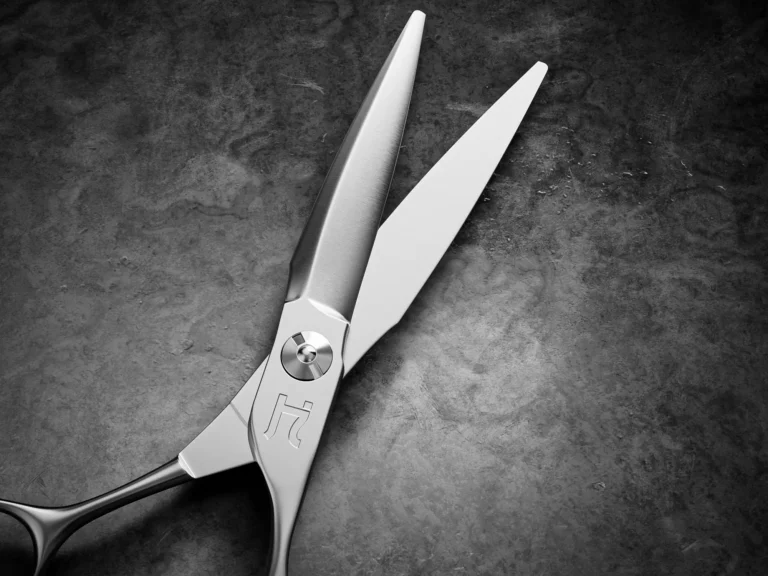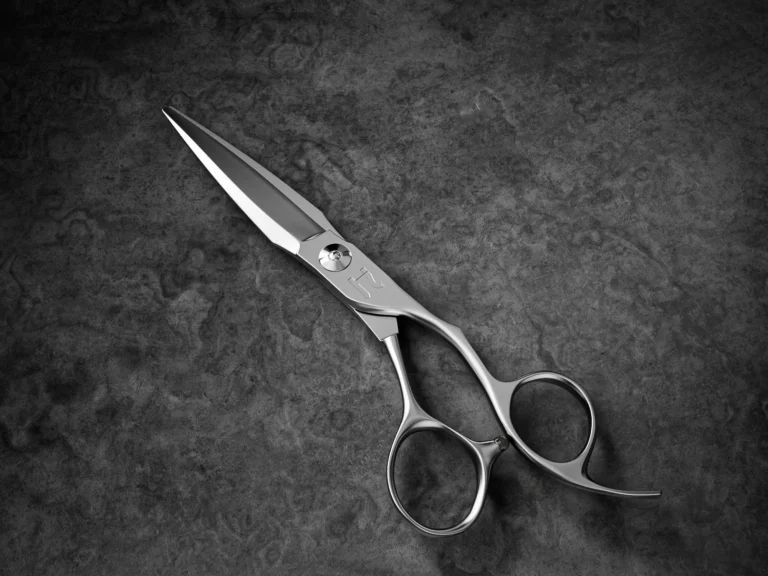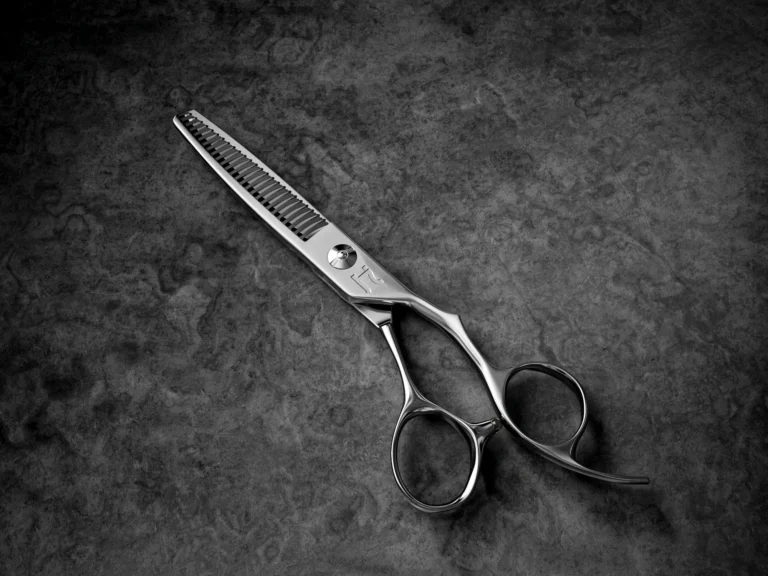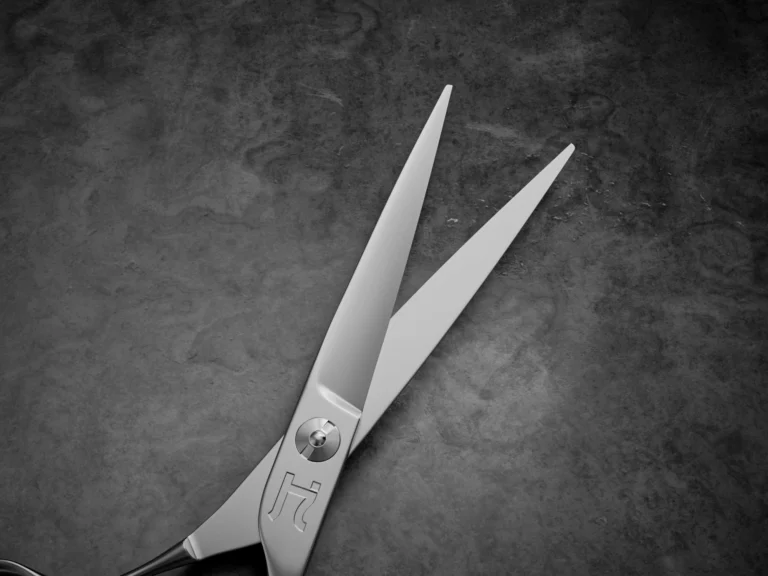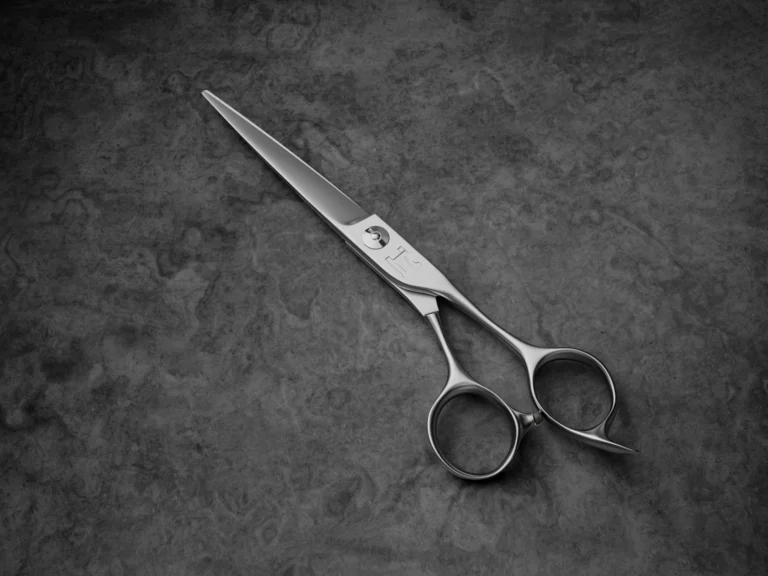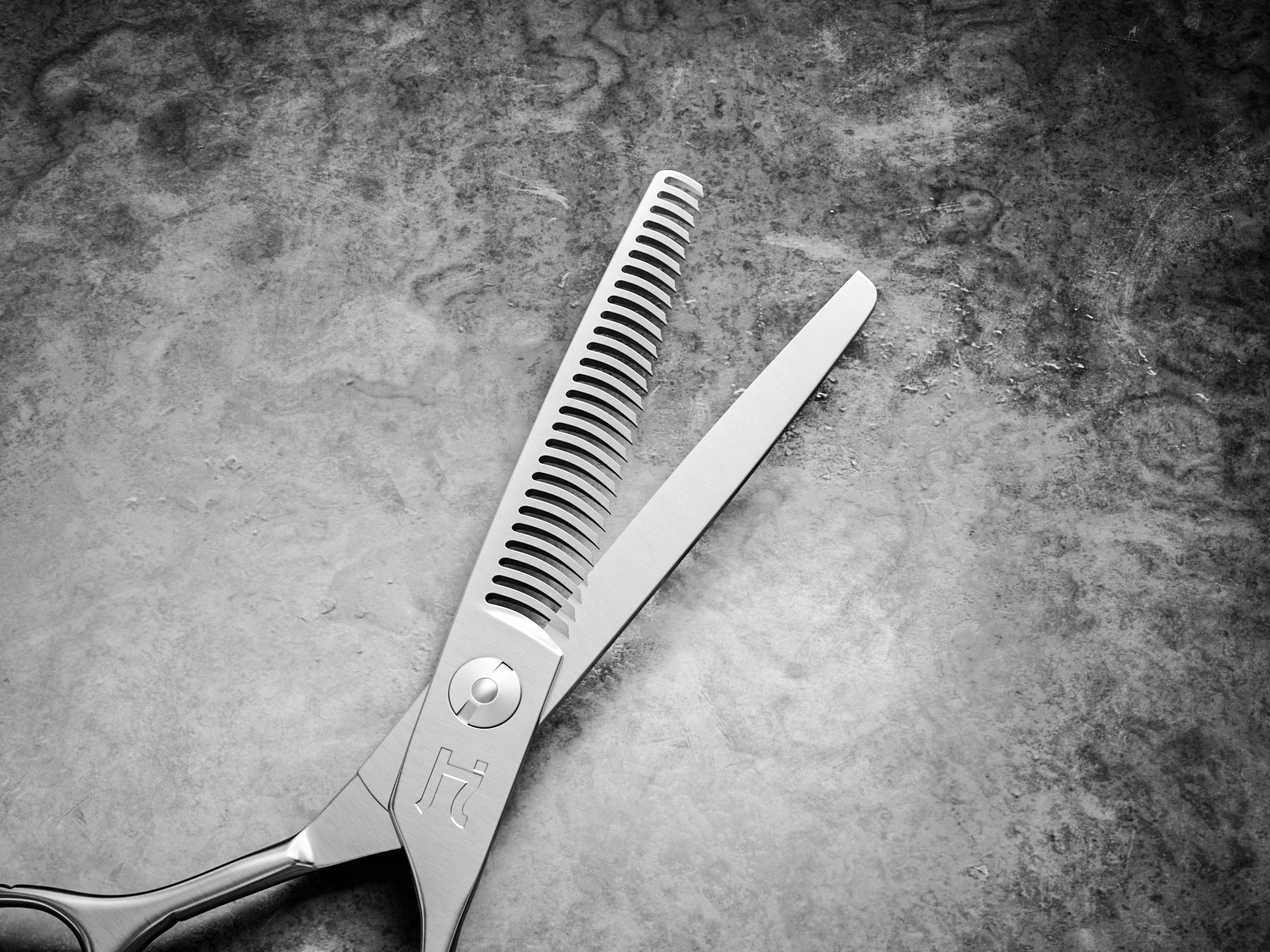
For licensed stylists and barbers, choosing the wrong thinning tool can turn a clean shape into frizz, gaps, drag, or visible cut marks. The challenge is not simply finding professional shears that remove weight; it is choosing the right tooth count for the hair type, density, finish, and technique in front of you. Hanzo helps cutters solve that problem with Japanese-steel texturizers built for controlled weight removal, softer blending, deeper separation, and finish work that looks intentional instead of overworked.
Here’s the thing: most clients do not know when a haircut has been thinned well. They just know when it moves better, sits cleaner, and does not feel bulky at the ends. Stylists, on the other hand, know the risk. One wrong pass through dense hair can leave shelves. One aggressive tool on fine hair can collapse the shape. One cheap school-kit shear can chew instead of cut.
That is why the best thinning shears for stylists are not chosen by price or popularity alone. They are chosen by result.
Thinning Shears vs Texturizing Shears: What’s the Difference?
“Thinning shears” is the common search term most stylists use when looking for a tool that removes bulk. In professional cutting, “texturizing shears” is the more precise category because the result depends on tooth count, tooth shape, spacing, blade geometry, and how the tool exits the hair.
Both categories reduce density, but they do not all behave the same way. A low-tooth tool can break up heavy weight lines and create separation. A mid-range tool can blend and debulk without making the cut look hollow. A high-tooth tool can refine, soften, and finish without leaving obvious texture.
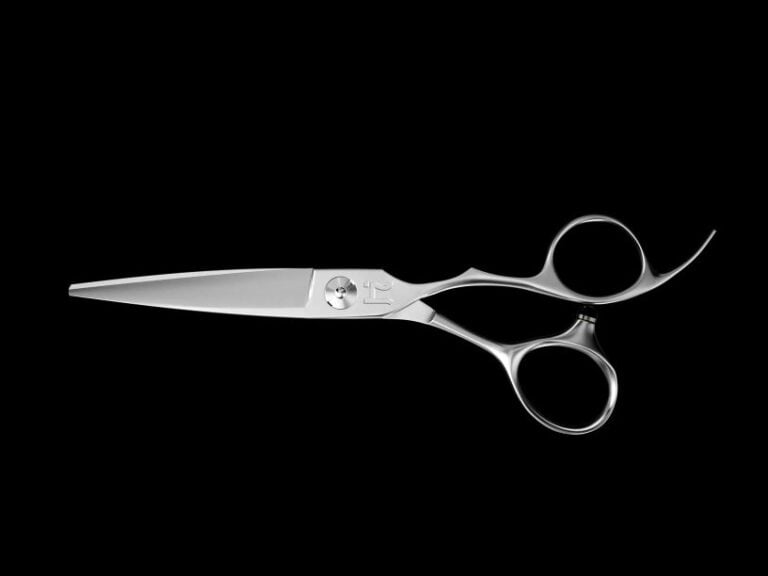
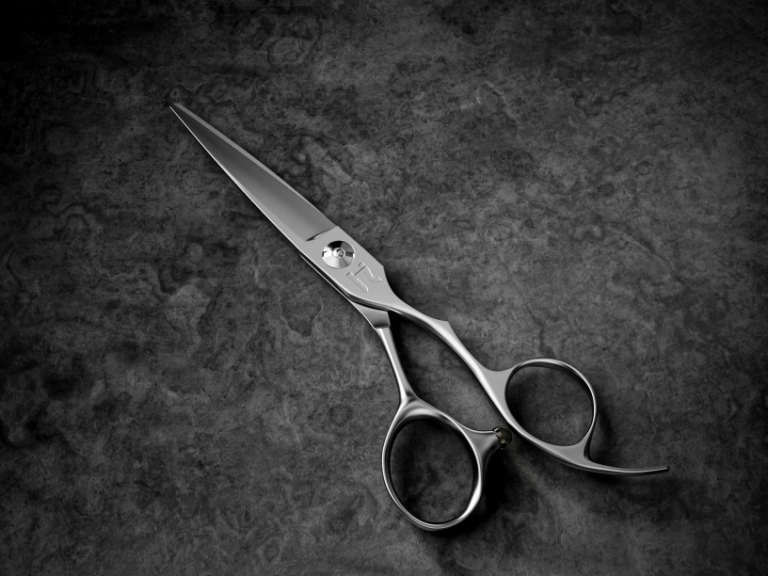
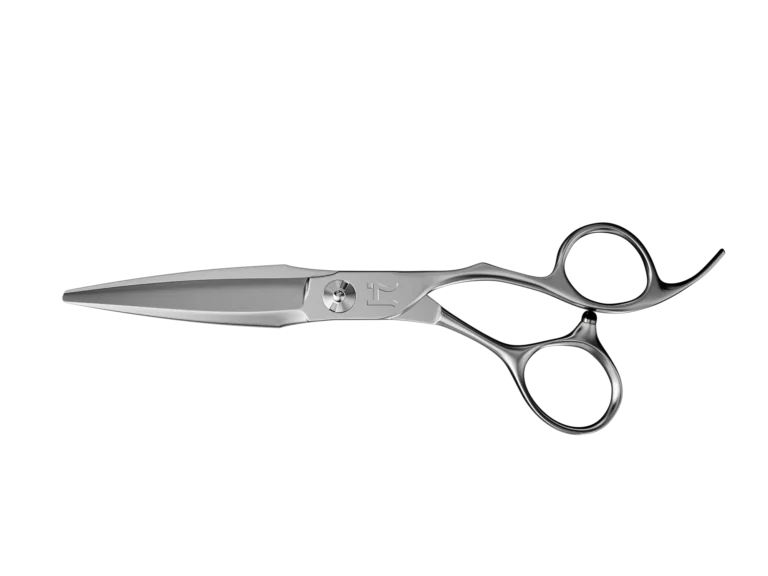
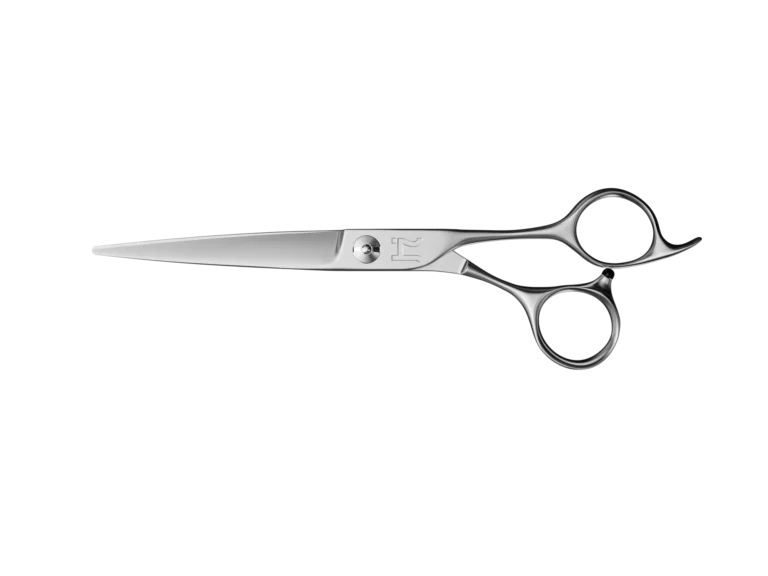
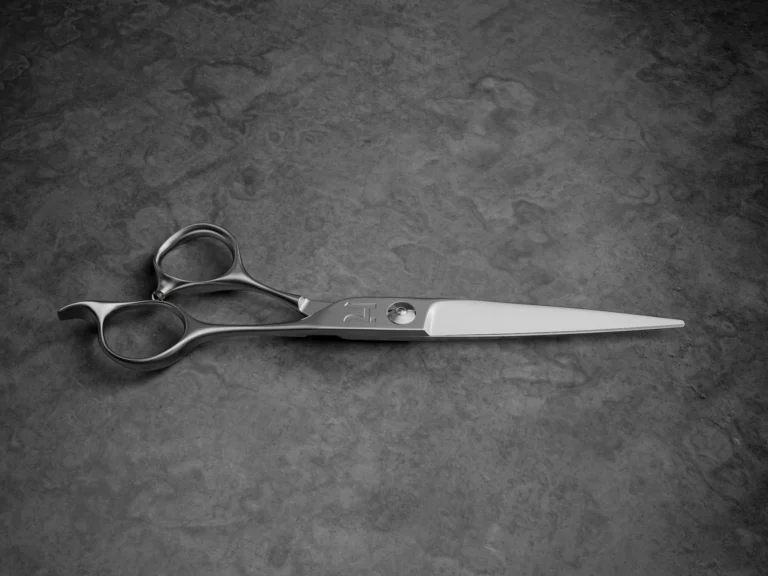
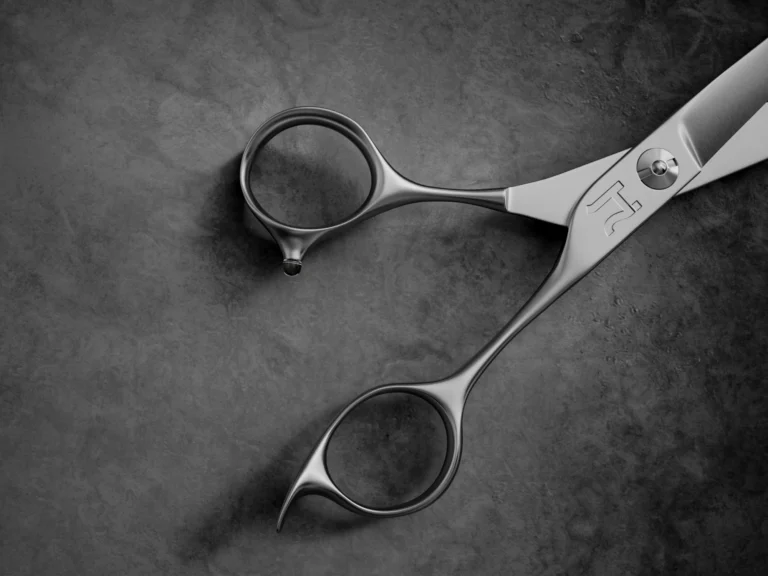
Hanzo’s lineup is built as texturizers because they do more than remove bulk. They help stylists control texture, movement, blending, and finish. If you are building a complete cutting kit, pair your texturizer with Hanzo professional shears so your blunt work, slide work, dry cutting, and finishing tools all support the same level of precision.
How Tooth Count Changes the Result
Tooth count is one of the fastest ways to understand what a thinning or texturizing tool will do before you ever close it on the hair. Fewer teeth generally create stronger removal and more separation. More teeth usually create a softer, more diffused finish.
Low Tooth Count: 10–16 Teeth
Low-tooth tools are for cutters who need visible change fast. These remove more hair per closure, create deeper texture, and help break through weight lines in thick, dense, or dry-cutting situations.
Best for:
- Heavy bulk removal
- Deeper separation
- Thick hair
- Long layers with dense interiors
- Replacing repetitive point cutting
- Blending extensions into natural hair
The warning: low-tooth tools require control. They can be powerful in the right hands and too aggressive in the wrong section.
Mid-Range Tooth Count: 20–28 Teeth
Mid-range tools are the everyday workhorses. They sit between heavy debulking and subtle finish work, which makes them useful for soft graduation, general blending, and controlled weight removal behind the chair.
Best for:
- Balanced debulking
- Soft visual texture
- Blending around weight lines
- Most salon cutting work
- Stylists upgrading from basic beauty school thinning tools
This is where many stylists find their first serious upgrade.
High Tooth Count: 30–40 Teeth
High-tooth tools are built for refinement. They remove hair more evenly, create softer visual texture, and help polish a cut without making the section look carved out.
Best for:
- Fine finishing
- Scissor-over-comb blending
- Subtle weight control
- Polishing short cuts
- Softening without obvious separation
These are especially valuable when the haircut is already strong and the goal is to make it sit cleaner.
Best for Heavy Weight Removal – HHVT1 Mamba Texturizer
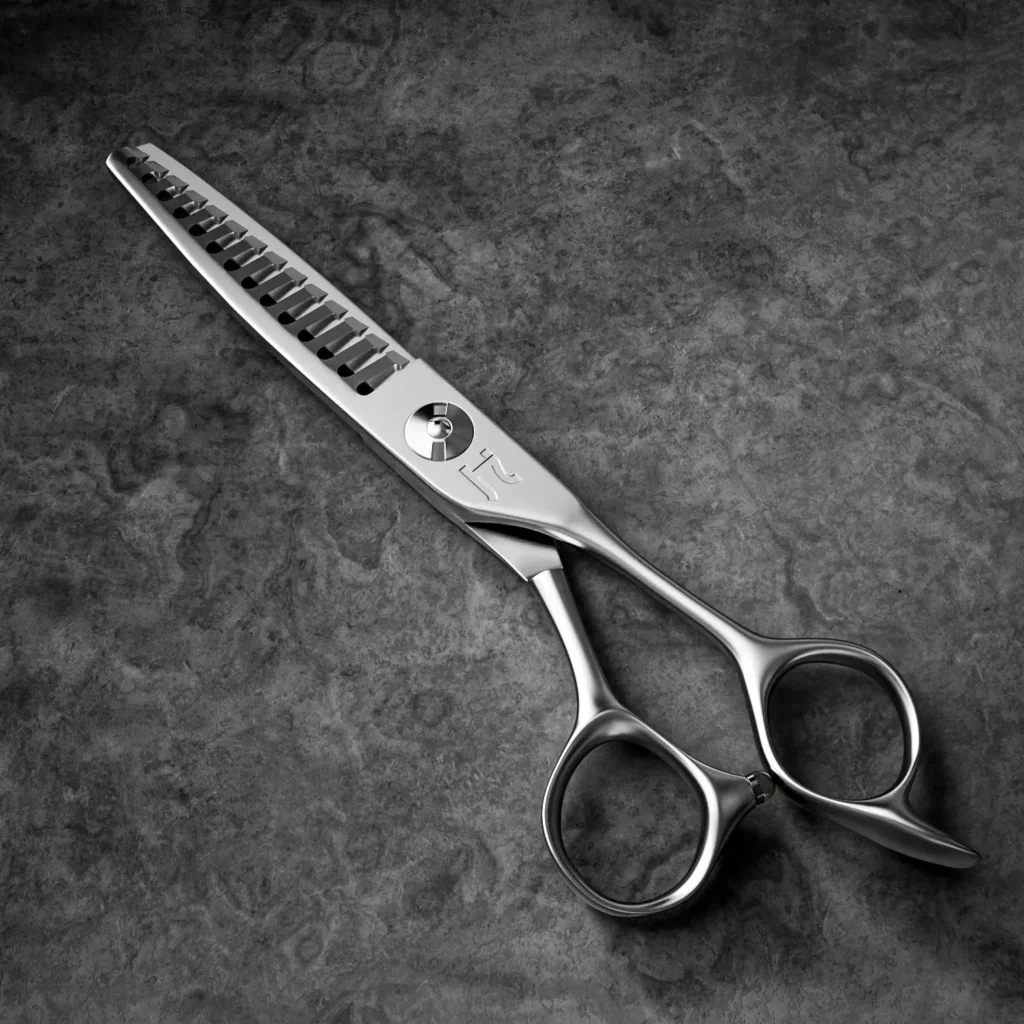
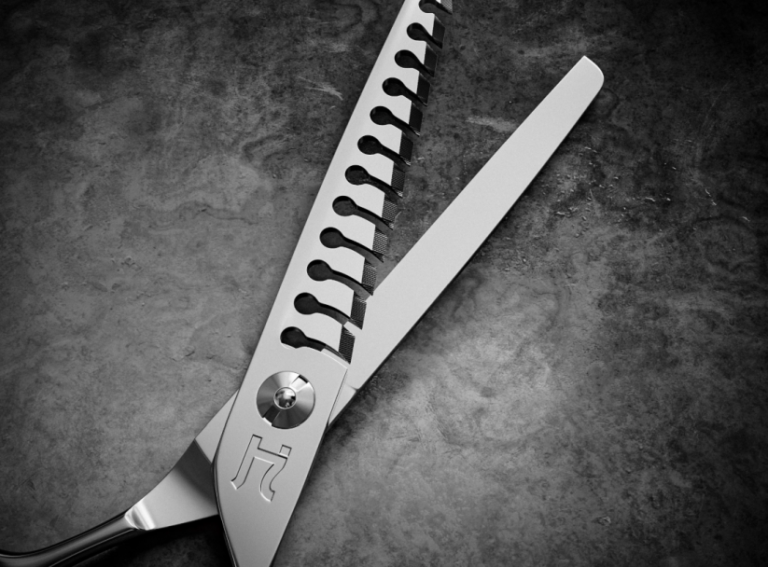
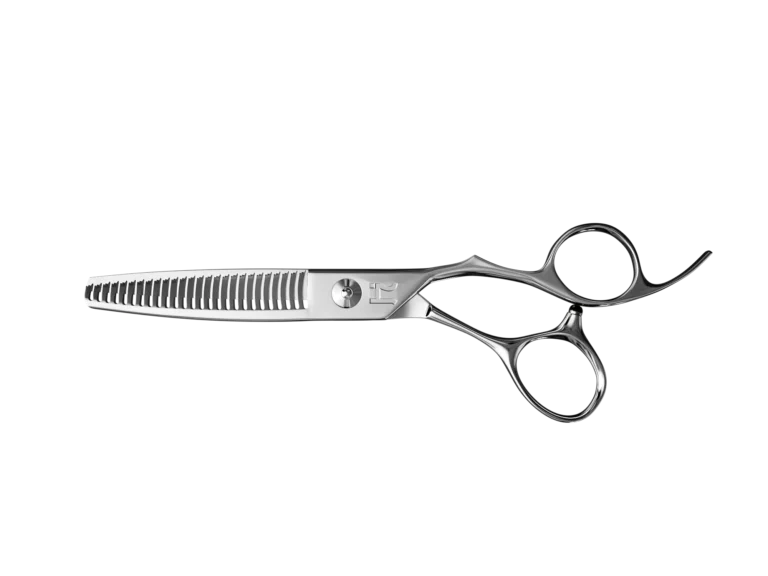
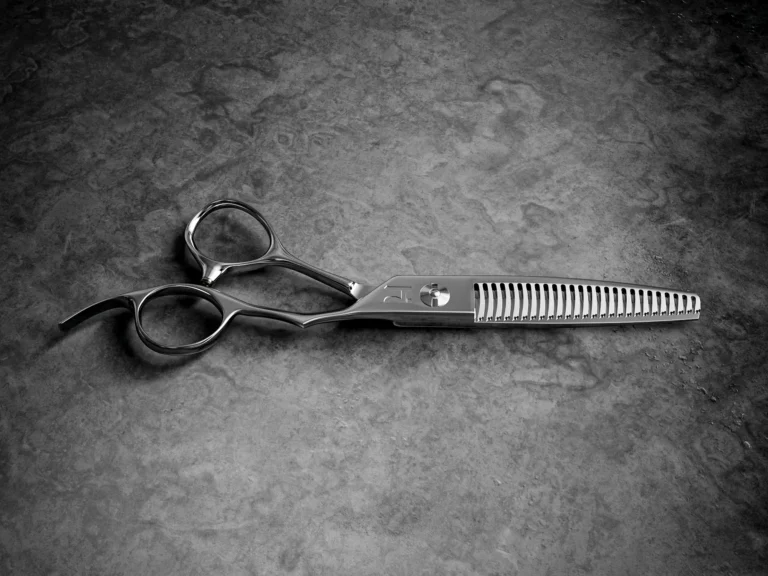
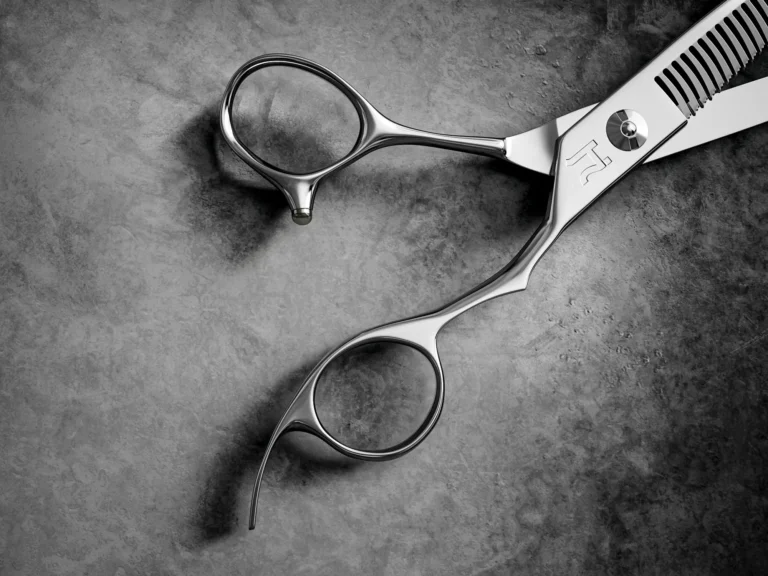
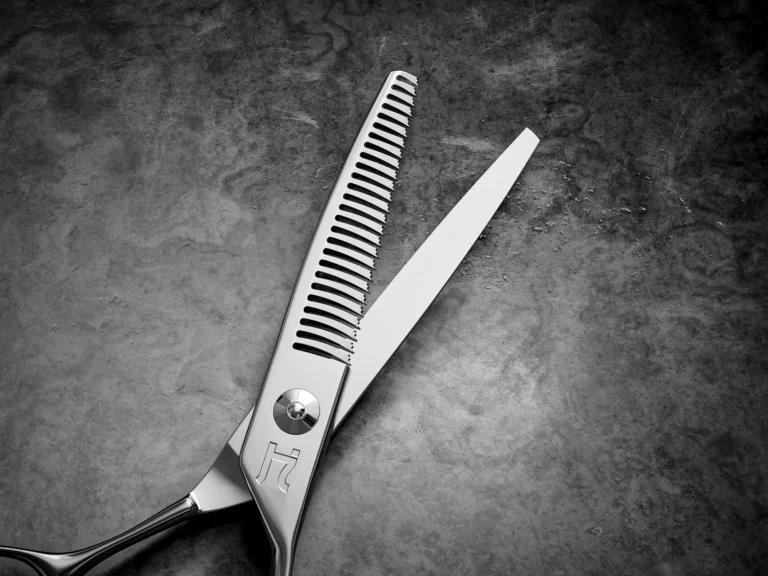
The HHVT1 Mamba Texturizer is the tool for stylists who need to break through density without shredding the hair. With 14 teeth, it sits in the low-tooth category, making it a strong choice for aggressive weight removal, deeper texture, and separation work.
The HHVT1 Mamba features 14 individual teeth with sword-like edges designed to maintain dry hair integrity by sealing the cuticle without tearing. It as a dry-cutting tool that helps save time as a point-cutting replacement and works through thick weight lines while adding deeper texture to long hair.
Use this when the client has heavy density through the interior, a thick perimeter that refuses to collapse, or long hair that needs movement without losing the overall shape. In real salon terms, this is the tool you reach for when point cutting alone would take too long.
Tooth count: 14 teeth
What it removes: Moderate to aggressive weight
Result: Deeper texture, separation, and broken-up weight lines
Best fit: Thick hair, dry cutting, long layers, extension blending, point-cutting replacement work
Best All-Around Thinning Shear – HH14T Shimatta
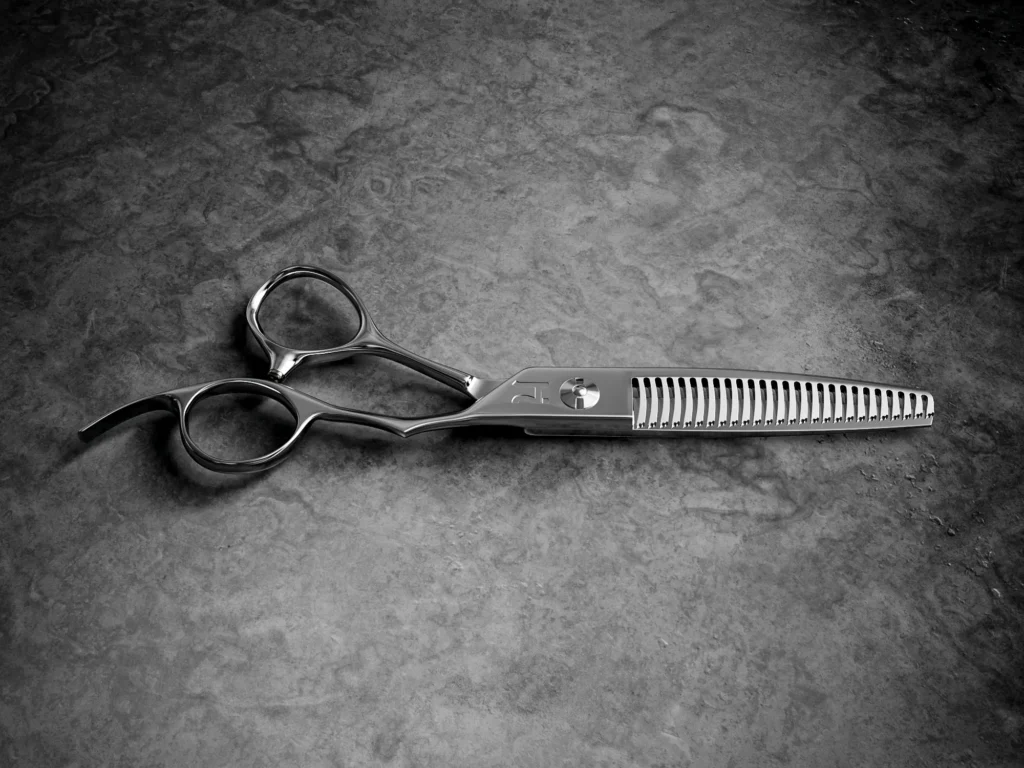
The HH14T Shimatta is Hanzo’s most popular texturizer for a reason. With 26 teeth, it lands in the mid-range category, giving stylists a strong balance between weight removal and blend control.
The HH14T Shimatta is a 26-toothed medium-coarse blending texturizer designed for efficient debulking, soft visual texture, and professional blending. Its curved teeth help the shear slide out without grabbing, while micro-serrations on the teeth add controlled visual texture. Hanzo also offers related configurations, including the HH3T swivel and HH2T left-handed version.
This is the upgrade for stylists who learned on basic thinning scissors and now need a cleaner, more refined professional tool. It can handle salon staples: reducing bulk behind the ear, blending short-to-long transitions, softening weight through the crown, and controlling heavy areas without making the cut look choppy.
Tooth count: 26 teeth
What it removes: Significant but controlled weight
Result: Balanced blending, soft texture, clean debulking
Best fit: Everyday salon cutting, general blending, mid-density to thick hair, stylists upgrading their kit
Best for Blending Extensions – HHVT1 Mamba / HH6T Kime
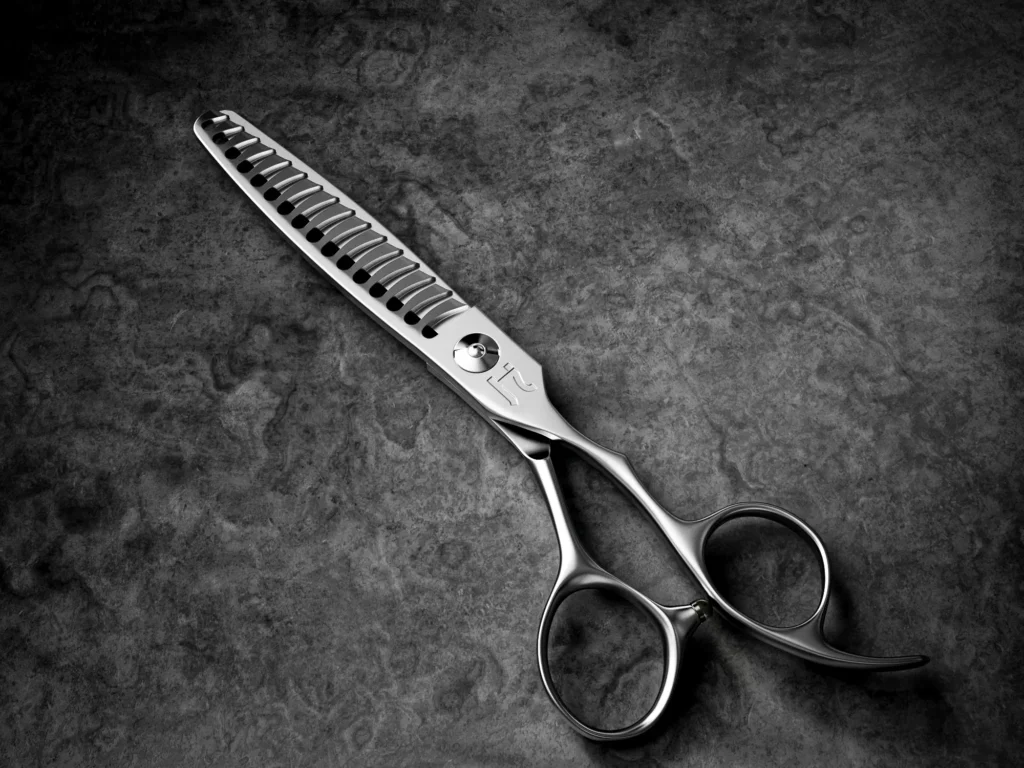
Extension blending is where tool choice gets serious. The goal is not just to remove weight. The goal is to erase the visual disconnect between natural hair and added length without chewing the ends or creating obvious holes.
For heavier extension work, the HHVT1 Mamba is a strong option because its 14-tooth design can break through dense weight lines and create deeper texture. For a slightly more moderate approach, the HH6T Kime gives stylists 16 teeth with a softer, controlled exit through the hair.
The HH6T Kime Texturizer is a 16-tooth blending tool designed for dry-cutting enthusiasts. It as ideal for weight removal, softening, and point-cutting replacement work, with curved, single-serrated teeth that slide through the hair while adding texture without tearing.
Use the HHVT1 when you need stronger separation. Use the HH6T when you want controlled removal with a smoother feel through the section. Both are useful when extension hair is dense at the bottom and the natural hair needs to visually melt into it.
Tooth count: 14 teeth for HHVT1, 16 teeth for HH6T
What it removes: Moderate to strong weight
Result: Blended extension lines, soft separation, reduced bulk
Best fit: Extension blending, dry cutting, long hair, thick perimeters, point-cutting replacement work
Best for Fine Finishing and Subtle Texture – HH40T Mazeru
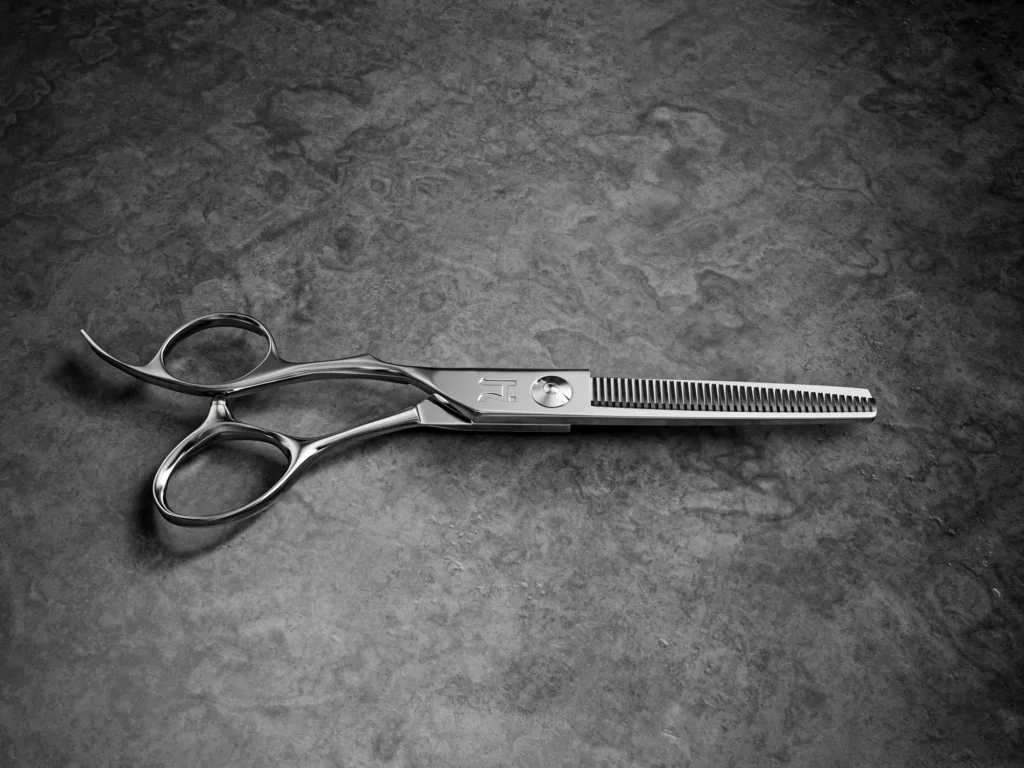
The HH40T Mazeru is the finishing tool for stylists and barbers who want a clean, polished result without heavy disruption. With 40 teeth, it belongs in the high-tooth category, making it ideal for fine blending and controlled refinement.
The HH40T Mazeru is a 40-toothed blending shear designed to remove 50% of the hair and create a smooth blend for scissor-over-comb work or anywhere a stylist needs refined finishing.
This is a strong choice for barbers working through scissor-over-comb transitions, stylists refining short shapes, and anyone who needs even weight removal without aggressive separation. It is also useful when a cut is almost finished but still looks too dense in small areas.
The Mazeru is not the tool you grab when a client has a thick, heavy interior that needs major removal. It is the tool you grab when the haircut is built and you need to make it sit better.
Tooth count: 40 teeth
What it removes: Even, controlled weight
Result: Fine blending, subtle texture, polished finish
Best fit: Scissor-over-comb blending, barbering, short cuts, final refinement, softer visual finishing
Best for Gentle Softening – HHVT3 Mamba
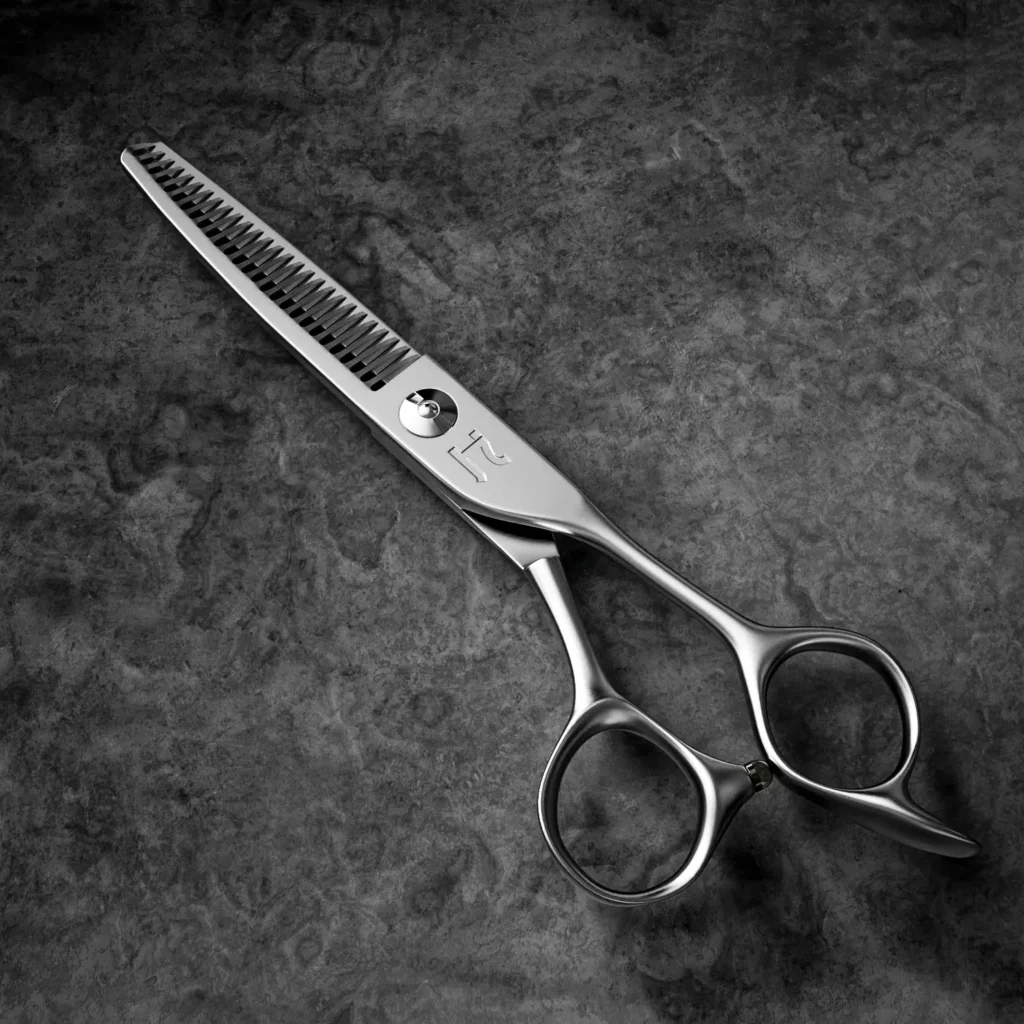
The HHVT3 Mamba is the right choice when you need softness more than removal. With 27 teeth, it sits near the mid-range category, but its purpose is gentler than a traditional debulking tool.
The HHVT3 Mamba is a 27-toothed softening tool designed to add slight visual texture and soften the look of hair. It is the gentlest texturizing scissor in its line, built with high-carbon steel for dry cutters.
This is the tool for those moments when the haircut is technically right but visually too solid. Think softening a bob without collapsing the outline, loosening curls without creating gaps, or refining a dry cut where the client wants movement but not obvious texture.
It is also a smart option for stylists who work with clients who fear thinning tools because they have had bad experiences with over-removal. The HHVT3 lets you make subtle changes without making the hair feel depleted.
Tooth count: 27 teeth
What it removes: Minimal to gentle weight
Result: Soft visual texture, light movement, gentle refinement
Best fit: Fine-tuning, curl softening, dry cutting, clients who need subtle texture without major density removal
Can You Use Thinning Shears on All Hair Types?
Yes, but not the same way on every client. The right tool, section, elevation, and closure count matter more than the label on the shear.
Thick Hair
Thick hair can usually handle stronger removal, especially through the interior. Low-tooth and mid-range tools are useful here because they can break up density and reduce bulk without forcing the stylist to over-point-cut every section.
For thick hair, the danger is staying too close to the surface or repeating closures in the same place. Work with intention. Remove weight where the shape needs movement, not everywhere the hair feels heavy.
Fine Hair
Fine hair needs restraint. The goal is usually softening, not debulking. A high-tooth finishing tool or gentle softening tool is safer because it creates refinement without taking away too much structure.
On fine hair, one extra closure can be the difference between movement and collapse. Keep the work visual, conservative, and focused.
Curly Hair
Curly hair requires respect for pattern, spring, and shape. Aggressive removal can create frizz or uneven expansion if the tool is used without a plan. Gentle softening tools can help loosen visual density, but the section must be chosen carefully.
Dry cutting often gives stylists more control because the curl pattern is visible in its natural state.
Extensions
Extension work needs blending without damage. Low-tooth and moderate-tooth tools can help remove heaviness where natural hair meets extension hair, but the tool must slide cleanly and avoid tearing.
The goal is a believable transition, not obvious texture.
How Professionals Use Texturizing Tools Without Creating Gaps
The difference between a clean professional finish and a choppy one is usually not just the shear. It is how the stylist uses it.
A few practical rules:
- Start deeper inside the section when removing bulk.
- Avoid repeated closures in the same exact spot.
- Stay off the surface unless the goal is visible texture.
- Use fewer closures on fine hair.
- Comb through and reassess before taking more.
- Match the tooth count to the result, not the habit.
- Use dry cutting when visual movement matters most.
Let’s be real: most thinning mistakes happen because the stylist keeps cutting after the hair already gave the answer. A better tool helps, but restraint is still part of the technique.
Which Tooth Count Should You Choose?
The fastest way to choose is to start with the result you want.
Choose 10–16 teeth if you need aggressive removal, deeper separation, extension blending, or a point-cutting replacement.
Choose 20–28 teeth if you need a versatile daily tool for blending, softening, and moderate debulking.
Choose 30–40 teeth if you need finishing, soft blending, scissor-over-comb refinement, or subtle weight control.
For many working stylists, the best kit includes more than one option: one stronger removal tool, one everyday blending tool, and one finishing tool. That gives you control across thick hair, fine hair, curls, barbering, dry cutting, and extensions.
Final Takeaway: The Best Thinning Shears Are Chosen by Result
The best thinning shears for stylists are not simply the sharpest, most expensive, or most popular tools. They are the ones that create the right finish for the client in your chair.
Use lower tooth counts for stronger removal. Use mid-range tooth counts for everyday blending. Use higher tooth counts for finish work and subtle refinement. When the tool matches the technique, the haircut looks cleaner, moves better, and grows out with more intention.
Browse Hanzo’s full texturizing lineup and filter by tooth count to find the right tool for your technique. Explore Hanzo professional shears to build a complete cutting kit around precision, control, and real behind-the-chair performance.