If you’re a working stylist or barber and your shears are pushing hair, folding sections, or suddenly feeling heavy in your hand, tension is often the hidden culprit. Incorrect tension costs you speed, precision, and can contribute to unnecessary hand strain over time. At Hanzo, we approach shear performance the way pros do: diagnose first, adjust precisely, and protect both your edge and your career longevity.
This guide is written for licensed barbers and stylists who are already working behind the chair – not for cosmetology theory or licensing exam prep.
Quick Answer
For Working Professionals If your shears started pushing hair or folding sections during a cut – and nothing else changed – tension is almost always the first thing to check. The drop test takes 10 seconds: hold vertically, open the top blade to 90 degrees, let go. It should fall halfway and stop. Closes all the way? Too loose. Barely moves? Too tight. Adjust one small increment at a time, retest on hair, not just in the air.
The Reality Check: Why Tension Matters More Than You Think
Many professionals assume poor cutting performance means the shear needs sharpening. Sometimes it does-but often, tension is the real issue.
Incorrect tension can:
- Cause hair to bend or push instead of slice
- Increase hand fatigue
- Wear down your edge prematurely
- Stress the pivot system
- Slow down your workflow
Tension controls how the two blades interact. Too loose, and the blades separate during the cut. Too tight, and you create unnecessary friction and resistance.
Fast Diagnosis: 3-Minute Self-Check
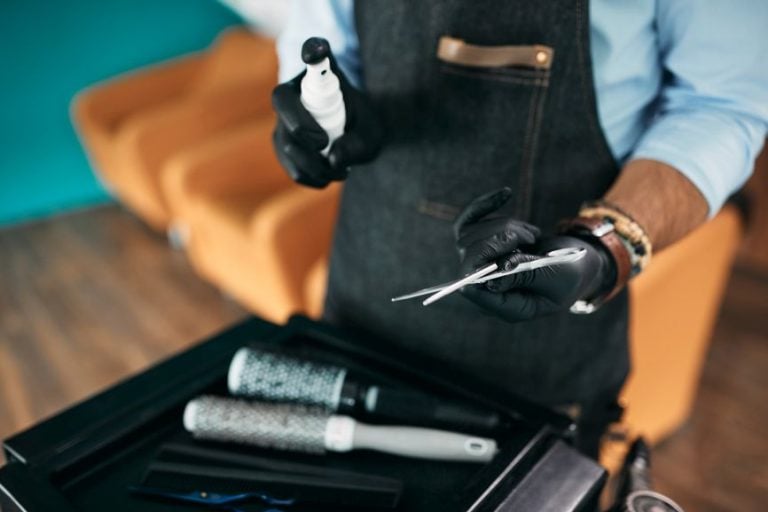
Step 1: Clean and Oil First
Remove hair and debris from the pivot. Apply a drop of shear oil at the pivot point.
Step 2: Perform the Drop Test
- Hold the shears vertically, tips pointing upward.
- Open the top blade to about 90 degrees.
- Release it.
What Should Happen?
- Ideal: Blade falls halfway to two-thirds down the bottom blade and stops.
- Too Loose: Blade closes completely.
- Too Tight: Blade barely moves.
This simple diagnostic is widely recommended across professional shear educators and manufacturers because it quickly reveals blade friction balance.
If your shears push or fold hair → tension is likely too loose.
The blades are separating instead of meeting cleanly through the cut.If cutting feels grindy or resistant → tension is likely too tight.
You’re forcing the blades through unnecessary friction.If your hand feels fatigued faster than usual → check tension before assuming it’s ergonomics.
Excess friction increases required closing force.If your shear dulls quickly → overtightening may be accelerating edge wear at the contact point.
What’s Actually Happening Mechanically

When you close your shears, the blades must maintain consistent contact along the cutting line.
Too loose:
- Blades separate microscopically.
- Hair bends before being severed.
- You compensate by squeezing harder.
Too tight:
- Excess friction increases resistance.
- Pivot experiences unnecessary wear.
- Cutting motion feels heavy and less fluid.
From a mechanical perspective, proper pivot friction ensures optimal blade engagement without excessive force. Excess resistance increases muscular effort, which over time contributes to repetitive strain load in the hand and forearm (see research from organizations like the National Institute for Occupational Safety and Health (NIOSH) and ergonomic guidance from the Occupational Safety and Health Administration (OSHA) on repetitive hand force and friction load).
In practical terms:
The smoother the shear closes, the less effort your flexor muscles must generate.
How to Adjust Tension Correctly
1. Make Micro-Adjustments Only
Turn the screw or dial:
- Clockwise = tighter
- Counterclockwise = looser
Move in very small increments (about 1/16 turn or one click).
2. Retest Immediately
After each adjustment, perform the drop test again.
3. Stop at Functional Smoothness
Don’t chase “tight for control.”
Control comes from sharpness, balance, and technique-not over-tight tension.
Technique-Specific Tension Adjustments
Many high-level cutters adjust slightly based on technique:
- Blunt precision cutting: Slightly firmer tension can enhance blade stability.
- Slide cutting: Slightly looser tension often improves glide.
- Dry cutting: Requires very clean blade contact-tension accuracy becomes more critical.
If you perform a lot of slide or dry cutting, shear balance, edge type, and pivot smoothness matter significantly. That’s where proper fitting and professional guidance-like what Hanzo provides-becomes part of performance optimization, not just maintenance.
Common Mistakes Professionals Make
- Adjusting tension before cleaning and oiling
- Over-tightening to “fix” pushing hair
- Ignoring pivot debris buildup
- Assuming tension fixes dull edges
- Forgetting that environmental humidity affects performance
Even corrosion resistance and metal friction behavior are influenced by environmental exposure, which is why consistent maintenance matters (see corrosion behavior standards from organizations like ASTM International for broader material science context).
Prevention & Best Practices
- Check tension daily if you’re high-volume.
- Oil at the pivot point consistently.
- Avoid over-tightening after sharpening.
- Store shears clean and dry.
- Schedule professional servicing before performance drops drastically.
If your shears consistently fall out of tension or feel unstable at the pivot, professional inspection may be necessary.
When It’s Not Just Tension
Sometimes tension symptoms are masking deeper issues:
- Edge wear
- Blade misalignment
- Pivot damage
- Warping from drops
If adjustments don’t resolve pushing or resistance, it may be time for professional sharpening or servicing. Proper diagnosis prevents unnecessary metal removal and protects tool longevity.
Why Shear Design & Pivot Quality Matter (And Where Hanzo Fits In)
Tension adjustment only works properly when the shear’s pivot system, balance, and blade alignment are engineered to maintain consistent blade contact.
If you constantly fight tension drift, inconsistent cutting feel, or premature edge wear, the issue may not just be how you’re adjusting-it may be the shear’s construction and pivot stability.
Here’s What Professionals Should Look For:
- Stable pivot system that holds tension consistently
- Smooth, even blade contact from heel to tip
- Balanced weight distribution to reduce closing force
- Ergonomic handle geometry that supports natural thumb movement
- Proper edge design for your primary cutting style (blunt, slide, dry)
Hanzo designs tools specifically for working professionals who cut all day-not occasional users. That means performance stability under real salon volume.
Upgrade the System, Not Just the Setting
If your current shears can’t hold proper tension or feel inconsistent throughout the cut, it may be time to evaluate your tools.
If you:
- Do a lot of precision blunt work → you need consistent blade engagement.
- Slide cut daily → smooth pivot action and correct tension range matter more.
- Work high volume → tension stability directly affects fatigue over time.
Explore Hanzo’s professional shear collections designed for high-volume stylists and barbers
FAQs
1. My shears are pushing hair mid-cut – is it tension or the edge?
Nine times out of ten, if it came on gradually or suddenly after a while of normal cutting, it’s tension before it’s the edge. Do the drop test first. If the blade falls completely shut, loosen is your diagnosis. Only reach for sharpening after you’ve ruled out tension and confirmed the edge is actually dull.
2. My shears feel heavy and my hand tires faster than it used to – what’s happening?
This is almost always tension running too tight. When the pivot has too much friction, your hand has to work harder to close the blades on every single cut. Over a full day that adds up fast. Do the drop test – if the blade barely moves when you release it, loosen by one small increment, retest, and notice whether the cutting feel lightens up.
3. How often should a working barber or stylist check tension?
If you’re doing 8 or more cuts a day, a quick drop test before your first client costs nothing and catches drift before it affects your work. Lower volume professionals should check whenever the cutting feel changes – don’t wait for a problem to become obvious during a client’s appointment.
4. I tightened my tension to try to fix pushing hair – it didn’t work. What now?
Tightening tension to fix pushing hair is one of the most common mistakes professionals make, and it usually makes things worse. Tighter tension increases friction and hand strain without fixing the actual blade contact issue. If loosening tension doesn’t resolve the push, the problem is the edge – at which point professional sharpening is the right next step, not further tension adjustments.
5. How much does tension actually affect hand and wrist strain over a long day?
More than most professionals realize until they fix it. Every cut you make against excess friction asks your flexor muscles to work harder than they need to. Over 30, 50, 80 cuts a day that accumulates into real fatigue. A properly tensioned shear that closes with minimal resistance is one of the simplest ergonomic upgrades you can make without buying anything new.
6. Should I adjust tension differently for slide cutting versus blunt cutting?
Yes, and most professionals who slide cut regularly figure this out through feel before they can explain why. Slide cutting benefits from slightly looser tension because the blades need to glide through the section rather than snap shut. Blunt precision cutting can tolerate slightly firmer tension for blade stability. The key word is slightly – you’re talking about a fraction of a turn either way, not a dramatic setting change.
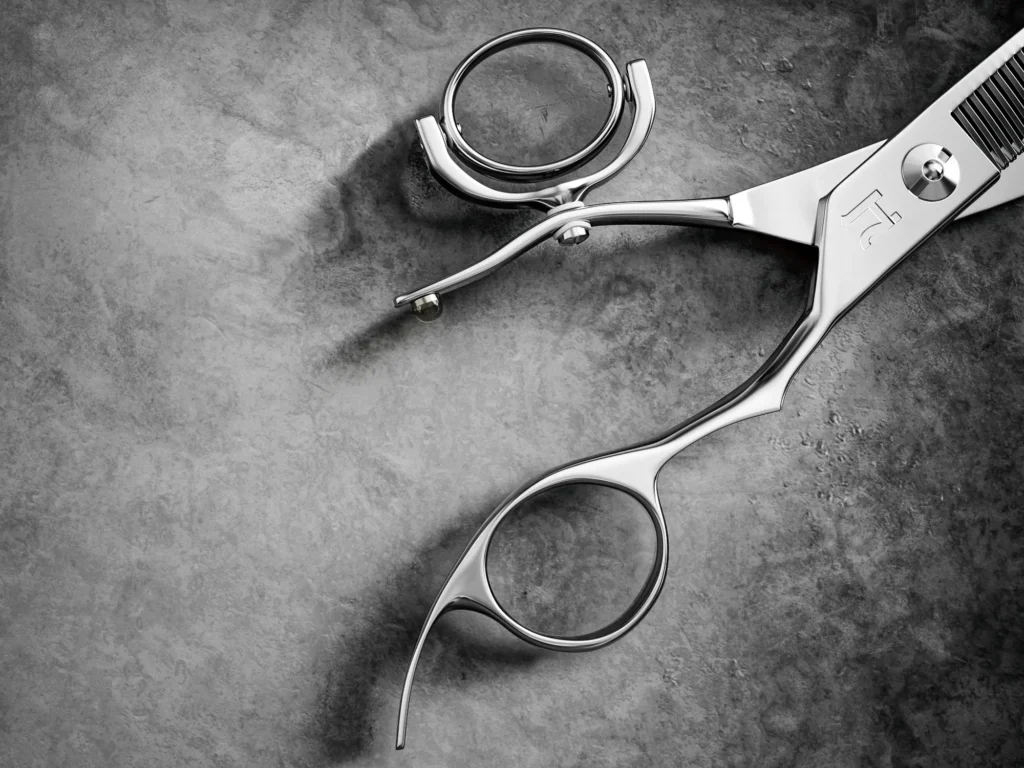
7. My shears have a dial instead of a screw – is the adjustment method the same?
Same principle, slightly easier execution. Dial systems are designed specifically so barbers can make micro-adjustments during the day without tools. Whether it’s a dial or a screw, the rule is identical: one small increment at a time, drop test after every adjustment, stop the moment cutting feel improves. Don’t keep going past the point where it’s working.
8. I’ve adjusted tension multiple times and the problem keeps coming back – what does that mean?
It means the pivot itself likely needs professional attention. When tension won’t hold or keeps drifting on its own, the pivot system is worn, damaged, or needs servicing – that’s not something you can fix from the outside with adjustments. Send the shears in before the problem gets worse. Continuing to cut on a failing pivot accelerates edge wear and eventually means a more expensive repair.