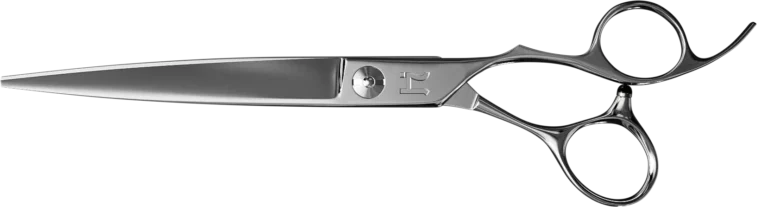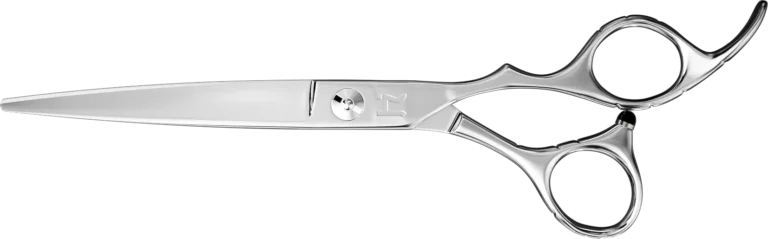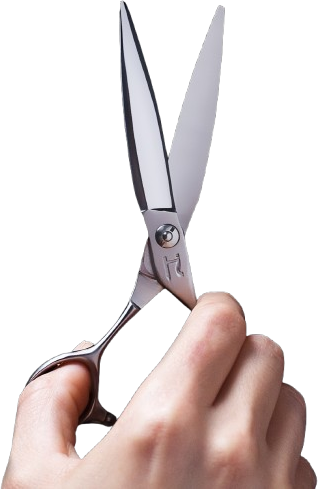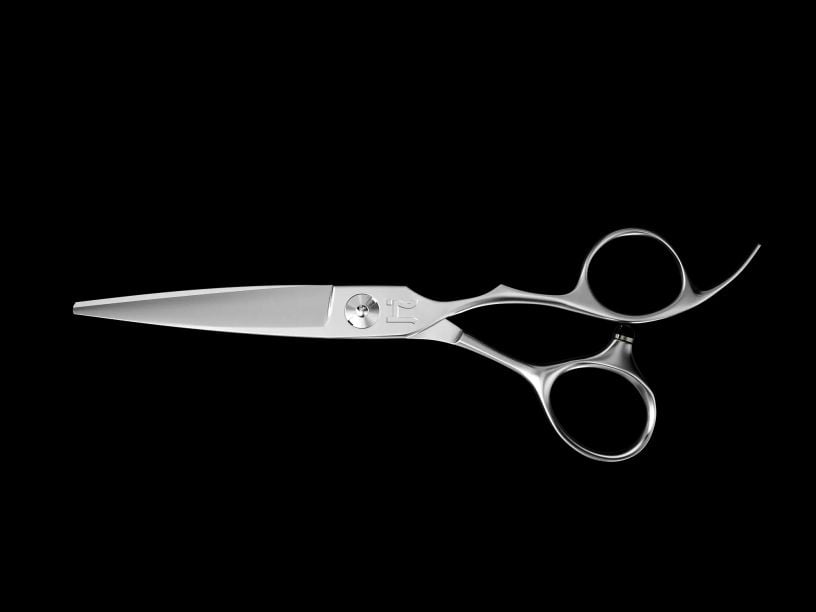
For stylists and barbers who rely on haircutting tools through a full day of cutting, incorrect tension can quickly affect comfort, control, and results. Shears that are too tight may strain your hand, while loose blades can fold hair, catch sections, or leave an inconsistent cut line. Hanzo’s adjustable, countersunk tension system allows you to correct normal tension changes with the supplied tension key before they interfere with your work.
How Do You Adjust Shear Tension?
To adjust the tension on hair shears:
- Clean and lightly oil the pivot area.
- Hold the shear vertically by the finger ring.
- Open the moving blade fully or to approximately 90 degrees.
- Release the moving blade and watch where it stops.
- Tighten clockwise if the blade falls completely shut.
- Loosen counterclockwise if the blade barely moves.
- Make only a tiny adjustment at a time.
- Repeat the gravity test after every adjustment.
Correctly adjusted blades should move smoothly and stop approximately halfway between fully open and fully closed. They should not slam shut or remain almost completely open.
Why Tension Matters
Shear tension controls how firmly the two blades meet as the tool opens and closes. It affects the resistance you feel in your thumb, the accuracy of the cut, and the consistency of blade contact from the pivot to the tips.
When the tension is too tight, the blades press against each other with excessive force. The shear may feel stiff or heavy, forcing your hand to work harder through every cutting motion. Continued use at an overly tight setting can create unnecessary friction and increase wear around the pivot and ride line.
When the tension is too loose, the blades can separate slightly under pressure. Hair may fold, bend, or slide between them instead of being cut cleanly. The shear may also feel unstable during point cutting, detailing, or other precision techniques.
Correct tension sits between these extremes. The blades should close smoothly with controlled resistance. They should not fight your hand, but they should not flop shut either.
The adjustable tension systems built into quality professional shears help maintain consistent blade contact while allowing the stylist or barber to set the tool within its intended operating range.
The Standard Shear Tension Test
The gravity test, sometimes called the drop test, is the quickest way to determine whether your tension is within the correct range.
How to Perform the Gravity Test
- Clean the shear. Remove visible hair and product residue from the blades and pivot.
- Hold the shear vertically. Grip it by the stationary finger ring rather than the moving thumb ring.
- Point the blade tips upward.
- Open the moving blade fully or to approximately 90 degrees.
- Release the moving handle. Allow gravity alone to move the blade.
- Watch where the blade stops.
How to Read the Result
- Correct tension: The moving blade closes smoothly and stops approximately halfway between fully open and fully closed.
- Too loose: The blade falls completely shut with little or no resistance.
- Too tight: The blade barely moves or remains almost fully open.
- Possible maintenance issue: The blade hesitates, grinds, jumps, or moves unevenly.
The precise stopping point can vary slightly depending on the shear’s blade weight, length, pivot design, and model. Smooth, controlled movement is more important than forcing every shear to stop at an exact angle.
How to Adjust Tension on Hanzo Shears Step by Step
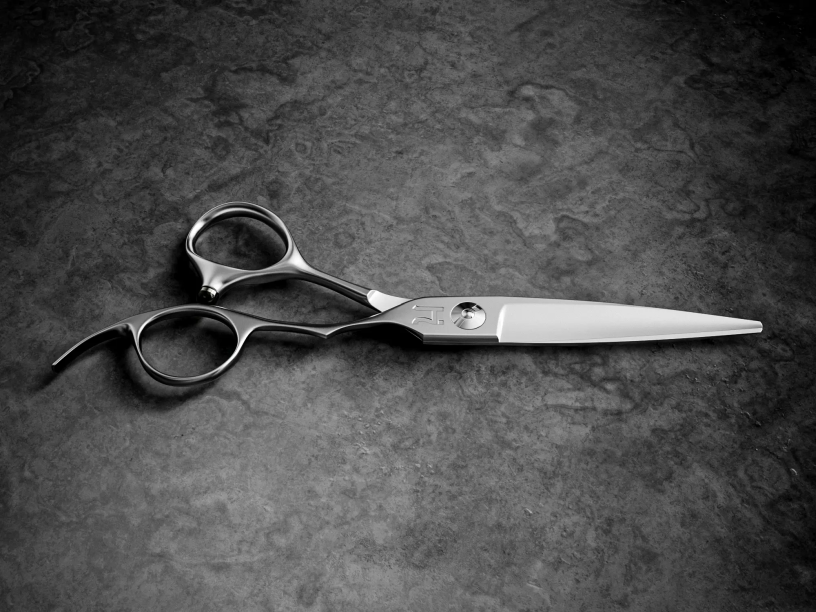
Hanzo shears use a countersunk locking tension control. The adjustment point sits below the surface of the pivot plate, which helps keep it out of the way during cutting and reduces the chance of accidental adjustment.
Use the Hanzo tension key supplied with your shear. Do not force a standard screwdriver, coin, or improvised object into the adjustment point. The wrong tool may slip or damage the recessed screw head.
Step 1: Clean the Pivot Area
Before changing the tension, wipe away loose hair, product residue, and other debris from around the pivot.
A dirty pivot may make a shear feel tighter or rougher than it actually is. Adjusting the tension before cleaning the tool can lead you to make an unnecessary correction.
Step 2: Apply Shear Oil
Place a small drop of shear oil near the pivot, following the care instructions supplied with your shears.
Open and close the blades several times to distribute the oil, then wipe away any excess. Too much oil can make the handles slippery and increase the risk of dropping the shear.
Cleaning and oiling should come before adjustment because dryness or trapped debris can create resistance that resembles overly tight tension.
Step 3: Position the Shear Safely
Hold the shear open in your non-dominant hand with the pivot accessible.
Keep your fingers clear of the cutting edges. Perform the adjustment over a counter, workstation, or padded surface rather than above a hard salon floor.
Step 4: Insert the Hanzo Tension Key
Place the Hanzo tension key securely into the countersunk tension control at the pivot.
Make sure the key is properly seated before turning it. If the key slips or does not fit securely, stop rather than forcing it.
Step 5: Tighten Loose Shears Clockwise
If the moving blade falls completely shut during the gravity test, the tension is too loose.
Turn the key clockwise to increase tension. Use a very small movement, preferably less than a quarter turn, and then retest.
Tiny adjustments are safer and more precise than making a large turn. A small change at the pivot can noticeably affect how the blades move along their entire length.
Step 6: Loosen Tight Shears Counterclockwise
If the moving blade barely drops or the shear feels stiff throughout the closing motion, the tension may be too tight.
Turn the tension key counterclockwise to reduce tension. Again, use only a small movement before retesting.
Avoid loosening the pivot excessively. The blades still need enough pressure to maintain consistent contact while cutting.
Step 7: Close the Shear Gently
After making the adjustment, remove the tension key and gently open and close the shear several times.
Do not snap the blades shut. This movement helps settle the pivot and gives you an initial sense of whether the resistance has improved.
Step 8: Repeat the Gravity Test
Perform the gravity test again after every adjustment.
Continue using tiny corrections until the moving blade closes smoothly and stops approximately halfway. Do not make several turns before testing, because this can move the shear from too loose to too tight.
Step 9: Test the Cutting Action
Once the gravity test produces the correct result, test the shear on an appropriate practice section before returning to client work.
The blades should:
- Open and close smoothly
- Maintain consistent contact
- Cut without folding or pushing hair
- Feel stable in your hand
- Move without grinding or clicking
If the shear passes the gravity test but still does not cut properly, tension may not be the underlying problem.
What If You Lose the Hanzo Tension Key?
Contact Hanzo or your local Hanzo representative to obtain the correct replacement tool.
Do not reshape another tool or force an incorrectly sized driver into the pivot. Damaging the tension control may make future adjustment difficult and could require professional repair.
Signs of Too-Tight Shear Tension
Your shear tension may be too tight if:
- The shear feels stiff or heavy when closing.
- Your thumb or hand becomes tired faster than usual.
- The blades require excessive pressure to move.
- The moving blade barely falls during the gravity test.
- You feel roughness, clicking, or grinding near the pivot.
- The blades appear to fight each other instead of meeting smoothly.
- Unusual wear marks appear along the ride line.
Do not assume hand fatigue always means you need a different shear size or handle design. Sometimes a small tension correction can noticeably improve the cutting motion.
However, grinding is not a normal sign of tension alone. If cleaning, oiling, and a minor adjustment do not restore smooth movement, stop using the shear and arrange an inspection.
Signs of Too-Loose Shear Tension
Your shear tension may be too loose if:
- The moving blade falls completely shut during the gravity test.
- Hair folds or bends between the blades.
- Sections push away instead of cutting immediately.
- The blades feel unstable or wobbly.
- Point cutting and detail work feel less controlled.
- Slide cutting feels sticky or inconsistent.
- You hear a soft clicking sound as the blades close.
- The shear cuts near the pivot but struggles closer to the tips.
Loose tension is often mistaken for dullness because both problems can cause pushing or folding. Check the pivot tension first, but do not keep tightening the shear if it already passes the gravity test.
How Tight Should Hair Shears Be?
Hair shears should be tight enough to maintain consistent contact between the blades but loose enough to move without excessive hand pressure.
A properly adjusted shear has three main characteristics:
- The blades move smoothly.
- The moving blade stops approximately halfway during the gravity test.
- The shear cuts without folding hair or straining your hand.
There is no benefit to tightening the pivot more than necessary. Excessive tension does not make the blades sharper. It only creates more friction and makes the shear harder to operate.
How Often Should Shear Tension Be Checked?
Check your tension regularly and whenever the shear begins to feel different during cutting.
A quick gravity test at the start of the working day takes only a few seconds. It can help you identify an incorrect setting before you begin working on a client.
High-volume stylists and barbers may also check their shears during a midday break, especially after several hours of continuous use.
A simple routine is:
- Wipe the blades.
- Remove hair from around the pivot.
- Oil the pivot when needed.
- Perform the gravity test.
- Adjust only when the test indicates a problem.
Avoid changing the tension repeatedly based only on how the shear feels in the moment. Clean and test the tool first, then make a measured correction.
Can You Realign Hair Shears by Adjusting the Tension?
No. Tension adjustment and blade alignment are not the same thing.
Changing the tension controls the pressure between the blades at the pivot. It cannot safely correct:
- A bent blade
- A damaged or chipped tip
- A worn or shifted pivot
- A nick in the cutting edge
- Incorrect blade geometry
- Damage caused by a drop
- Uneven blade contact
Do not try to compensate for a damaged or misaligned shear by overtightening the pivot. This can increase blade friction without correcting the underlying issue.
Blade realignment and pivot repairs should be handled by a trained shear service professional.
When Tension Adjustment Is Not Enough
Tension adjustment is appropriate for routine corrections within the shear’s normal operating range. Some problems, however, require sharpening, repair, or professional inspection.
The Tension Is Correct, but the Shear Still Folds Hair
If the gravity test looks correct but the blades continue to push, fold, or catch hair, the cutting edge may be dull or damaged.
Review the signs that determine how often professional shears should be sharpened before making additional pivot changes. Sharpening needs depend on cutting volume, technique, maintenance, blade steel, and the types of services you perform.
The Tension Will Not Hold
If the tension loosens again shortly after adjustment, the pivot or tension mechanism may require professional attention.
Do not continue tightening the shear throughout the day. Repeated adjustments may temporarily hide the problem without correcting the worn or damaged component.
The Shear Was Dropped
Even when the tension appears normal, a dropped shear may have a bent tip, nicked edge, misaligned pivot, or altered blade-contact pattern.
Some drop damage is difficult to see without a professional inspection. Continuing to cut with the shear may worsen the problem.
Do not attempt to bend or realign the blades at home.
The Pivot Still Feels Rough After Cleaning and Oiling
Grinding, scraping, jumping, or uneven resistance after cleaning and lubrication may indicate pivot wear, debris inside the assembly, or incorrect blade contact.
Stop using the shear and arrange professional service rather than dismantling the pivot yourself. Hanzo’s StaySharp program provides sharpening and protection options for eligible Hanzo shears.
Frequently Asked Questions
Which direction tightens hair shears?
On Hanzo’s tension system, turning the tension key clockwise increases tension. Turning it counterclockwise reduces tension.
How much should you turn the tension key?
Make a very small turn, preferably less than a quarter turn, and repeat the gravity test. Avoid making full turns or several adjustments at once.
Can you use a screwdriver on Hanzo shears?
Use the Hanzo tension key supplied with the shear. A standard screwdriver or improvised tool may not fit the countersunk adjustment point correctly and could damage it.
Can incorrect tension make sharp shears fold hair?
Yes. Even sharp blades can fold or push hair when loose tension prevents them from maintaining consistent contact. If the tension is correct and the problem continues, the shear may need sharpening or repair.
Keep Your Shears Cutting Smoothly
Correct tension is part of what keeps a shear cutting cleanly for years. Browse Hanzo’s full range of professional shears – every pair ships with a tension key and lifetime warranty.