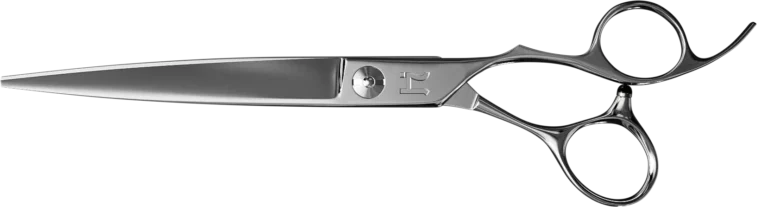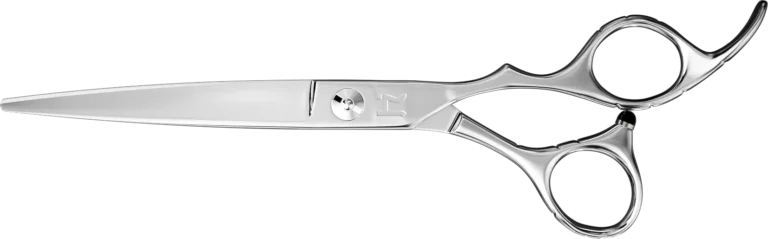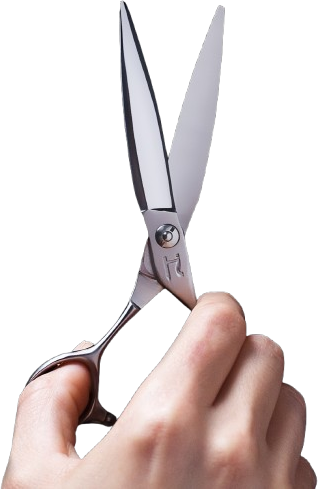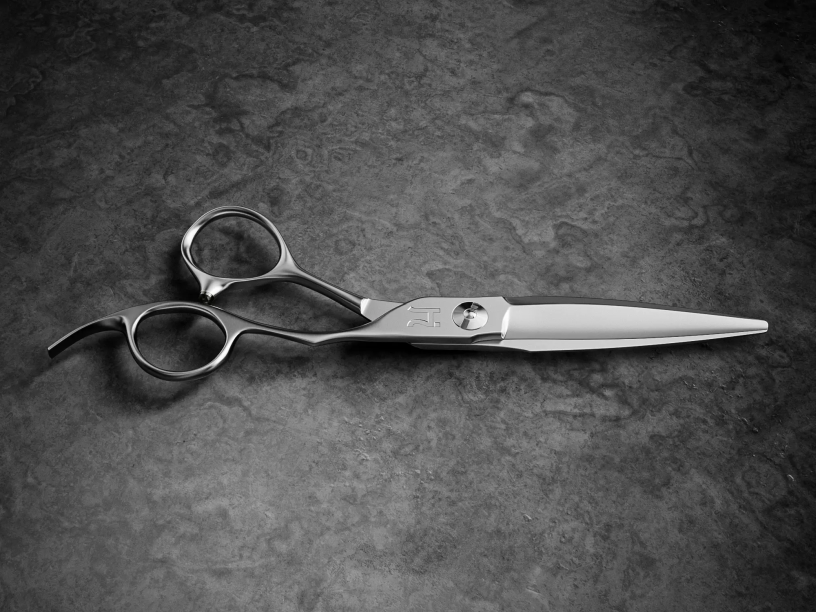
For licensed stylists and barbers using professional shears through back-to-back appointments, a thumb position that fights your natural cutting motion can turn a full appointment schedule into hours of wrist, elbow, or shoulder fatigue. The challenge is that handle terminology often makes choosing a shear more confusing than it needs to be. Hanzo offers both fixed-thumb and swivel designs across wet-cutting, dry-cutting, and versatile shear families, making it possible to choose a handle based on how your hand moves rather than marketing claims.
The basic answer is simple: straight-handle shears provide familiar, consistent thumb feedback, while swivel shears allow the thumb ring to rotate so the hand and arm can move more freely. Neither design is automatically better. The right one depends on your cutting techniques, working posture, comfort, and willingness to adjust to a different feel.
What the Handle Question Is Really About
The comparison is not about the angle between the finger rings and blades. It is about whether the thumb ring remains fixed or rotates while you cut.
With a straight or fixed-thumb shear, the thumb ring stays in one position. Your thumb opens and closes the blade along a consistent arc. With a swivel shear, the thumb ring rotates independently, allowing your thumb to change position without forcing the entire wrist and forearm to follow.
This distinction should not be confused with offset versus opposing handles. Offset and opposing describe the position of the finger rings relative to each other. Swivel and straight describe the movement of the thumb ring. A shear can have an offset handle and still use either a fixed or swiveling thumb.
When comparing professional shears, evaluate these features separately:
- Blade material and shape
- Shear length
- Offset or opposing ring position
- Fixed, single-swivel, or double-swivel thumb
- Intended wet- or dry-cutting application
The thumb mechanism primarily changes hand movement and comfort. It does not determine the shear’s blade performance.
Straight Handle Shears: Who Do They Suit?
Straight-handle shears use a fixed thumb ring. Each time you open and close the blades, your thumb follows the same controlled path.
This is the configuration most stylists and barbers encounter during training, so it usually feels natural from the first cut. There is no rotating mechanism to learn, and the consistent thumb position creates predictable feedback between the hand and blades.
Why stylists choose a fixed thumb
A straight handle may suit you when you value:
- A familiar grip
- Consistent thumb placement
- Direct feedback from the blades
- A stable feel during precise cutting
- Little or no adaptation time
Traditional techniques such as blunt cutting, classic layering, perimeter work, structured shaping, and scissor-over-comb cutting can feel especially controlled with a fixed thumb. Many experienced professionals have also spent years refining their technique with this configuration and have no reason to change when they remain comfortable.
Picture a stylist building a sharp bob or checking a clean perimeter. The predictable movement of a fixed-thumb shear can make every opening and closing action feel deliberate. For someone who already cuts with a relaxed hand and keeps the wrist reasonably neutral, that familiarity can be an advantage.
The possible ergonomic trade-off
Because the thumb moves through a fixed arc, a stylist may compensate by extending the thumb, rotating the forearm, raising the elbow, or repositioning the shoulder. How much this happens depends on the person’s technique, hand anatomy, workstation height, client position, and shear fit.
These movements do not mean a straight handle is inherently harmful. They simply make technique more important over a long cutting day. Occupational ergonomics guidance generally recommends keeping the wrist as straight as practical and reducing repeated movements performed in awkward positions.
A fixed thumb may be the better choice when:
- You do not experience recurring wrist, thumb, elbow, or shoulder fatigue
- You prefer firm and consistent thumb feedback
- You perform mostly traditional, structured techniques
- You already maintain a relaxed grip
- You want a shear that feels familiar immediately
Hanzo straight-handle options
The HH8 Talon is a versatile wet-to-dry shear with a fixed thumb and 20-degree offset handle. It is available in lengths from 5.0 to 7.5 inches
Other fixed-thumb choices include:
- HH6 Kime: A premium high-carbon shear emphasizing dry cutting, coarse hair, channel cutting, and slide cutting. Its 20-degree offset handle uses a fixed thumb.
- HHP Pai Mei: A premium nano-powder-steel shear built for strength, versatility, dense sections, bobs, and straight perimeter lines.
These examples show why “straight handle” should not be mistaken for a basic blade. A fixed thumb is available on everything from versatile everyday shears to highly specialized premium cutting tools.
Swivel Handle Shears: Who Do They Suit?
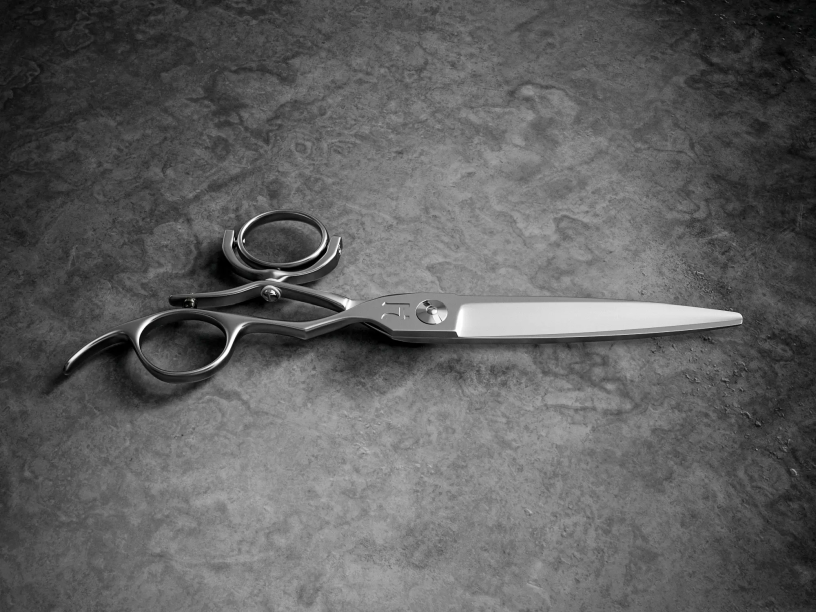
Swivel handle hair shears use a rotating thumb ring that allows the thumb to move more independently from the fingers, wrist, and forearm.
Instead of requiring your entire hand to follow one fixed opening arc, the ring can rotate as you change cutting position. A swivel thumb may make it easier for some stylists to limit wrist rotation, thumb extension, or elevated-elbow positioning when cutting from changing angles
Single swivel vs double swivel
Professional swivel shears are commonly available in two configurations:
- Single swivel: The thumb ring rotates through one swivel mechanism, providing additional movement while retaining a relatively guided feel.
- Double swivel: A second rotating connection provides a wider range of movement and allows the thumb ring to adapt more freely as the hand changes position.
A single swivel may be an easier transition for someone who wants improved mobility without making the thumb feel completely free. A double swivel may appeal to professionals who regularly work around the head from multiple angles or want maximum thumb independence.
Where a swivel can make a noticeable difference
Imagine point cutting around a client’s crown, channel cutting through long layers, or detailing a difficult section behind the ear. With a fixed thumb, you may reposition your elbow or rotate your wrist to reach the desired blade angle. A swivel mechanism lets the thumb ring respond to that angle instead.
That can be useful for:
- Point cutting
- Channel cutting
- Slide cutting
- Face-framing
- Creative texturizing
- Dry detailing
- Cutting around the head at changing angles
- Working with the palm facing different directions
A swivel handle may be the better choice when:
- Your wrist, thumb, elbow, or shoulder becomes tired during cutting
- You regularly raise your elbow to position the blades
- You perform creative techniques from multiple angles
- You have difficulty keeping a relaxed hand with fixed-thumb shears
- Long-term working comfort is a major purchasing priority
Hanzo swivel options
The HH3 Ayako is available with either a single – or double-swivel thumb. Its cobalt-and-molybdenum alloy construction is designed for wet and dry versatility, while lengths from 5.0 to 7.0 inches support a broad range of techniques.
The HH6S Kime Swivel combines a single – or double-swivel thumb with premium high-carbon Japanese stainless steel, a slightly exaggerated blade radius, and strong dry-cutting performance.
These designs suit stylists who want greater thumb mobility without giving up specialized blade geometry.
Are Swivel Shears Hard to Use?
Swivel shears are not necessarily difficult, but they do require a different habit.
A common mistake is placing the thumb deeply into the ring and gripping it tightly, exactly as you might with a fixed-thumb shear. That restricts the mechanism and makes the shear feel unstable, bulky, or unnecessarily complicated.
The swivel works best when the thumb remains relaxed and shallow in the ring. Let the mechanism respond to your hand instead of trying to force it into one position.
Many stylists need several appointments or a few weeks of regular use before a swivel thumb begins to feel natural. Some understand the movement during the first appointment. Others need several working days before the thumb stops trying to control the rotating ring.
During the adjustment period:
- Begin with familiar cuts rather than your most technical service.
- Keep the thumb relaxed and avoid inserting it too deeply.
- Practice opening the blades with minimal finger movement.
- Notice whether you are still lifting your elbow unnecessarily.
- Use the shear for full appointments, not just a few practice snips.
- Evaluate how your hand feels near the end of the day.
The benefit may not feel dramatic during the first five minutes. It becomes more apparent once the thumb learns to release tension and the rest of the arm stops compensating.
Do Swivel Shears Reduce Wrist and Shoulder Strain?
Swivel shears can reduce some of the awkward wrist rotation, thumb extension, and elevated-elbow positioning associated with cutting at changing angles. However, no handle can guarantee that a stylist will avoid pain or repetitive strain.
Comfort also depends on:
- Shear length and weight
- Finger-ring fit
- Tension adjustment
- How tightly you grip
- Client-chair height
- Your stance and shoulder position
- Number of cuts performed each day
- Existing injuries or medical conditions
A swivel mechanism is therefore best viewed as an ergonomic option, not a medical device. It can help place the hand in a more natural working position, but technique and overall workstation setup still matter.
Persistent pain, numbness, weakness, or tingling should be evaluated by a qualified healthcare professional rather than managed only by changing shears.
Can You Have a Swivel on a High-Carbon or Dry-Cutting Shear?
Yes. The swivel is a handle mechanism, not a blade category.
Choosing a swivel does not require you to accept an all-purpose blade or sacrifice dry-cutting capability. Blade material, edge design, radius, thickness, and handle movement are separate purchasing decisions.
For example:
HH6S Kime Swivel
The HH6S Kime Swivel combines premium high-carbon Japanese stainless steel with an exaggerated blade radius and a swivel thumb. It is designed to support dry cutting, coarse hair, channel cutting, and slide cutting while providing more freedom in the hand.
HH1S Kamikaze Swivel
The HH1S Kamikaze Swivel uses premium high-carbon Japanese stainless steel and an exaggerated radius developed for dry slide cutting. It is available with single- and double-swivel options and is suited to techniques such as carving, face-framing, point cutting, channel cutting, and dry detailing.
HH3 Ayako
The HH3 Ayako combines a cobalt-and-molybdenum alloy with wet-and-dry versatility and single- or double-swivel configurations. Its broad size range also gives stylists room to match the length to their preferred techniques.
The practical takeaway is important: choose your blade for the hair and techniques you work with, then choose your thumb mechanism for movement and comfort.
How Do You Choose the Right Shear Handle?
Start by observing how you currently cut rather than selecting a handle based only on its product description.
Choose a straight handle if:
- Your hand remains comfortable throughout the day
- You prefer consistent thumb feedback
- You use a fixed thumb without gripping tightly
- Most of your work involves blunt cutting, classic layering, scissor-over-comb, or structured shaping
- You want an immediately familiar feel
Choose a swivel handle if:
- Your wrist, thumb, elbow, or shoulder regularly feels fatigued
- You lift your elbow frequently to position the blades
- You perform slide cutting, channel cutting, point cutting, or creative detailing
- You cut from many different angles
- You want greater thumb mobility
- You are prepared to work through an adjustment period
Try both if:
- Your discomfort appears only during certain techniques
- You are unsure whether your grip or the handle is the issue
- You like the control of a fixed thumb but want greater mobility
- You are choosing between single- and double-swivel designs
Hanzo’s 15-day trial allows licensed cosmetologists and barbers to put a shear to work before committing to the purchase. The trial is especially valuable with swivel shears because a few openings at a display table will not tell you how the mechanism feels after several appointments.
Frequently Asked Questions
Are swivel shears better than regular shears?
Swivel shears are better for some professionals, particularly those who want greater thumb mobility or experience fatigue when cutting from multiple angles. Straight shears remain a strong professional choice for stylists who prefer consistent feedback and remain comfortable with a fixed thumb.
What is the purpose of swivel shears?
The rotating thumb ring allows the thumb to move more independently. This can help the wrist remain closer to neutral and reduce the amount of forearm rotation or elbow elevation required to change the blade angle.
Are swivel shears suitable for beginners?
They can be, although beginners should first learn to use a light, controlled grip. Learning on a swivel may encourage relaxed hand movement, but some students prefer the predictable feedback of a fixed thumb while developing foundational techniques.
Can you perform blunt cutting with swivel shears?
Yes. The handle mechanism does not prevent blunt cutting. Line quality depends more directly on blade design, sharpness, tension, hand control, and the shear’s suitability for the technique.
Are straight-handle shears the same as opposing-handle shears?
No. “Straight” in this comparison means the thumb ring does not swivel. “Opposing” describes finger rings that are positioned symmetrically. An offset shear can still have a fixed, straight thumb.
Should you choose a single or double swivel?
Choose a single swivel when you want additional thumb movement with a more controlled feel. Consider a double swivel when you want maximum range of motion or frequently position your shear at changing angles. Testing both during real appointments is the most reliable way to decide.
Find the Handle That Fits the Way You Cut
There is no universal winner between fixed and swivel handles. A straight thumb offers familiarity, stability, and consistent feedback. A swivel thumb provides greater mobility and may reduce unnecessary wrist, forearm, and elbow movement during long or technically varied cutting days.
Pay attention to how you hold the shear at the beginning and end of your shift. The right handle should support your technique without forcing your body to work around the tool.
Browse Hanzo’s full range of professional shears and compare swivel and straight options based on your cutting style, preferred blade, and daily comfort.